
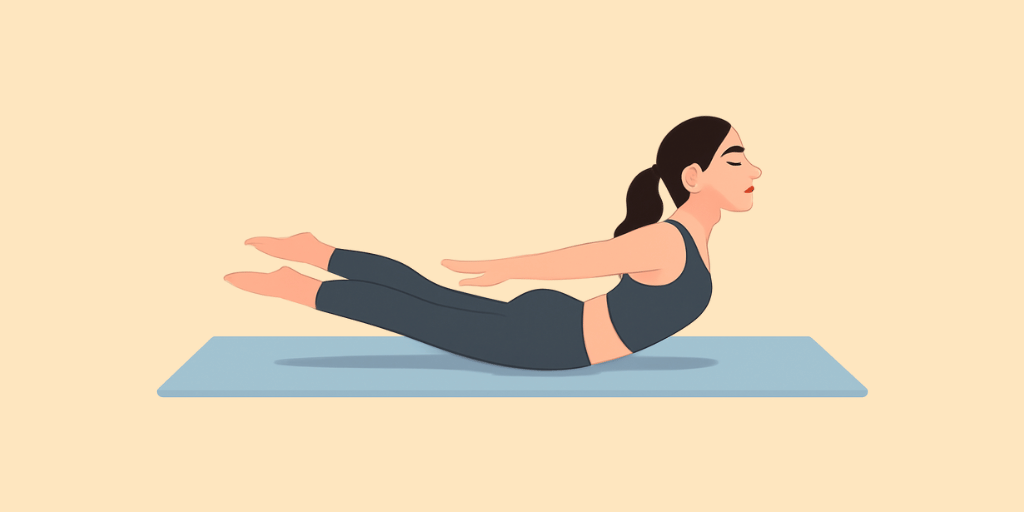
Sanskrit Name: सलबासन
English Name: Locust Pose
Description
Salabhasana, commonly referred to as the Locust Pose, draws inspiration from the graceful ascent of a locust, embodying a feeling of lightness and intent. The term “Shala” signifies the locust or grasshopper, while “Asana” translates to pose. In this position, the body mimics the elegant form of a locust taking flight.
This pose fosters strength, balance, and serenity in both body and mind. Salabhasana is among the thirty-two asanas outlined in ancient yoga texts, symbolizing the balance between physical strength and inner peace. This pose inspires us to rise above the challenges and obstacles we encounter, both on the mat and in our daily lives.
How to Do
Here are the steps to do Salabhasana (Locust Pose).
- Lie on Your Stomach: Begin by lying flat on your stomach with your legs extended straight behind you and your feet together. Keep your arms by your sides with palms facing downward.
- Engage Your Core and Legs: Tighten your core muscles and engage your legs. Press the tops of your feet into the floor to activate the thighs and keep them firm.
- Lift Your Chest and Arms: Inhale deeply, and as you exhale, slowly lift your chest, arms, and head off the floor. Keep your arms straight and by your sides with palms facing down.
- Lift Your Legs: As you inhale again, lift both legs off the floor. Keep your legs straight and together, and lift them as high as you can without straining. The aim is to lift your legs using the strength of your lower back and glutes.
- Engage the Back Muscles: Continue lifting your chest and legs by engaging the muscles of your back. Imagine you are trying to lift your thighs higher while maintaining the lift in your upper body. Keep your arms actively reaching toward your feet.
- Hold the Pose: Hold the pose for 15-30 seconds, breathing deeply and steadily. Focus on keeping your legs straight and strong, with your chest lifted and shoulders relaxed. Keep your gaze forward or slightly upward without straining your neck.
- Release the Pose: To release, slowly lower your chest, arms, and legs back down to the floor. Rest your forehead on the mat and breathe deeply for a few moments to relax.
- Repeat: You can repeat Salabhasana a couple of times, with a short rest in between, depending on your comfort level.
If you have any neck or spinal issues, it’s important to practice this pose with caution or avoid it entirely.
Benefits
- Incorporating Salabhasana into a regular practice can lead to improved physical and mental well-being.
- It aids in improving spinal flexibility and strength, which can alleviate back pain and improve posture.
- Additionally, this asana enhances digestion and can help with gastrointestinal issues.
- It also stimulates the adrenal glands, potentially benefiting those with fatigue or stress-related conditions.
- Furthermore, Salabhasana can strengthen the muscles in the legs and lower back, which is advantageous for individuals recovering from injuries or those with muscular imbalances.
Medical Conditions(Relief)
- Strengthens the Back: This asana enhances the strength of the back muscles, improving posture and alleviating back pain.
- Stimulates Digestive Organs: By engaging the abdominal area, it aids in digestion and can help relieve constipation.
- Improves Circulation: The pose promotes better blood flow, which can enhance overall vitality and energy levels.
- Relieves Stress: Practicing Salabhasana can help reduce stress and anxiety, promoting a sense of calm and relaxation.
- Enhances Flexibility: It stretches the spine and opens up the chest, increasing flexibility in the back and shoulders.
- Strengthens the Legs and Glutes: The pose engages the leg and gluteal muscles, contributing to overall body strength.
Medical Conditions(Avoid)
- Pregnancy: This pose exerts pressure on the abdomen, which can be uncomfortable or harmful during pregnancy.
- Recent Abdominal Surgery: Individuals recovering from abdominal surgery should avoid this pose to prevent strain and promote healing.
- Hernia: Those with any type of hernia should refrain from this asana, as it can exacerbate the condition.
- Lower Back Pain: If experiencing chronic lower back pain or injury, this pose may worsen discomfort and should be avoided.
- Carpal Tunnel Syndrome: The pressure on the wrists can aggravate symptoms in individuals with this condition.
- Severe Asthma or Breathing Issues: Those with respiratory problems may find it difficult to breathe properly while in this pose.
References
- Patanjali, Yoga Sutras of Patanjali, Commentary by Swami Sivananda. Divine Life Society, 1990; p. 58.
- Swatmarama, Hatha Yoga Pradipika, Edited by Swami Muktibodhananda. Bihar School of Yoga, 1998; p. 72.
- Sushruta, Sushruta Samhita, Commentary by Acharya Y.T. (5th ed.). Varanasi: Chaukambha Orientalia, 1992; p. 445.
- Krishnamacharya, Yoga Makaranda, Translated by A.G. Mohan. Krishnamacharya Yoga Mandiram, 2012; p. 103.
- Iyengar B.K.S., Light on Yoga. HarperCollins Publishers, 1966; p. 102.
- Desikachar T.K.V., The Heart of Yoga: Developing a Personal Practice. Inner Traditions, 1995; p. 88.
- Jois K. Pattabhi, Yoga Mala. The Yoga Institute, 2002; p. 120.
- Swami Vivekananda, Raja Yoga. Advaita Ashrama, 1993; p. 61.
- Swami Sivananda, The Science of Pranayama. Divine Life Society, 1951; p. 99.
- Sivananda Yoga Vedanta Centres, Yoga and Health. Sivananda Publications, 2005; p. 45.

