
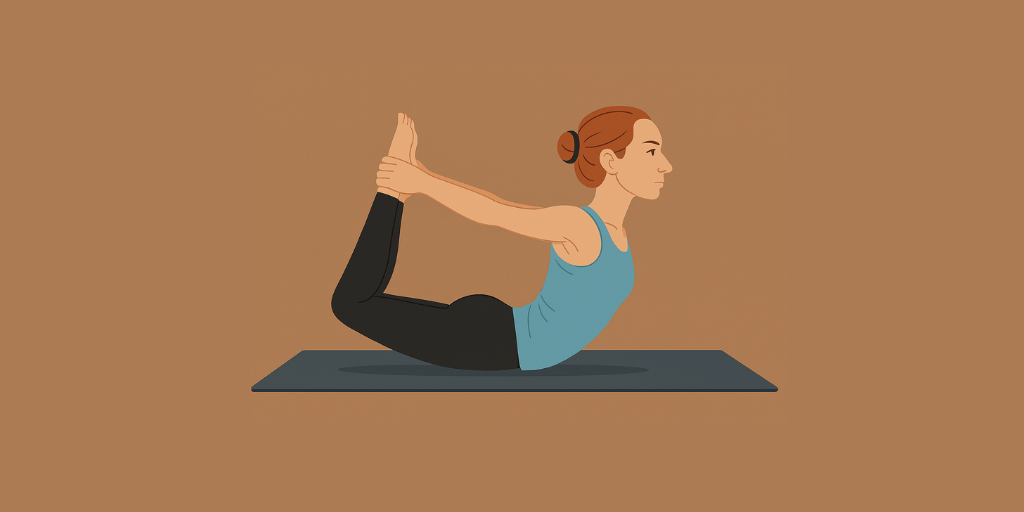
Sanskrit Name: धनुरासन
English Name: Bow Pose
Description
The term “Dhanurasana” can be understood literally: “dhanu” translates to bow, while “asana” refers to pose. In essence, it is a yoga position that stretches the entire body, providing numerous advantages. Yoga emphasizes correct alignment, with each pose carrying its unique importance and function. Dhanurasana, commonly known as the bow pose or Akarna Dhanurasana, is a dynamic and expressive posture that activates the upper, middle, and lower body. It aids in relieving tension and soothing the muscles, fostering an overall sense of relaxation.
This Asana effectively massages the abdominal area and should be performed on an empty stomach. You can create a bow-like movement by swaying side to side, as well as forwards and backwards, ensuring a comprehensive massage to the abdomen. Swing, rock, and enjoy the practice while mentally repeating OM, OM, OM!
How to Do
Here are the steps to do Dhanurasana (Bow Pose).
- Lie on Your Stomach: Start by lying flat on your stomach with your legs extended behind you and your feet hip-width apart. Keep your arms by your sides with palms facing upwards.
- Bend Your Knees: Bend your knees and bring your heels as close as possible to your buttocks. Keep your knees together.
- Grab Your Ankles: Reach back with both hands and hold the outer edges of your ankles or the tops of your feet, depending on your flexibility. Keep your grip firm.
- Engage Your Core and Legs: Engage your core muscles and press your thighs into the floor. At the same time, keep your chest open and extend your spine.
- Lift Your Chest and Legs: Inhale and, using your core and leg strength, begin to lift your chest and thighs off the floor. Pull your feet and legs towards your head, creating a bow shape with your body.
- Open Your Chest: Lift your chest higher towards the sky and press your legs into your hands. Keep your shoulders away from your ears and open up your chest.
- Hold the Pose: Hold the pose for 15-30 seconds, breathing deeply and steadily. Focus on creating a strong curve in your spine while maintaining balance.
- Release the Pose: To come out of the pose, exhale and gently lower your chest, head, and legs back down to the floor. Relax in Savasana (Corpse Pose) or any comfortable position for a few breaths.
If you’re new to Dhanurasana, you can use a cushion or bolster under your abdomen for support until you build enough strength and flexibility.
Benefits
- Dhanurasana, or Bow Pose, is beneficial for various medical conditions.
- It aids in improving flexibility and strength in the spine, which can alleviate back pain.
- This pose also stimulates the digestive organs, potentially aiding in digestion and relieving constipation.
- Additionally, it can help in managing stress and anxiety by promoting relaxation and improving overall mental well-being.
- Furthermore, Dhanurasana may enhance lung capacity and respiratory function, making it advantageous for individuals with asthma or other respiratory issues.
Medical Conditions(Relief)
- Improves Flexibility: This asana stretches the entire front body, enhancing flexibility in the spine, hips, and chest.
- Strengthens Back Muscles: It strengthens the back muscles, promoting better posture and reducing back pain.
- Stimulates Digestive Organs: The compression of the abdominal area during the pose can improve digestion and alleviate constipation.
- Reduces Stress and Fatigue: Practicing Dhanurasana can help relieve stress and fatigue by promoting relaxation and increasing energy levels.
- Enhances Respiratory Function: The opening of the chest improves lung capacity and encourages deeper breathing.
- Balances Hormones: The pose stimulates the adrenal glands, which can help regulate hormonal balance.
Medical Conditions(Avoid)
- Pregnancy: This pose puts pressure on the abdomen, which can be harmful during pregnancy.
- Back Injuries: Individuals with recent or chronic back injuries may exacerbate their condition by bending and arching the spine.
- Knee Issues: Those with knee pain or injuries should avoid this pose as it can strain the knee joints.
- Carpal Tunnel Syndrome: The weight on the hands can aggravate symptoms in individuals with this condition.
- Hernia: This pose can increase intra-abdominal pressure, which could worsen a hernia.
- Recent Surgery: Anyone who has had abdominal or back surgery should refrain from this pose until fully healed.
References
- Patanjali, Yoga Sutras of Patanjali, Commentary by Swami Sivananda. Divine Life Society, 1990; p. 58.
- Swatmarama, Hatha Yoga Pradipika, Edited by Swami Muktibodhananda. Bihar School of Yoga, 1998; p. 72.
- Sushruta, Sushruta Samhita, Commentary by Acharya Y.T. (5th ed.). Varanasi: Chaukambha Orientalia, 1992; p. 445.
- Krishnamacharya, Yoga Makaranda, Translated by A.G. Mohan. Krishnamacharya Yoga Mandiram, 2012; p. 103.
- Iyengar B.K.S., Light on Yoga. HarperCollins Publishers, 1966; p. 102.
- Desikachar T.K.V., The Heart of Yoga: Developing a Personal Practice. Inner Traditions, 1995; p. 88.
- Jois K. Pattabhi, Yoga Mala. The Yoga Institute, 2002; p. 120.
- Swami Vivekananda, Raja Yoga. Advaita Ashrama, 1993; p. 61.
- Swami Sivananda, The Science of Pranayama. Divine Life Society, 1951; p. 99.
- Sivananda Yoga Vedanta Centres, Yoga and Health. Sivananda Publications, 2005; p. 45.

