Ayurvedic name: Kamala
Description:
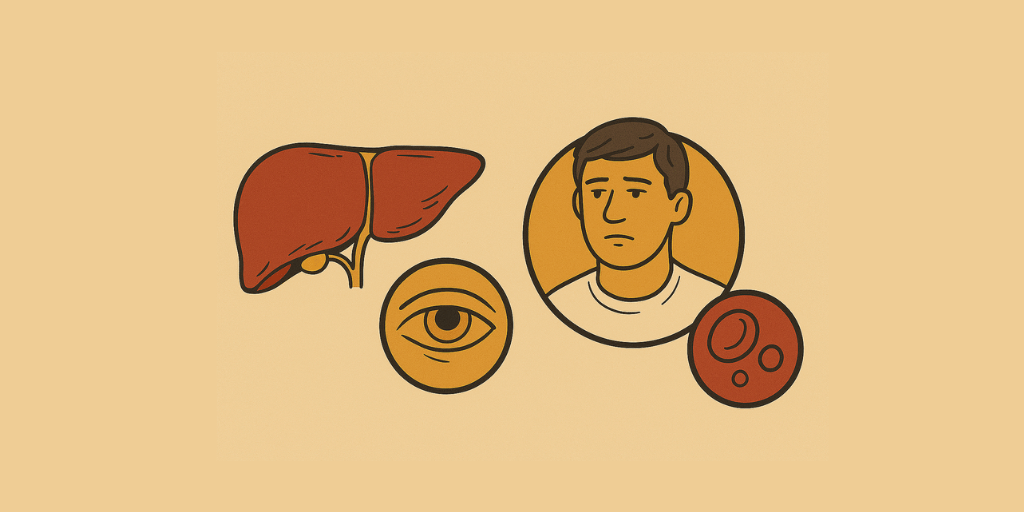
Kamala is an advanced disorder of Pitta Dosha affecting the liver, resembling jaundice. It is resulting from excessive consumption of hot, spicy, and heavy foods that aggravate Pitta, which leads to bile imbalances and liver dysfunction. Symptoms include yellowing of the skin and eyes, dark urine, fatigue, and digestive disturbances. It is often a progression of untreated Pandu Roga and requires detoxification therapies like Virechana (purgation) and liver-rejuvenating herbs.
Signs & Symptoms:
- Haridranetra (Yellowing of the Eyes): Yellowish discoloration of the sclera (whites of the eyes).
- Haridra Twak (Yellowing of the Skin): General yellowing of the skin and mucous membranes.
- Rakta-Pita Mutra (Dark Urine): Urine that is dark yellow, tea-colored, or cola-colored.
- Shakrit (Pale Stool): Stool becomes pale or clay-colored, indicating a lack of bile flow.
- Daha (Burning Sensation): A sensation of heat or burning in the body, often in the stomach.
- Karna Kshweda (Tinnitus): Ringing or buzzing sounds in the ears, often associated with dizziness.
- Avipaka (Indigestion): Poor digestion, often with nausea or vomiting.
- Gaurava (Heaviness in the Body): A feeling of heaviness or fatigue due to the liver’s impaired function.
Diagnosis:
Liver Function Test (LFT)
Risk Factors:
- Dietary Factors
Excessive consumption of alcohol, fatty foods, and sugary beverages, which strain the liver and can lead to jaundice.
Inadequate intake of nutrients that support liver health, such as antioxidants and fiber. - Lifestyle Factors
Poor hygiene, particularly in handling food, leading to viral infections like Hepatitis A, which causes jaundice.
Exposure to contaminated water or food, leading to liver infections. - Medical Conditions
Liver diseases such as hepatitis, cirrhosis, or liver cancer can impair bile production and lead to jaundice.
Conditions like gallstones or pancreatic cancer that obstruct bile flow can cause jaundice.
Complications:
- Liver Damage (Yakrit Vikruti) – Chronic jaundice, particularly from liver disease like hepatitis or cirrhosis, can lead to irreversible liver damage.
- Ascites (Udara Shotha) – Severe jaundice due to liver failure can cause fluid buildup in the abdomen, leading to ascites.
- Kidney Dysfunction (Vrikka Vikruti) – Jaundice caused by liver disease can lead to kidney dysfunction or failure, particularly if the liver’s detoxifying function is impaired.
- Neurological Impairment (Mastishka Vikruti) – High levels of bilirubin in the bloodstream (due to liver failure) can lead to brain damage, known as hepatic encephalopathy.
- Chronic Fatigue (Dourbalya) – Jaundice often causes prolonged fatigue and malaise due to liver dysfunction and toxin buildup in the body.
Epidemeology:
More common in individuals with liver diseases, including hepatitis, cirrhosis, or alcohol-related liver damage. Affects both men and women, though men have a slightly higher incidence due to higher rates of alcohol use and liver disease.
Can occur at any age, but newborns and the elderly are more vulnerable to complications associated with jaundice. Approximately 20-30% of adults in developing countries are affected by liver diseases leading to jaundice, with hepatitis B and C being leading causes.
References:
- Agnivesha; Charak Samhita, Kushawaha (Reprint edition), Chikitsa Sthan; Pandu chikitsadhyay: chapter 16 verse 124 Varanasi: Chaukhambia Orientalia; 2012. 441 Schwarzenbach HR. Jaundice and pathological liver values. Praxis (Bern 1994) 2013;102:727–9
- Agnivesha; Charaka SamhitaAcharya YT (editor), Chakrapani Tika, Reprint, 2013. 528
- Sushruta; Sushruta SamhitaAcharya YT (editor), Nibandhsangraha and NyayachandrikaPanjika tika, Varanasi: ChaukhanbaPrakashan; Reprint, 2014. 729
- Gadad GG, Gudaganatti KS. Critical analysis of formulation and probable mode of action of Avipattikarachurna: A comprehensive review. IJPPR Human 2021;22:301–11
- Srinivasan K. Black pepper and its pungent principle-piperine: A review of diverse physiological effects. Crit Rev Food Sci Nutr 2007;47:735–48
- https://journals.lww.com/jras/fulltext/2023/07030/ayurveda_management_of_jaundice__a_case_study.6.aspx

