
Ayurvedic Name: Amavata
Description:
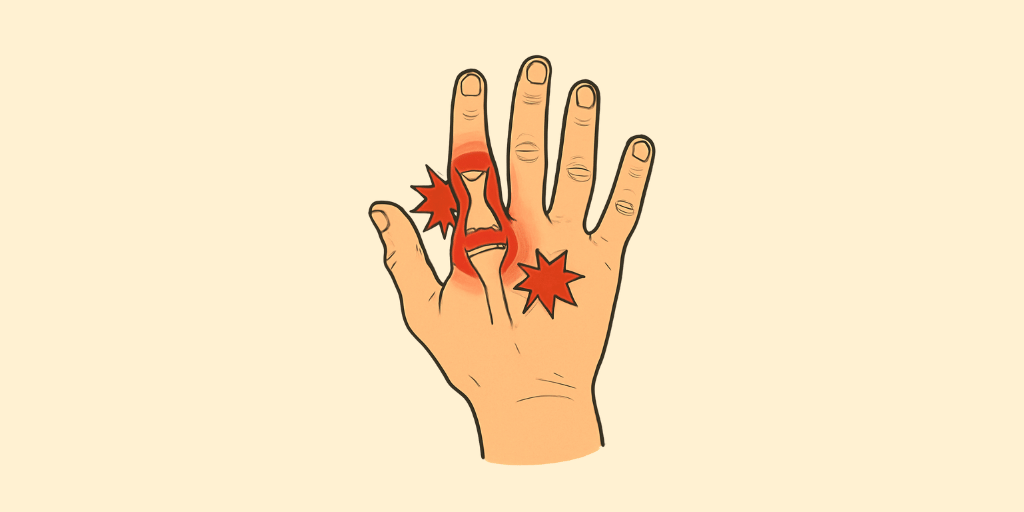
Rheumatoid Arthritis is a condition characterized by resulting from the accumulation of Ama (undigested toxins) due to weak digestion, which combines with Vata Dosha and settles in the joints, which leads to pain, stiffness, swelling, and restricted mobility. It is aggravated by an unhealthy diet, lack of exercise, excessive consumption of cold or heavy foods, and poor metabolism, resulting in morning stiffness, loss of appetite, indigestion, and fatigue. The obstructed Srotas (microchannels) contribute to inflammation and joint deformities.
Signs & Symptoms:
- Sandhishoola (Joint Pain): Deep, throbbing, and migratory pain, worsened in cold or damp conditions.
- Sandhishotha (Joint Swelling): Inflammatory swelling with tenderness, often appearing symmetrically in both hands or knees.
- Stambha (Stiffness): Prolonged morning stiffness lasting more than an hour, making movement difficult.
- Sparsha Asahyata (Tenderness to Touch): Extreme sensitivity in affected joints due to Ama accumulation.
- Jwara (Fever): Mild to moderate fever due to the autoimmune inflammatory response.
- Gaurava (Heaviness in the Body): Feeling of sluggishness due to toxin buildup in the system.
- Agnimandya (Digestive Impairment): Weak digestion, bloating, and irregular appetite due to metabolic dysfunction.
- Kshrama (Fatigue): Persistent tiredness even with minimal exertion.
Diagnosis:
Rheumatoid Factor (RF) and Anti-CCP Antibody test
Risk Factors:
- Dietary Factors
Excess consumption of processed and packaged foods High intake of dairy products, refined sugar, and gluten. Excessive consumption of sour, salty, and heavy foods that increase Ama (toxins). Low intake of anti-inflammatory foods such as turmeric, ginger, and leafy greens. Insufficient hydration leading to toxin accumulation - Lifestyle Factors
Sedentary lifestyle with little to no physical activity. Chronic stress, which exacerbates inflammation and autoimmune reactions. Smoking and alcohol consumption increasing oxidative stress. Poor sleep patterns, leading to increased inflammatory responses. Exposure to cold and damp environments, which aggravates Vata - Medical Conditions
Genetic predisposition (family history of autoimmune diseases). Hormonal imbalances (more common in women, particularly post-menopause). Pre-existing autoimmune disorders (such as lupus or Sjögren’s syndrome). Obesity, which puts additional strain on joints and increases inflammation. Chronic infections or gut imbalances affecting immune response
Complications:
- Joint Deformities (Sandhivakrata / Asthi Vikruti): Long-term inflammation can lead to permanent joint damage
- Osteoporosis (Asthi Kshaya): Increased bone fragility due to chronic inflammation and medication use
- Cardiovascular Issues (Hridaya Roga): Higher risk of heart disease due to persistent inflammation
- Lung Involvement (Shwasa Vikara): Inflammation can lead to interstitial lung disease
- Eye and Skin Problems (Netra Roga / Twak Vikara): Dry eyes, inflammation, and skin nodules
Epidemeology:
More common in women than men (3:1 ratio), generally have peak onset between ages 30-50, though it can occur at any age. It affects approximately 1% of the global population.
References:
- Madhavakara, Madhavanidana, Vimala Madhudhara Teeka by Tripathi Brahmanand, Chaukhambha Surabharati Prakashana, Varanasi, ed. 2010, poorvardha, adhyaya 25, page.571-577.
- Arnett FC, Edworthy SM, Bloch DA, McShane DJ, Fries JF, Cooper NS et al. The American Rheumatism Association 1987 revised criteria for the classification of rheumatoid arthritis. Arthritis & Rheumatism|Arthritis & Rheumatism-Arthritis Care & Research 1988;31(3):315-324.
- Sri Govindadas, Bhaishajya Ratnavali, Hindi commentary by Shri Ambikadatta Shastri, Chaukhambha Prakashana, Varanasi, Edition 2014, Amavatachikitsa, 29/1, page no.613.
- Chakrapanidatta, Chakradatta, Vaidyaprabha Hindi Commentory by Acharya Ramanath Dwivedi, Chaukhambha Publication, Varanasi, 2002, Niruhaadhikara 25/52-56, Page no.455.
- Vagbhata, Ashtanga Hridaya, Marathi Translation by Garde G. K., Anmol Prakashan, Pune, 2006, Nidanasthana 12/1, Page
- https://www.ayurvedjournal.com/JAHM_201512_02.pdf

