
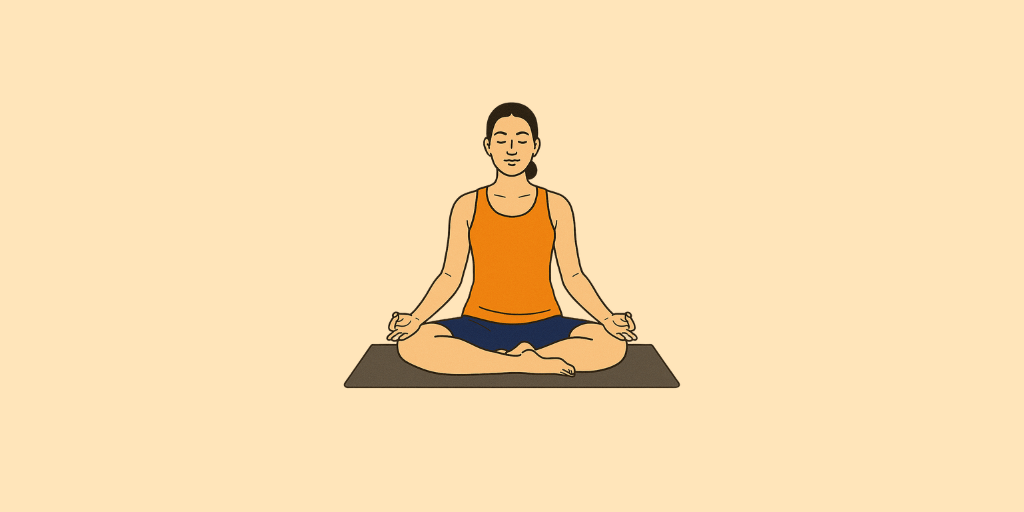
Sanskrit Name: सिद्धासन
English Name: Accomplished Pose
Description
Siddhasana, also known as the Accomplished Pose, serves as an ideal position for entering a state of deep focus. This seated posture is particularly beneficial for meditation and breathing exercises.
In Sanskrit, “Siddha” translates to accomplished or perfected, while “asana” means pose. Thus, Siddhasana symbolizes the “Accomplished Pose” or “Perfect Pose,” embodying the pursuit of balance and mastery in one’s practice—representing the perfect way to sit, remain present, calm, and centered.
With its strong roots in Hatha Yoga, Siddhasana is recognized as one of the essential poses for meditation. It is often referred to as the “perfect pose” for meditation due to its ability to foster both physical stillness and mental clarity, providing an optimal position to quiet the mind and eliminate distractions, ultimately creating a serene environment for introspection and connection with one’s thoughts.
How to Do
Here are the steps to do Siddhasana (Accomplished Pose).
- Sit on the Floor: Begin by sitting on the floor with your legs extended in front of you. Keep your spine straight, your shoulders relaxed, and your hands resting on your knees.
- Bend Your Left Leg: Bend your left knee and bring your left foot in towards your pelvis. Place the sole of your left foot against the inner thigh of your right leg, with your left heel touching the pubic bone.
- Bend Your Right Leg: Now, bend your right knee and bring the right foot up, placing the sole of your right foot on the inner side of your left thigh, with your heel touching the perineum (area between the anus and genitals). Your right knee should be pointing outward.
- Align the Feet: The soles of both feet should be facing upward, with your left foot pressing into your right thigh and your right foot pressing against the left thigh, creating a secure cross-legged position.
- Sit Upright: Sit up straight, keeping your back and neck aligned. Imagine a string pulling the top of your head towards the sky to lengthen your spine.
- Place Your Hands in Mudras: Rest your hands on your knees in a mudra of your choice (such as Gyan Mudra – the tip of the index finger and thumb gently touching). Keep your arms relaxed and elbows slightly bent.
- Focus on Your Breath: Close your eyes and focus on your breath. Begin practicing slow, deep breathing, inhaling through your nose and exhaling gently. Allow your breath to become calm and even.
- Engage Your Core and Relax Your Mind: Engage your core muscles slightly to maintain a stable and upright posture. With each breath, feel your body relax and your mind calm. Keep your attention on the breath and the sensations in your body.
- Hold the Pose: Hold Siddhasana for 5–15 minutes or longer if you are comfortable. Focus on maintaining a relaxed and steady breath.
- Release the Pose: To release, gently straighten your legs and rest for a moment in a comfortable seated position, such as Savasana or Easy Pose.
If you find it difficult to sit for extended periods, consider using a cushion under your hips for added support.
Benefits
- Siddhasana is ideal for meditation, helping to calm the mind and enhance focus.
- The alignment of the spine in Siddhasana helps improve overall posture and reduce back pain.
- Sitting in this position encourages better blood flow, particularly to the pelvic region.
- This asana helps balance the body’s energy channels (nadis), promoting overall vitality and well-being.
- The meditative aspect of Siddhasana aids in reducing stress and anxiety levels.
- Regular practice can strengthen pelvic muscles, which is beneficial for reproductive health.
- The seated position can aid in digestion and alleviate gastrointestinal issues.
Medical Conditions(Relief)
- Anxiety and Stress: Practicing Siddhasana promotes relaxation and helps alleviate symptoms of anxiety and stress by encouraging mindfulness and deep breathing.
- Digestive Issues: This asana aids in improving digestion and can alleviate problems like constipation by stimulating the abdominal organs.
- Sciatica: Siddhasana can help relieve sciatica pain by stretching the lower back and hips, promoting better alignment and reducing discomfort.
- Menstrual Disorders: It may assist in regulating menstrual cycles and reducing associated pain by improving blood circulation in the pelvic area.
- Respiratory Problems: The posture encourages deep breathing, which can enhance lung capacity and improve overall respiratory function.
- Joint Pain: Regular practice can improve flexibility in the hips and knees, which may help ease joint pain and stiffness.
- Insomnia: By calming the mind and body, Siddhasana can be effective in improving sleep quality and reducing insomnia symptoms.
- Mental Clarity: This pose enhances focus and concentration, making it beneficial for those experiencing mental fatigue or lack of clarity.
- Back Pain: Siddhasana helps strengthen the spine and improve posture, which can alleviate chronic back pain over time.
Medical Conditions(Avoid)
- Knee Injuries: Individuals with knee injuries or chronic knee pain may find this posture uncomfortable or exacerbating their condition.
- Hip Issues: Those with hip joint problems, such as arthritis or bursitis, should avoid Siddhasana as it requires significant hip flexibility.
- Back Pain: People suffering from severe or chronic back pain may struggle to maintain proper alignment and could worsen their discomfort.
- Pregnancy: Pregnant individuals should be cautious with this asana, especially in later trimesters, as it can put pressure on the abdomen.
- Recent Surgeries: Anyone who has undergone recent surgeries, particularly in the lower body, should avoid this pose until fully healed.
References
- Patanjali, Yoga Sutras of Patanjali, Commentary by Swami Sivananda. Divine Life Society, 1990; p. 58.
- Swatmarama, Hatha Yoga Pradipika, Edited by Swami Muktibodhananda. Bihar School of Yoga, 1998; p. 72.
- Sushruta, Sushruta Samhita, Commentary by Acharya Y.T. (5th ed.). Varanasi: Chaukambha Orientalia, 1992; p. 445.
- Krishnamacharya, Yoga Makaranda, Translated by A.G. Mohan. Krishnamacharya Yoga Mandiram, 2012; p. 103.
- Iyengar B.K.S., Light on Yoga. HarperCollins Publishers, 1966; p. 102.
- Desikachar T.K.V., The Heart of Yoga: Developing a Personal Practice. Inner Traditions, 1995; p. 88.
- Jois K. Pattabhi, Yoga Mala. The Yoga Institute, 2002; p. 120.
- Swami Vivekananda, Raja Yoga. Advaita Ashrama, 1993; p. 61.
- Swami Sivananda, The Science of Pranayama. Divine Life Society, 1951; p. 99.
- Sivananda Yoga Vedanta Centres, Yoga and Health. Sivananda Publications, 2005; p. 45.

