
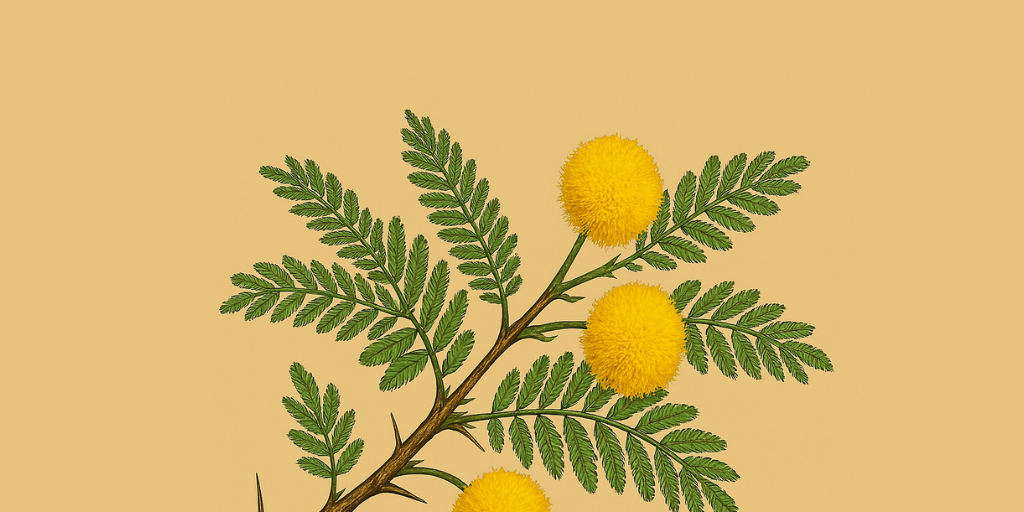
Sanskrit Name: Barbura
Devanagari Name: बबूल.
English Name: Gum Arabic Tree
Description:
Babool, often referred to as the Gum Arabic Tree, is a multifaceted plant renowned for its health and medicinal advantages. Indigenous to India and various tropical areas, this medium-sized, thorny tree features dark brown bark and fragrant yellow blossoms. In Ayurveda, Babool is esteemed for its wide range of therapeutic benefits. Its bark, gum, and leaves are utilized in the preparation of herbal treatments. The bark is abundant in tannins, rendering it a natural astringent. Babool is particularly famous for enhancing oral health — in rural regions, twigs are traditionally employed as toothbrushes due to their antibacterial qualities. In addition to dental benefits, Babool addresses various health issues. Its astringent nature aids in managing diarrhea, while its natural antiseptic properties make it effective for treating wounds and skin infections. It can also alleviate coughs and soothe throat irritation.
This herb is not only cherished for its healing capabilities but also plays a crucial role in preventing soil erosion. However, it is important to exercise caution when using Babool, as excessive intake may lead to constipation or discomfort. Knowing how to properly utilize Babool can help harness its potential for enhancing health and well-being.
Benefits:
Promotes oral health and combats bad breath
Supports digestion and relieves diarrhea
Aids in wound healing and skin care
Provides relief from sore throat and cough
Medical Conditions(Relief):
Oral infections and bleeding gums
Diarrhea and dysentery
Skin wounds and irritations
Medical Conditions(Avoid):
Avoid during pregnancy as it may induce contractions
Not suitable for individuals with chronic constipation
Not recommended for those allergic to Acacia-related plants

