
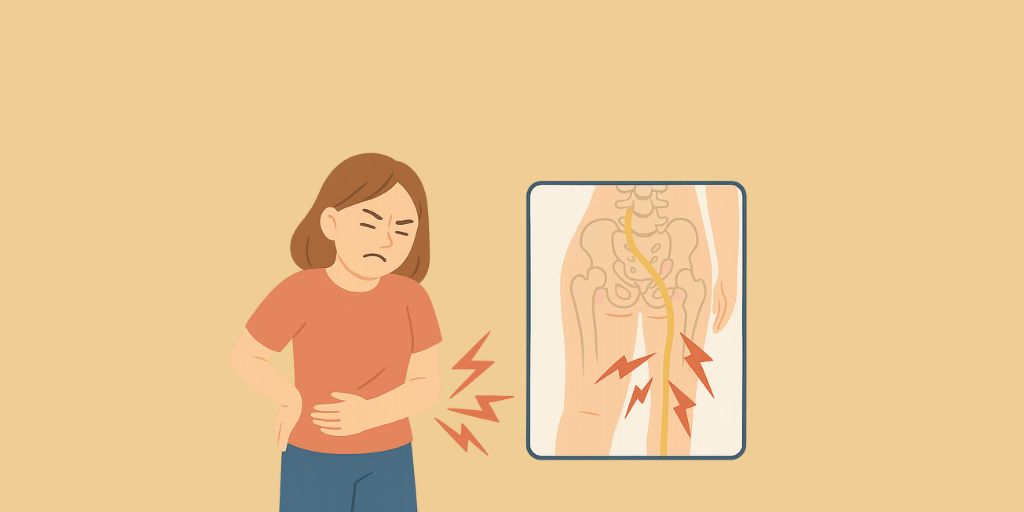
Ayurvedi name: Gridhrasi
Description:
Gridhrasi is the Ayurvedic term for sciatica, a disorder resulting from aggravated Vata affecting the sciatic nerve, which leads to radiating pain from the lower back to the legs. The pain is often sharp, shooting, or throbbing, accompanied by numbness, tingling, and difficulty in movement. Aggravating factors include excessive physical exertion, improper sitting postures, exposure to cold, and chronic constipation.
Treatment includes Panchakarma therapies like Kati Basti (oil retention on the lower back), Abhyanga, herbal formulations such as Yogaraja Guggulu, Dashmoola, and lifestyle modifications to pacify Vata and relieve nerve compression. And exercises for Sciatica pain.
Signs & Symptoms:
- Prishtava Vata (Sciatica): Radiating pain along the sciatic nerve, often extending from the lower back to the legs.
- Vishama Agni (Irregular Digestion): Digestive disturbances may arise due to nerve compression affecting abdominal organs.
- Shwasa (Breathlessness): Difficulty in breathing or taking deep breaths, particularly when the pain is intense.
- Stambha (Stiffness): Stiffness and reduced mobility in the lower back and legs.
- Rukshata (Dryness): Tight or dry muscles in the affected region, contributing to discomfort.
- Gaurava (Heaviness in the Body): A sensation of heaviness in the affected leg or lower back.
Diagnosis:
Straight Leg Raise (SLR) test and MRI lumbar spine
Risk Factors:
- Dietary Factors
High-inflammatory Foods: Diets rich in processed foods, sugar, and trans fats can promote inflammation and worsen sciatica symptoms.
Excessive Caffeine Intake: High caffeine intake may contribute to dehydration and muscle spasms, which can aggravate sciatica. - Lifestyle Factors
Sedentary Lifestyle: Sitting for long periods, poor posture, and lack of physical activity can lead to pressure on the sciatic nerve, causing pain.
Overexertion or Lifting Incorrectly: Sudden, heavy lifting or improper posture while lifting can lead to nerve compression and sciatica. - Medical Conditions
Herniated Discs or Spinal Stenosis: Conditions like disc herniation, degenerative disc disease, or spinal stenosis can compress the sciatic nerve, causing sciatica.
Obesity: Excess body weight can increase pressure on the spine and the sciatic nerve, increasing the risk of sciatica.
Complications:
- Chronic Leg Pain (Pada Shoola) – Sciatica leads to sharp, radiating pain down the leg, which can persist for extended periods.
- Nerve Damage (Nadi Kshaya) – Prolonged compression of the sciatic nerve can lead to permanent nerve damage, causing weakness and numbness.
- Loss of Mobility (Chalana Avikriti) – Reduced movement and muscle weakness in the affected leg can lead to difficulty walking or standing.
- Muscle Atrophy (Vishalyaka) – Continued immobility or poor nerve function can lead to muscle wasting in the legs.
- Chronic Disability (Aparipurnata) – Untreated sciatica may result in long-term disability, requiring assistive devices like crutches or a walker.
Epidemeology:
More common in individuals aged 30-50, with higher prevalence in men. Affects approximately 10-40% of people at some point in their lives.
Peak incidence is in individuals with a history of herniated discs, degenerative spinal conditions, or those who lead sedentary lifestyles. Higher rates in people with occupations that require heavy lifting or prolonged sitting, such as office workers or laborers.
References:
- Yadavaji Trikamji, Editor, Charaka Samhita of Agnivesha, Chikitsa sthana, chapter 28 verse no. 56 ed 5 Varanasi: Chaukhamba Surbharati Prakashan, 2008; 651.2.Vagbhata.
- Ashtanga Hridaya (Commentaries of Ayurveda Rasayana by Hemadri and Sarvanga Sundari by Arunadatta, Haridasasiva Paradakara).1sted.Varanasi:Chaukamba Publications; 2010.Nidana Sthanam, 15 verse no.54.
- Yadavaji Trikamji, Editor, Charaka Samhita of Agnivesha, chikitsa sthana, chapter 28 verse no. 101 ed 5 Varanasi: Chaukhamba Surbharati Prakashan, 2008; 651
- Kaviraja Ambikadatta Shastri, Sushrutasamhita, sharirasthana, 8thchapter, shloka no.23, Varanasi; Chaukambha Sanskrit sansthana, edition-2014 Pg no.915.
- YadavajiTrikamji,SushrutaSamhitawith NibandhasagrahacommentaryofDalhanAcharya.Chap.12 Reprint Edition.Choukhamba Surbharati prakashana. Varanasi,2008pp 51
- https://ayushdhara.in/index.php/ayushdhara/article/view/1121/893

