
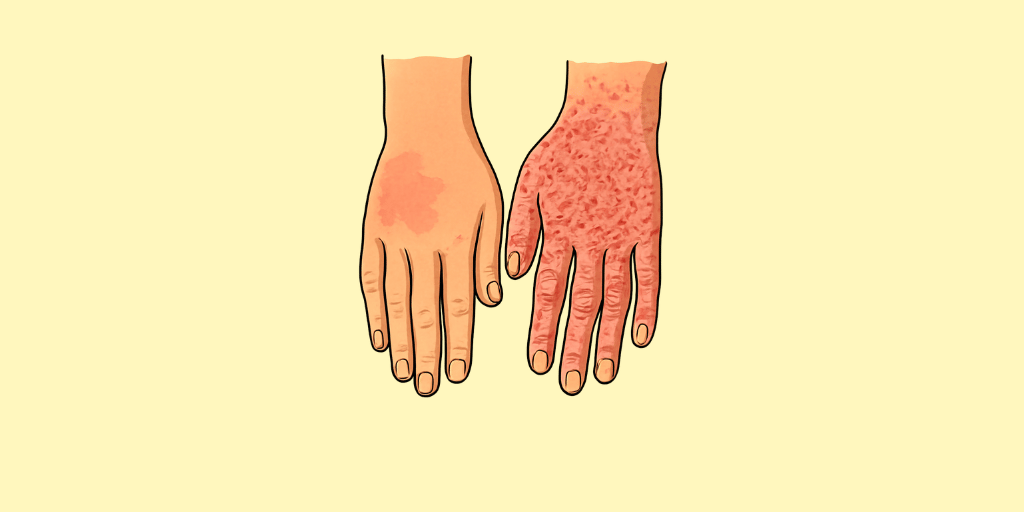
Ayurvedic Name: Vicharchika
Description:
Eczema (Vicharchika) or Dermatitis is a pattern of inflammatory response of the skin which is resultant of delayed type hypersensitivity mediated by memory T lymphocytes in the skin. This is highly itchy, inflamed, and oozing lesions commonly seen on the hands, feet, and folds of the body. It is resulting from Tridosha imbalance, majorly from Kapha-Pitta imbalance, which leads to thickened, cracked, and hyperpigmented skin with intense itching and discharge.
Modern correlation: Eczema or Atopic Dermatitis.
Signs & Symptoms:
Vicharchika involves Kushta (Skin Lesions), Kandu (Itching), Rukshata (Dryness), Pidika (Inflammed bumps), Strava (Profuse discharge), Ruja (Pain), Raji (Linings), Shyava (Blackish lesions) and Agnimandya (Poor Digestion).
Diagnosis:
Blood Smear for Spirochetes or PCR Testing
Risk Factors:
- Dietary Factors: Consuming foods that disrupt digestion or trigger inflammation, like greasy and spicy foods, meat of country side animals, citrus food, excessive milk and curd intake, sugarcane, wine, ghee, sesame can contribute to Vicharchika (digestive disorders). A diet low in fiber and high in processed foods can worsen symptoms.
- Lifestyle Factors: Sleeping in day time, stress, lack of physical activity, and poor sleep and suppressing natural urges can affect digestion and contribute to Vicharchika. Sedentary habits and irregular meal times can also worsen the condition.
Complications:
- Skin Inflammation (Vicharchika): Redness, swelling, and irritation on the skin caused by allergies or internal imbalances.
- Pain (Ruja): Painful skin lesions that may form scabs.
- Fever (Jwara): A rise in body temperature due to infection or inflammation.
Epidemeology:
Vicharchika is commonly linked to poor eating habits, stress, or chronic conditions like IBS. More prevalent in males than females. Also this condition is more prevalent in individuals with sedentary lifestyles or those with imbalanced diets.
References:
- Siddhanand Mishra, Bhaishajya Ratnavali of Kaviraj Govind Das Sen. Kushtadhikara: Chapter 54/222. Varanasi, India: Chaukhambha Prakashan; 2016. Pp. 891.
- Ganguly S, Prasad A. Role of plant extracts and cow urine distillate as, immunomodulator in comparison to levamisole- A review. Journal of Immunology and Immunopathology. 2010;12(2):91-94.
- Bhavamishra. Bhavprakash, including Bhavprakash Nighantu portion. In: Vidyotini, editor. Hindi commentary by Sri Brahmashankara Mishra and S. Rupalaji Vaishya. 9th ed. Vol. 1. Varanasi, India: Chaukhambha Sanskrit Sansthana; 1999. Pp. 7. Haritakyadi varga, 30.
- Shastri R, editor. Commentary vidyotini of Ambikadatta Shastri on Bhaishajya Ratnavali of Shri Govindadas; Kushtharoga Chikitsa: Chapter no. 54. Verse 256-260. 14th ed. Varanasi: Chowkhambha Sanskrit Sansthan Publisher 2001, Pp. 633-34.
- Das SG, Ratnavali B, Ayurvedacharya SKAS. Varanasi: Chaukhambha Prakashan. Kushtha Chikitsa Prakaranam; 2014;54/1285:890.
- Paradakar Hari SS. Sutrasthana AH 15/15. Chaukhambha Surbharati Prakashan; 2002. Pp. 235
- https://journals.lww.com/kleu/fulltext/2018/11010/ayurvedic_management_of_vicharchika_with_special.18.aspx#:~:text=Vicharchika%20is%20often%20correlated%20to,is%20Shodhana%20and%20shaman%20oushadhis.

