
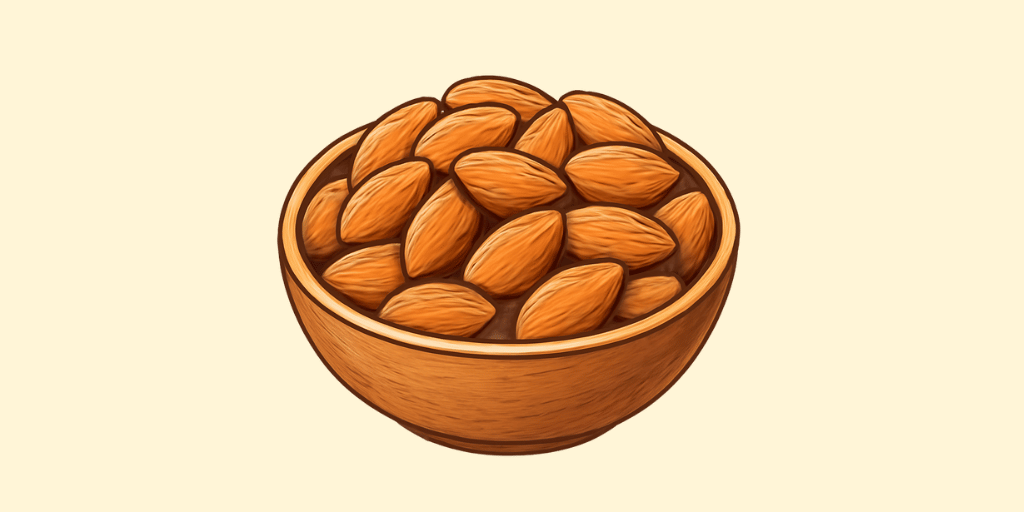
Sanskrit Name: Vatada
Devanagari Name: बदाम
Botanical Name: Prunus dulcis
English Name: Almond
Description
Almonds, or Vatada in Sanskrit, are nutrient-rich seeds obtained from the almond tree (Prunus dulcis). While not native to India, almonds have found a significant place in modern Ayurvedic-inspired nutrition. Traditionally referred to as the “King of Nuts,” almonds are classified into two main types: sweet and bitter. Sweet almonds are commonly consumed, while bitter almonds contain amygdalin, which can release cyanide and is therefore used with caution, mostly in external or industrial applications like essential oils and cosmetics.
Almonds are a powerhouse of nutrients, including vitamin E, magnesium, protein, and healthy fats. They are widely recommended for boosting brain functions, supporting heart health, aiding in digestion, and improving skin and hair quality. Soaking almonds overnight and consuming them peeled in the morning is a common wellness practice.
Almond oil, extracted from sweet almonds, is also popular in skincare and haircare. When applied to the skin, it helps in reducing dryness, dark circles, and pigmentation. For hair, almond oil nourishes the scalp and strengthens hair roots, promoting shine and reducing hair fall.
Although almonds are widely used in health and beauty routines, they are not mentioned in classical Ayurvedic texts like Charaka Samhita or Sushruta Samhita, as the tree is not native to India. However, their benefits align with Ayurvedic principles of nourishing Ojas (vitality), balancing Vata, and rejuvenating tissues.
Benefits – through the lens of Ayurveda
- Medhya (supports cognitive function)
- Balya (strength promoting)
- Rasayana (rejuvenative)
- Vatahara (helps pacify Vata)
Main Chemical Constituents
- Alpha-tocopherol (Vitamin E)
- Oleic acid
- Linoleic acid
- Magnesium
- Riboflavin (Vitamin B2)
Nutritional Components
- Protein
- Healthy fats (monounsaturated)
- Fiber
- Magnesium
- Calcium
- Vitamin E
Medical Conditions(Relief)
- Almond provides relief for conditions such as high cholesterol, heart disease, and cognitive decline.
- It is known for its rich content of healthy fats, fiber, and antioxidants, which support cardiovascular health and improve brain function.
- Almonds also help in managing blood sugar levels, promoting skin health, and reducing inflammation.
- They are beneficial for boosting immunity and providing energy.
Medical Conditions(Avoid)
- Almonds should be avoided by individuals with nut allergies, as they can trigger severe allergic reactions.
- People with kidney disorders or issues related to high oxalate levels should limit almond intake, as they may contribute to kidney stone formation.
- In rare cases, excessive consumption of almonds may cause digestive discomfort or bloating.
References
- Charak Samhita of Agnivesha, Charak, Dridhabala edited with ‘Vidyamanorama’ hindi commentary by Acharya Vidyadhar Shukla and prof. Ravi Dutt Tripathi, Chaukhamba Sanskrit Pratishthan, Delhi, edition, 2006; 1
- Kaiyadeva Nighantuh Prof. Priyavrata Sharma and Dr. guru Prasada Sharma Chaukhambha Orientalia Varanasi Reprint, 2013.
- Nighantu aadarsa vol-2 by Bapalala. G. Vaidya Chaukhambha Bharati Academy reprint, 2009.
- Haritakyadi Nighantu, edited by Khemraj Shrikrishnadas, Mumbai, 2000.
- Bhavaprakasa Nighantu of Sri Bhavamisra, commentary by Padmshri prof. K. C. Chunekar edited by Dr. G. S. Pandey. Chaukhambha Bharati Academy Varanasi. Reprint,
- Susruta Samhita of Maharsi-Susruta edited with Ayurveda-Tattva-Sandipika by Kaviraj Ambikadutta Shastri Part-1 Chaukhambha Sanskrit sansthan Varanasi. Reprint, 2017.
- Singh D, Gohil KJ, Rajput RT, Sharma V. Almond (Prunus amygdalus Batsch.): a latest review on pharmacology and medicinal uses. Research Journal of Pharmacy and Technology. 2022 Jul 1;15(7):3301-8.
- Tripathi J, Bhola S, Vashishth R. A review on the therapeutic role of Vadam Taila through Nasya (Prunus amygdalus Batsch) in Avabahuka as a single drug. World J Pharm Res. 2018 Sep 28;7(19):382-95.

