
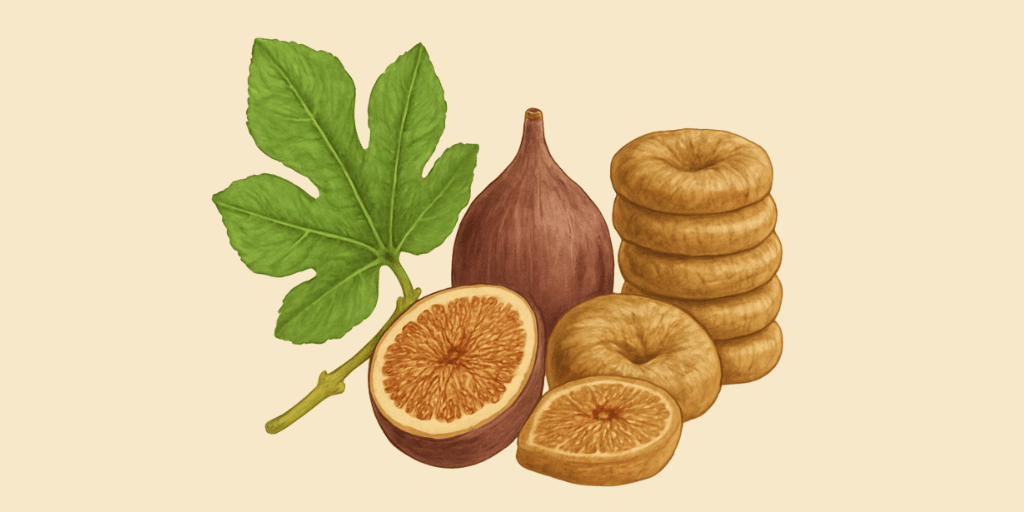
Sanskrit Name: Phalgu
Devanagari Name: अंजीर
Botanical Name: Ficus carica
English Name: Fig
Description
Anjeer, or fig, is a nutrient-dense fruit obtained from the deciduous Ficus carica tree, commonly known as the Anjeer tree (Anjeer ka ped). This tree typically grows 7–10 meters tall and bears pear-shaped fruits that are sweet, soft, and chewy when ripe. The fruit is widely recognized for its high fiber content, essential minerals, and antioxidant properties, making it a valued addition to daily diets and wellness routines.
Available both fresh and dried (dry Anjeer), the fruit supports digestive health and regular bowel movements due to its natural laxative effect. Soaked Anjeer is commonly consumed on an empty stomach to enhance absorption and effectiveness. Rich in calcium, iron, potassium, and natural sugars, Anjeer contributes to improved stamina, hormonal balance, and satiety.
Anjeer is often highlighted for its benefits in pregnancy, as it helps manage constipation and provides iron and folate. It also supports skin health and healthy aging through its antioxidant activity. In home care, fig paste is sometimes combined with honey or milk for topical use to improve skin glow and reduce pigmentation. Additionally, Anjeer leaves are being studied for their role in regulating blood sugar and improving insulin sensitivity.
Widely cultivated in tropical and subtropical regions, Anjeer plants are grown both in home gardens and commercially for their high nutritional and economic value. The fruit is also featured in various culinary forms such as Anjeer milkshake, Anjeer barfi, and health snacks, and is available in forms like Afghani Anjeer and Turkish Anjeer in Indian markets.
Whether referred to as Anjeer fruit, Anjeer dry fruit, or Anjeer ka fal, this fruit continues to attract attention for its broad health benefits and cultural relevance.
Benefits – through the lens of Ayurveda
- Mriduvirechana (mild natural laxative)
- Balya (strengthening)
- Rakta-pachana (blood purifying)
- Tridosha balancing when consumed moderately
Main Chemical Constituents
- Polyphenols
- Flavonoids
- Tannins
- Anthocyanins
- Organic acids
Nutritional Components
- Dietary fiber
- Potassium
- Calcium
- Magnesium
- Natural sugars
- Antioxidants (especially in dried figs)
Medical Conditions(Relief)
- Anjeer (Fig) provides relief for digestive issues such as constipation, bloating, and indigestion, as it is rich in fiber and has mild laxative properties.
- It is also helpful in managing conditions like high blood pressure and cholesterol due to its potassium and fiber content.
- Anjeer is beneficial for improving bone health, boosting immunity, and promoting skin health.
- It also supports the management of respiratory issues such as cough and asthma.
- Additionally, anjeer is known for its antioxidant properties, which help fight oxidative stress, and its anti-inflammatory effects, which may reduce joint pain and inflammation.
- Furthermore, it is excellent for skin health, promoting a healthy glow and preventing premature aging.
Medical Conditions(Avoid)
- Anjeer should be avoided in individuals with diabetes unless used with caution, as it can influence blood sugar levels.
- People with allergies to figs should avoid consuming them.
- Pregnant and breastfeeding women should consult a healthcare provider before using Anjeer, as its safety in these groups has not been well-studied.
References
- Charak Samhita of Agnivesha, Charak, Dridhabala edited with ‘Vidyamanorama’ hindi commentary by Acharya Vidyadhar Shukla and prof. Ravi Dutt Tripathi, Chaukhamba Sanskrit Pratishthan, Delhi, edition, 2006; 1
- Kaiyadeva Nighantuh Prof. Priyavrata Sharma and Dr. guru Prasada Sharma Chaukhambha Orientalia Varanasi Reprint, 2013.
- Nighantu aadarsa vol-2 by Bapalala. G. Vaidya Chaukhambha Bharati Academy reprint, 2009.
- Haritakyadi Nighantu, edited by Khemraj Shrikrishnadas, Mumbai, 2000.
- Bhavaprakasa Nighantu of Sri Bhavamisra, commentary by Padmshri prof. K. C. Chunekar edited by Dr. G. S. Pandey. Chaukhambha Bharati Academy Varanasi. Reprint,
- Susruta Samhita of Maharsi-Susruta edited with Ayurveda-Tattva-Sandipika by Kaviraj Ambikadutta Shastri Part-1 Chaukhambha Sanskrit sansthan Varanasi. Reprint, 2017.
- Sandhu AK, Islam M, Edirisinghe I, Burton-Freeman B. Phytochemical composition and health benefits of figs (fresh and dried): a review of literature from 2000 to 2022. Nutrients. 2023 Jun 3;15(11):2623.
- Hussain SZ, Naseer B, Qadri T, Fatima T, Bhat TA. Fig (Ficus Carica)—Morphology, taxonomy, composition and health benefits. InFruits grown in highland regions of the himalayas: Nutritional and health benefits 2021 Jun 16 (pp. 77-90). Cham: Springer International Publishing.
- Singh JP, Singh B, Kaur A. Polyphenols in fig: a review on their characterisation, biochemistry during ripening, antioxidant activity and health benefits. International Journal of Food Science and Technology. 2022 Jun;57(6):3333-42.

