
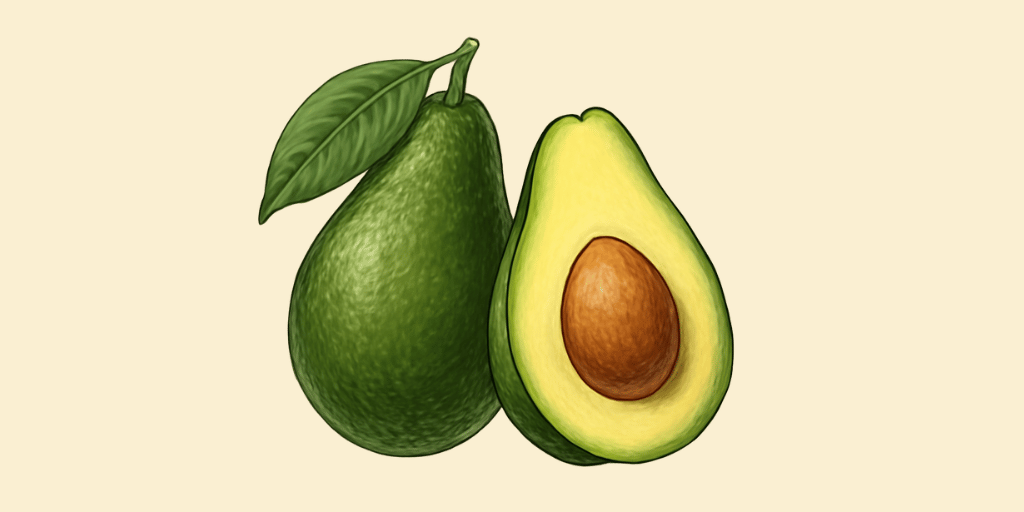
Sanskrit Name: Not listed in Classical Texts
Devanagari Name: ऐवोकाडो
Botanical Name: Persea americana
English Name: Avocado
Description
Avocado is a green, pear-shaped fruit known for its high nutritional content. It is an excellent source of protein as well as vitamins A, B, D, and E.
With its creamy texture and subtle flavor, avocado can enhance various dishes or be enjoyed in salads. Consuming avocados daily may support weight loss due to its high fiber content, which promotes a feeling of fullness.
Additionally, avocado serves as a natural moisturizer, benefiting the skin by boosting collagen production and minimizing wrinkles thanks to its antioxidant properties.
The pulp can be applied to the skin to alleviate issues like sunburn, eczema, dryness, and psoriasis.
Avocado oil is readily absorbed by the hair and scalp, enhancing hair quality, stimulating growth, and preventing damage. For smoother and shinier hair, avocado oil can be combined with olive oil.
Individuals with latex allergies should refrain from consuming avocado, as it may trigger allergic reactions.
Benefits – through the lens of Ayurveda
Avocado (Persea americana) is not mentioned in classical Ayurvedic texts such as the Charaka Samhita, Sushruta Samhita, or Bhavaprakasha Nighantu, because it is native to Central America and was introduced to India only in recent centuries.
Main Chemical Components
- Oleic acid
- Beta-sitosterol
- Lutein
Nutritional Components
- Healthy fats
- Fiber
- Potassium
- Vitamins A, B, D, E & C
Medical Conditions(Relief)
- It provides relief for conditions such as high cholesterol, heart disease, and high blood pressure due to its healthy fat content.
- It supports skin health by reducing inflammation and promoting hydration.
- It is rich in fiber, aiding in digestion and helping to prevent constipation.
- The antioxidants in avocados help combat oxidative stress, promoting healthy skin and reducing the signs of aging.
- It is also beneficial for weight management, digestion, and promoting healthy vision.
- Their high fiber content aids in digestion and regulating blood sugar levels.
Medical Conditions(Avoid)
- Avocados should be avoided by individuals with latex allergies, as they may experience cross-reactions.
- People with digestive issues like IBS or those prone to bloating may experience discomfort if they consume avocados in large amounts.
- Pregnant women can consume avocados, but it should be in moderation.
References
- Duarte PF, Chaves MA, Borges CD, Mendonça CR. Avocado: characteristics, health benefits and uses. Ciência rural. 2016 Apr;46(4):747-54.
- CHAVES, M.A. et al. Preparation of whole cookie using avocado pulp flour and oil. Boletim do Centro de Pesquisa e Processamento de Alimentos, v.31, p.215-226, 2013.
- DAIUTO, E.R. et al. Sensory analysis of cold-stored guacamole added with α-tocopherol and ascorbic acid. Revista Ceres, v.58, n.2, p.140-148, 2011.
- DARVAS, J.M. et al. Effect of treatment after picking on the incidence of post-harvest fruit diseases of avocado. Phytophylactica, v.22, n.1, p.93-96, 1990.
- DEMBITSKY, V.M. et al. The multiple nutrition properties of some exotic fruits: Biological activity and active metabolites. Food Research International, v.44, p.1671-1701, 2011.
- ELEZ-MARTINEZ, P. et al. Natural antioxidants preserve the lipid oxidative stability of minimally processed avocado pure. Journal of Food Science, n.70, p.325-329, 2005.
- FAO (ORGANIZAÇÃO DAS UNIDAS PARA ALIMENTAÇÃO E AGRICULTURA).
- FRANCISCO, V.L.F.S.; BAPTISTELLA, C.S.L. Avocado cultivation in the state of São Paulo, Brazil. Revista Informações Econômicas, v.35, n.5, p.27-41, 2005.
- GUZMÁN, G.R. et al. Effect of zinc and copper chloride on the color of avocado puree heated with microwaves. Innovative Food Science and Emerging Technologies, v.3, n.1, p.47-53, 2002.

