
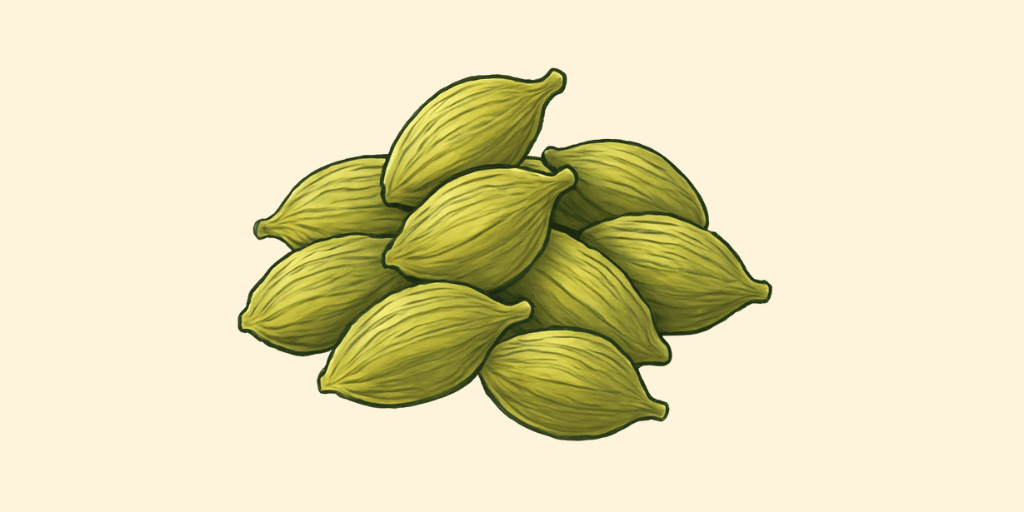
Sanskrit Name: Ela
Devanagari Name: इलायची
Botanical Name: Elettaria cardamomum
English Name: Cardamom
Description
Cardamom, known as इलायची (Elaichi) in Hindi, is widely celebrated for its intense aroma and complex flavor. Popularly referred to as the “Queen of Spices,” cardamom is a staple in Indian kitchens and is used extensively in desserts, teas, curries, and spice blends like garam masala. Cardamom powder is valued for enhancing taste and freshness in food, while cardamom seeds are often chewed to reduce bad breath and aid digestion.
There are two main types of cardamom: green cardamom (small cardamom or chhoti elaichi) and black cardamom (large cardamom or badi elaichi). Green cardamom is sweet and aromatic, commonly used in sweets and tea, while black cardamom has a smoky flavor and is often added to savory dishes. Cardamom tea is particularly popular for its soothing properties and digestive support. Cardamom is also used in wellness products such as cardamom essential oil and cardamom-infused beverages.
Beyond its culinary importance, cardamom benefits include supporting digestion, freshening breath, improving oral hygiene, easing respiratory discomfort, and offering antioxidant support. From traditional home remedies to modern health products, cardamom continues to be a valuable spice in daily life.
Benefits – through the lens of Ayurveda
- Deepana (enhances digestive fire)
- Hridya (strengthens heart and improves circulation)
- Shwasahara (relieves cough, asthma, congestion)
- Varnya (improves skin clarity)
- Rochana (stimulates appetite)
Main Chemical Constituents
- Cineole (Eucalyptol)
- Terpinene
- Linalool
- Myrcene
- Flavonoids
- Volatile oils (essential oils)
Nutritional Components
- Manganese
- Potassium
- Calcium
- Magnesium
- Vitamin C
- Dietary fiber
Medical Conditions(Relief)
- Cardamom provides relief for digestive issues such as indigestion, bloating, and acid reflux.
- It helps in improving appetite, reducing nausea, and promoting overall digestive health.
- It is also known for its antimicrobial and anti-inflammatory properties, promoting oral health, reducing bad breath, and supporting respiratory health.
- It supports heart health by improving blood circulation and lowering blood pressure.
- It is also used to manage respiratory issues such as cough, asthma, and bronchitis.
- Additionally, cardamom has a soothing effect on the mind, helping to reduce stress and promote mental clarity.
Medical Conditions(Avoid)
- Cardamom should be avoided by individuals with allergies to spices or members of the ginger family.
- People with gallstones or digestive issues should consult a healthcare provider before using cardamom, as it may aggravate these conditions.
- Pregnant women should consume cardamom in moderation and consult their healthcare provider.
References
- Charak Samhita of Agnivesha, Charak, Dridhabala edited with ‘Vidyamanorama’ hindi commentary by Acharya Vidyadhar Shukla and prof. Ravi Dutt Tripathi, Chaukhamba Sanskrit Pratishthan, Delhi, edition, 2006; 1
- Kaiyadeva Nighantuh Prof. Priyavrata Sharma and Dr. guru Prasada Sharma Chaukhambha Orientalia Varanasi Reprint, 2013.
- Nighantu aadarsa vol-2 by Bapalala. G. Vaidya Chaukhambha Bharati Academy reprint, 2009.
- Haritakyadi Nighantu, edited by Khemraj Shrikrishnadas, Mumbai, 2000.
- Bhavaprakasa Nighantu of Sri Bhavamisra, commentary by Padmshri prof. K. C. Chunekar edited by Dr. G. S. Pandey. Chaukhambha Bharati Academy Varanasi. Reprint,
- Susruta Samhita of Maharsi-Susruta edited with Ayurveda-Tattva-Sandipika by Kaviraj Ambikadutta Shastri Part-1 Chaukhambha Sanskrit sansthan Varanasi. Reprint, 2017.
- Ashokkumar K, Murugan M, Dhanya MK, Warkentin TD. Botany, traditional uses, phytochemistry and biological activities of cardamom [Elettaria cardamomum (L.) Maton]–A critical review. Journal of ethnopharmacology. 2020 Jan 10;246:112244.
- Abdullah, Ahmad N, Tian W, Zengliu S, Zou Y, Farooq S, Huang Q, Xiao J. Recent advances in the extraction, chemical composition, therapeutic potential, and delivery of cardamom phytochemicals. Frontiers in Nutrition. 2022 Sep 30;9:1024820.
- Singletary K. Cardamom: Potential health benefits. Nutrition Today. 2022 Jan 1;57(1):38-49.

