
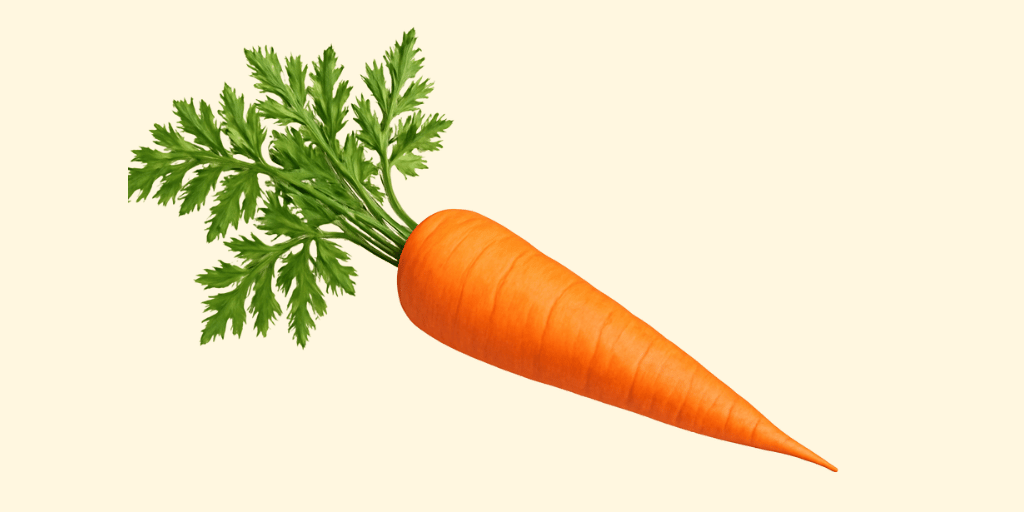
Sanskrit Name: Gajar
Devanagari Name: गाजर
Botanical Name: Daucus carota
English Name: Carrot
Description
Carrot is a crunchy, sweet root vegetable widely cultivated and consumed across the world. Commonly orange in color, other types include black carrot, red carrot, white carrot, and purple carrot. It is used in raw salads, cooked dishes, carrot juice, and desserts like carrot halwa. Carrot is also found in various processed forms such as carrot powder, carrot seed oil, and pickled carrots.
Known for its high beta-carotene content, carrot is a rich source of antioxidants, fiber, and essential vitamins like Vitamin A and C. It promotes good eyesight, supports skin and heart health, and aids in digestion. Carrots also have a low glycemic index, making them suitable for diabetes-friendly diets.
Benefits – through the lens of Ayurveda
- Deepana (enhances digestive fire)
- Sangrahi (absorbs excess moisture, helps in bowel regulation)
- Laghu (light to digest)
Main Chemical Constituents
- Beta-carotene
- Lutein
- Alpha-carotene
- Ascorbic acid (Vitamin C)
- Polyacetylenes
- Anthocyanins (in purple/black carrot)
- Pectin
Nutritional Components
- Dietary fiber
- Vitamin A (from beta-carotene)
- Vitamin K1
- Vitamin C
- Potassium
- Manganese
- Antioxidants
Medical Conditions(Relief)
- Carrots are rich in beta-carotene, which is converted into Vitamin A and supports eye health, improving vision and preventing age-related eye problems.
- Carrot provides relief for conditions such as constipation, digestive disorders, and poor vision due to its high fiber and beta-carotene content.
- It supports heart health by reducing cholesterol levels and improving circulation.
- They are also beneficial for skin health, improving immunity, and promoting detoxification.
- They are rich in antioxidants that protect the body from oxidative stress.
Medical Conditions(Avoid)
- Carrots should be avoided by individuals with allergies to members of the Apiaceae family, such as celery or parsley.
- People with kidney problems or prone to kidney stones should consume carrots in moderation due to their oxalate content.
- Pregnant women can consume carrots but should maintain a balanced diet.
References
- Charak Samhita of Agnivesha, Charak, Dridhabala edited with ‘Vidyamanorama’ hindi commentary by Acharya Vidyadhar Shukla and prof. Ravi Dutt Tripathi, Chaukhamba Sanskrit Pratishthan, Delhi, edition, 2006; 1
- Kaiyadeva Nighantuh Prof. Priyavrata Sharma and Dr. guru Prasada Sharma Chaukhambha Orientalia Varanasi Reprint, 2013.
- Nighantu aadarsa vol-2 by Bapalala. G. Vaidya Chaukhambha Bharati Academy reprint, 2009.
- Haritakyadi Nighantu, edited by Khemraj Shrikrishnadas, Mumbai, 2000.
- Bhavaprakasa Nighantu of Sri Bhavamisra, commentary by Padmshri prof. K. C. Chunekar edited by Dr. G. S. Pandey. Chaukhambha Bharati Academy Varanasi. Reprint,
- Susruta Samhita of Maharsi-Susruta edited with Ayurveda-Tattva-Sandipika by Kaviraj Ambikadutta Shastri Part-1 Chaukhambha Sanskrit sansthan Varanasi. Reprint, 2017
- da Silva Dias JC. Nutritional and health benefits of carrots and their seed extracts. Food and Nutrition Sciences. 2014 Dec 1;5(22):2147.
- Varshney K, Mishra K. An analysis of health benefits of carrot. International Journal of Innovative Research in Engineering & Management. 2022 Feb;9(1):211-4.
- Sharma KD, Karki S, Thakur NS, Attri S. Chemical composition, functional properties and processing of carrot—a review. Journal of food science and technology. 2012 Feb;49(1):22-32.

