Sanskrit Name: Tvak
Devanagari Name:दालचीनी
Botanical Name: Cinnamomum verum
English Name: Cinnamon
Description
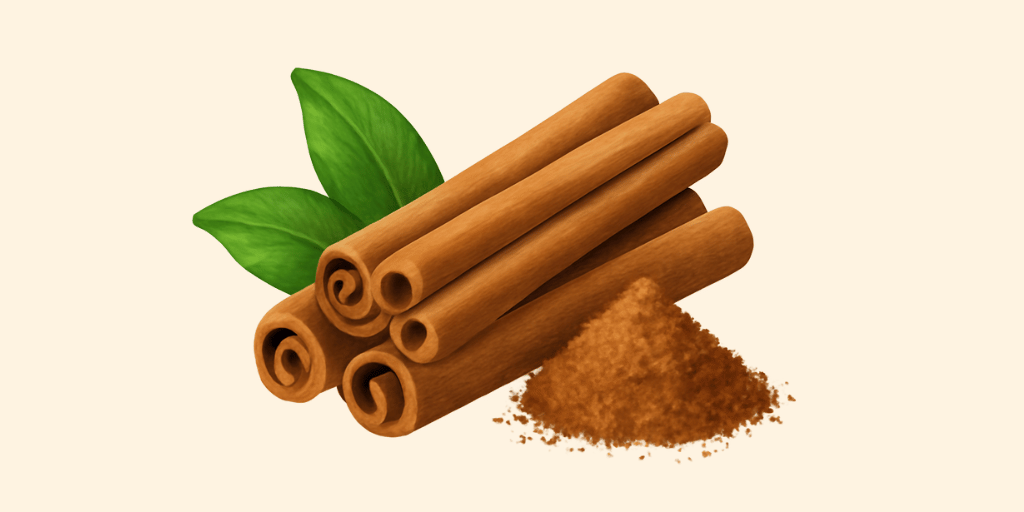
Cinnamon, commonly referred to as Dalchini, is a spice that is a staple in many kitchens.
It serves as a beneficial treatment for diabetes by enhancing the body’s ability to absorb glucose. Additionally, it helps lower elevated cholesterol levels and diminishes the likelihood of heart disease thanks to its antioxidant characteristics. Furthermore, its anti-spasmodic properties make it useful for alleviating menstrual discomfort.
You can incorporate it into your daily routine by infusing some Cinnamon bark in your tea or sprinkling a bit of Cinnamon powder into lemon water, which aids in digestion and weight management. Cinnamon is also effective in combating acne due to its antibacterial qualities. For acne treatment, you can combine Cinnamon powder with honey to create a face mask.
Benefits – through the lens of Ayurveda
- Deepana (Enhances appetite)
- Pachana (Promotes digestion)
- Krimighna (Antiparasitic)
- Kaphahara (Reduces Kapha)
- Vatanulomana (Regulates Vata movement)
- Shothahara (Anti-inflammatory)
- Vedanasthapana (Pain-relieving)
- Medohara (Reduces excess fat)
- Pramehaghna (Useful in urinary disorders and diabetes)
Main chemical components
- Cinnamaldehyde
- Eugenol
- Linalool
Nutritional components
- Manganese
- Calcium
- Fiber
- Small amounts of Iron
- Vitamin K
Medical Conditions(Relief)
- Cinnamon provides relief for digestive issues such as indigestion, bloating, and gas.
- It is also known to support blood sugar regulation, lower cholesterol, and promote heart health.
- It has antimicrobial properties, making it beneficial for treating infections.
- It also supports brain health and improves cognitive function.
- Cinnamon is widely known for its antioxidant and anti-inflammatory properties.
Medical Conditions(Avoid)
- Cinnamon should be avoided by individuals with liver disorders, as it contains compounds that may be harmful to the liver when consumed in large amounts.
- People with allergies to spices or cinnamon should avoid it.
- Pregnant women should consume cinnamon in moderation and consult their healthcare provider.
References
- Charak Samhita of Agnivesha, Charak, Dridhabala edited with ‘Vidyamanorama’ hindi commentary by Acharya Vidyadhar Shukla and prof. Ravi Dutt Tripathi, Chaukhamba Sanskrit Pratishthan, Delhi, edition, 2006;
- Kaiyadeva Nighantuh Prof. Priyavrata Sharma and Dr. guru Prasada Sharma Chaukhambha Orientalia Varanasi Reprint, 2013.
- Nighantu aadarsa vol-2 by Bapalala. G. Vaidya Chaukhambha Bharati Academy reprint, 2009.
- Haritakyadi Nighantu, edited by Khemraj Shrikrishnadas, Mumbai, 2000.
- Bhavaprakasa Nighantu of Sri Bhavamisra, commentary by Padmshri prof. K. C. Chunekar edited by Dr. G. S. Pandey. Chaukhambha Bharati Academy Varanasi. Reprint,
- Susruta Samhita of Maharsi-Susruta edited with Ayurveda-Tattva-Sandipika by Kaviraj Ambikadutta Shastri Part-1 Chaukhambha Sanskrit sansthan Varanasi. Reprint, 2017.
- Panda P, Indu S, Das B, Rao SK, Rao MM. Uses of Twak (Cinnamon) In Ayurveda with pharmacological evidence-A Review. Research Journal of Pharmacology and Pharmacodynamics. 2023;15(3):141-3.
- Thomas J, Kuruvilla KM. Cinnamon. InHandbook of herbs and spices 2012 Jan 1 (pp. 182-196). Woodhead Publishing.

