
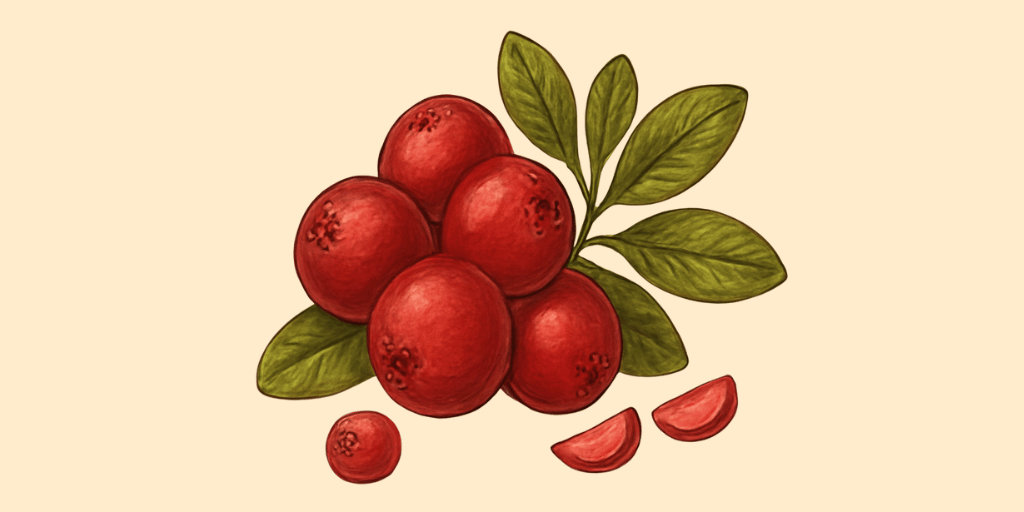
Sanskrit Name: Not listed in Classical Texts
Devanagari Name: क्रैनबेरी
Botanical Name: Vaccinium macrocarpon
English Name: Cranberry
Description
Cranberries are small, tart, red berries known for their high antioxidant content and therapeutic properties. Though not native to India, cranberry juice and dried cranberries have become popular for their ability to support urinary health, digestion, and immunity.
Cranberry juice is widely consumed for preventing urinary tract infections (UTIs) due to its ability to prevent harmful bacteria from adhering to the urinary tract lining. This makes cranberry juice for UTI one of the most searched and recommended natural remedies.
Dried cranberries and cranberry dry fruit are convenient forms rich in fiber and antioxidants. They help reduce inflammation, promote heart health, and protect against oxidative damage.
Cranberry supplements, including cranberry tablets and cranberry capsules, are also used to maintain urinary tract and kidney health.
With growing interest in cranberry drinks, cranberry chocolates, and combinations like cranberry coffee, this berry continues to grow in popularity not only for health but also as a gourmet ingredient.
However, people prone to kidney stones or those on blood thinners should consume it with caution due to its oxalate content and potential drug interactions.
Benefits – through the lens of Ayurveda
In classical Ayurvedic texts, cranberry is not mentioned, as it is not native to ancient India.
Main Chemical Constituents
- Proanthocyanidins
- Quinic acid
- Flavonoids
- Benzoic acid
- Anthocyanins
Nutritional Components
- Vitamin C
- Dietary fiber
- Manganese
- Vitamin E
- Vitamin K1
- Copper
Medical Conditions(Relief)
- Cranberries are rich in Vitamin C and antioxidants, which help boost immunity and protect against infections.
- Cranberries provide relief for urinary tract infections (UTIs) by preventing bacteria from adhering to the urinary tract walls.
- They also support digestive health, improve heart health by reducing cholesterol, and boost immunity.
- Cranberries are rich in antioxidants and promote skin health.
Medical Conditions(Avoid)
- Cranberries should be avoided by individuals with a history of kidney stones, as they contain oxalates that may contribute to stone formation.
- People taking blood thinners should consult their healthcare provider before using cranberry products, as they may interact with the medication.
References
- Bodet C, Grenier D, Chandad F, Ofek I, Steinberg D, Weiss EI. Potential oral health benefits of cranberry. Critical Reviews in Food Science and Nutrition. 2008 Jul 10;48(7):672-80.
- Zhao S, Liu H, Gu L. American cranberries and health benefits–an evolving story of 25 years. Journal of the Science of Food and Agriculture. 2020 Nov;100(14):5111-6.
- Vattem DA, Ghaedian R, Shetty K. Enhancing health benefits of berries through phenolic antioxidant enrichment: focus on cranberry. Asia Pacific journal of clinical nutrition. 2005 Jun 1;14(2).
- Leahy M, Roderick R, Brilliant K. The cranberry-promising health benefits, old and new. Nutrition Today. 2001 Sep 1;36(5):254-65.
- Howell AB. Update on health benefits of cranberry and blueberry. InIX International Vaccinium Symposium 810 2008 Jul 13 (pp. 779-785).
- Leahy M, Speroni J, Starr M. Latest Developments in Cranberry Health Research. Pharmaceutical biology. 2002 Feb 2;40.

