
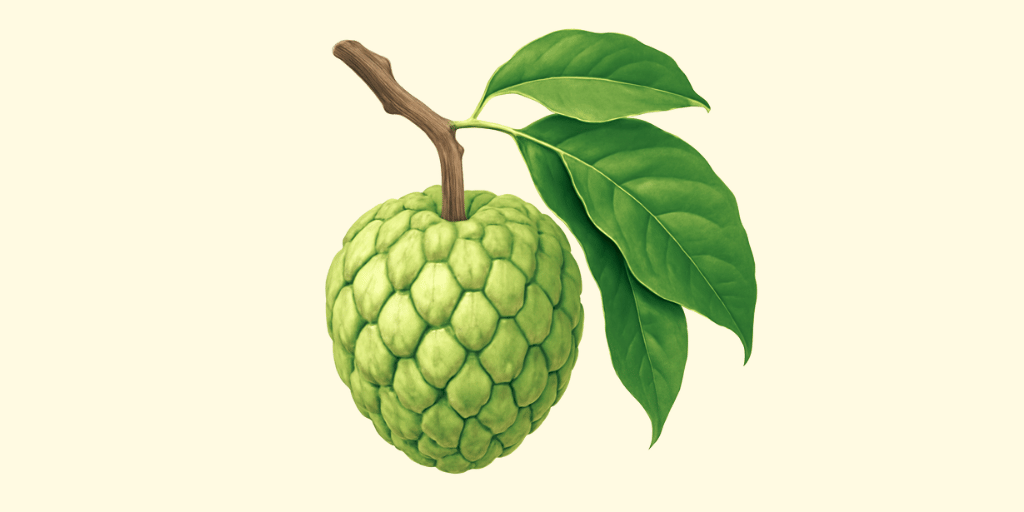
Sanskrit Name: Not listed in Classical Texts
Devanagari Name: शरीफा
Botanical Name: Annona squamosa
English Name: Custard Apple
Description
Custard apple, also known as Sharifa or Sitaphal, is a tropical fruit widely appreciated for its sweet taste and creamy texture. A rich source of essential nutrients, it contains abundant vitamin C, magnesium, potassium, and dietary fiber, making it a popular choice among health-conscious individuals.
The custard apple fruit is widely consumed fresh, in smoothies, desserts, and even custard apple ice cream. It promotes gut health, supports immunity, and is especially recommended for people suffering from constipation, fatigue, or poor digestion.
The custard apple tree thrives in warm climates and its leaves and bark are traditionally used in herbal remedies. Custard apple leaves have shown potential in diabetes management, while its bark can be used for addressing diarrhea.
Due to its high natural sugar content, people watching their weight or managing blood sugar must consume custard apple in moderation. Though generally safe, the seeds of custard apple are toxic if ingested and should never be consumed.
Benefits – through the lens of Ayurveda
In classical Ayurvedic literature, Sharifa is not extensively described.
Main Chemical Constituents
- Annonacin
- Flavonoids
- Alkaloids
- Tannins
- Phenolic compounds
Nutritional Components
- Vitamin C
- Vitamin B6
- Magnesium
- Potassium
- Calcium
- Dietary fiber
- Natural sugars
Medical Conditions(Relief)
- Custard Apple provides relief for digestive issues like constipation, indigestion, and bloating due to its high fiber content.
- It is also beneficial for managing blood pressure, improving skin health, and supporting overall immune function.
- Custard apple contains antioxidants that help reduce inflammation and fight oxidative stress.
Medical Conditions(Avoid)
- Custard apple should be avoided by individuals with a history of allergies to tropical fruits or those with latex allergies.
- People with digestive issues such as acid reflux should consume custard apple in moderation, as it may aggravate acidity.
- Pregnant and breastfeeding women should consult their healthcare provider before using custard apple in large amounts.
References
- Kumar M, Changan S, Tomar M, Prajapati U, Saurabh V, Hasan M, Sasi M, Maheshwari C, Singh S, Dhumal S, Radha. Custard apple (Annona squamosa L.) leaves: Nutritional composition, phytochemical profile, and health-promoting biological activities. Biomolecules. 2021 Apr 21;11(5):614.
- Singh Y, Bhatnagar P, Thakur N. A review on insight of immense nutraceutical and medicinal potential of custard apple (Annona squamosa Linn.). Int. J. Chem. Stud. 2019;7(2):1237-45.
- Gautam DK, Singh V, Singh SK, Tiwari P, Verma S, Tripathy S, Luthra S, Chawla R. Custard Apple (Annona squamosa L.): Exploring its Health Benefits and Medicinal Properties. European Journal of Nutrition and Food Safety. 2024 Oct 18;16(10):129-40.
- Jamkhande PG, Ajgunde BR, Jadge DR. Annona cherimola Mill.(Custard apple): A review on its plant profile, nutritional values, traditional claims and ethnomedicinal properties. Oriental Pharmacy and Experimental Medicine. 2017 Sep;17(3):189-201.

