
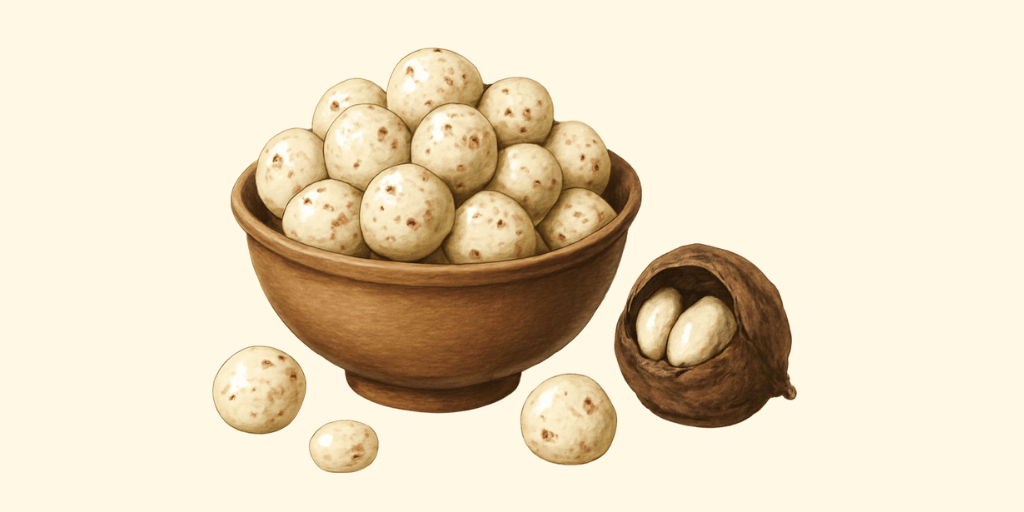
Sanskrit Name: Padma Beej
Devanagari Name: मखाना
Botanical Name: Euryale ferox
English Name: Fox Nuts
Description
Makhana, the seed derived from the lotus plant, is utilized in making both sweet and savory dishes. These seeds can be eaten raw or cooked and are also valued for their medicinal properties.
Rich in nutritional content, Makhana is an excellent source of proteins, carbohydrates, fiber, potassium, iron, and zinc. It promotes satiety when consumed as a snack, which can aid in weight loss by curbing overeating. Additionally, Makhana supports skin health by combating wrinkles and signs of aging, thanks to its antioxidants and specific amino acids with anti-aging benefits.
In Ayurvedic medicine, Makhana is believed to enhance male sexual health by improving the quality and quantity of sperm due to its aphrodisiac qualities. It may also assist in managing diarrhea, as its potent astringent properties can slow the movement of stool through the digestive system, reducing the frequency of bowel movements.
However, overconsumption of Makhana may lead to constipation, bloating, and gas.
Benefits – through the lens of Ayurveda
- Brimhana (nourishing tonic)
- Balya (strength-promoting)
- Vajikara (aphrodisiac)
- Rasayana (rejuvenative)
- Grahi (absorbs excess fluids)
- Tridoshaghna (balances all doshas
Main Chemical Components
- Alkaloids
- Flavonoids
- Gallic acid
- Tannins
- Saponins
Nutritional Components
- Protein
- Carbohydrates
- Fiber
- Magnesium
- Potassium
- Phosphoru
Medical Conditions(Relief)
- Makhana is a nutrient-rich herb that provides relief for high blood pressure, digestive disorders, and insomnia.
- It supports kidney health, helps manage urinary tract infections, and is beneficial for heart health.
- It is also known for its antioxidant properties, which support immune health and skin health.
- Additionally, it helps with weight management and enhances blood circulation.
- It is rich in antioxidants and helps in detoxifying the body.
- It also supports kidney function, improves digestion, and promotes skin health due to its high content of vitamins and minerals.
Medical Conditions(Avoid)
- Makhana should be avoided by individuals with low blood pressure or hypotension.
- Pregnant women should consult their healthcare provider before using Makhana.
References
- Charak Samhita of Agnivesha, Charak, Dridhabala edited with ‘Vidyamanorama’ hindi commentary by Acharya Vidyadhar Shukla and prof. Ravi Dutt Tripathi, Chaukhamba Sanskrit Pratishthan, Delhi, edition, 2006; 1
- Kaiyadeva Nighantuh Prof. Priyavrata Sharma and Dr. guru Prasada Sharma Chaukhambha Orientalia Varanasi Reprint, 2013.
- Nighantu aadarsa vol-2 by Bapalala. G. Vaidya Chaukhambha Bharati Academy reprint, 2009.
- Haritakyadi Nighantu, edited by Khemraj Shrikrishnadas, Mumbai, 2000.
- Bhavaprakasa Nighantu of Sri Bhavamisra, commentary by Padmshri prof. K. C. Chunekar edited by Dr. G. S. Pandey. Chaukhambha Bharati Academy Varanasi. Reprint,
- Susruta Samhita of Maharsi-Susruta edited with Ayurveda-Tattva-Sandipika by Kaviraj Ambikadutta Shastri Part-1 Chaukhambha Sanskrit sansthan Varanasi. Reprint, 2017.
- Jana BR, Srivastava A, Idris M. New makhana (Euryale ferox Salisb.) processed products for health benefit. J Food Process Technol. 2019;10(789):2.
- Garg N, Chauhan K, Baria K, Mehan MB. Foxnut (Makhana): the powerpack seed. Everyman’s Science. 2021:165-8.

