
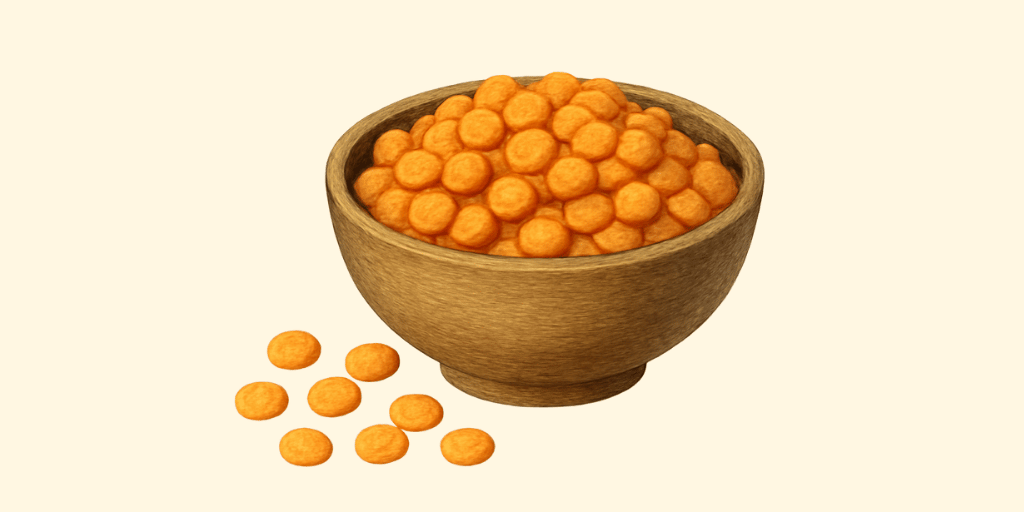
Sanskrit Name: Masoor Dal
Devanagari Name: मसूर दाल
English Name: Red Lentil
Description:
Masoor Dal, referred to as Lentil in English, is one of the oldest cultivated legumes. It boasts a high nutritional profile, being rich in protein, fiber, and minerals while having a low-fat content.
This lentil is advantageous for skin health, keeping it hydrated and vibrant due to its vitamin B content. Additionally, it aids in acne management because of its zinc content and anti-inflammatory properties.
A face mask made from Masoor Dal powder mixed with milk or honey serves as a natural exfoliant and assists in controlling facial hair growth. Incorporating Masoor Dal into your diet offers numerous health benefits. It can lower the risk of heart disease by reducing blood pressure and cholesterol levels, thanks to its dietary fiber, protein, and antioxidants.
Furthermore, it supports pregnancy and fetal development due to its iron and folate content. It can be enjoyed in various forms, such as Dal (curry), soup, or sprouts.
Benefits:
- Masoor dal is a rich source of protein, fiber, and essential minerals like iron and folate.
- It is beneficial for improving digestion, supporting heart health, and managing blood sugar levels.
- It is also helpful in weight management, as it provides satiety and supports healthy bowel movements.
- Additionally, it helps in improving skin health and promoting healthy hair.
Medical Conditions(Relief):
- Masoor Dal, a rich source of protein, is helpful in managing digestive disorders such as bloating, constipation, and gas due to its high fiber content.
- It supports heart health by reducing cholesterol levels and improving circulation.
- The iron in Masoor Dal makes it an excellent food for managing anemia, especially in individuals with iron deficiency.
- It helps strengthen the immune system, promotes healthy skin, and supports bone health.
- The lentil’s high fiber content also helps in regulating blood sugar levels, making it beneficial for diabetics.
Medical Conditions(Avoid):
- Masoor Dal should be avoided by individuals who have allergic reactions to legumes.
- It should also be used cautiously by individuals with gastrointestinal issues or kidney problems.
- Pregnant and breastfeeding women should consult their healthcare provider before consuming Masoor Dal regularly.

