Sanskrit Name: Unlisted in Classical Texts
Devanagari Name:जई
Botanical Name: Avena sativa
English Name: Oats
Description
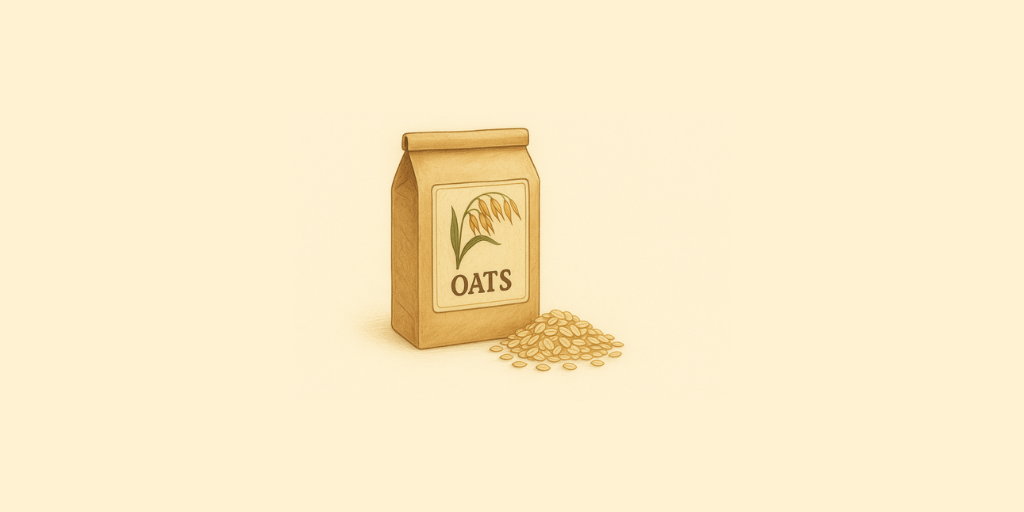
Oats are a type of cereal grain that can be consumed by humans in the form of oatmeal.
They represent one of the fastest and healthiest breakfast options and can be incorporated into various dishes such as porridge, upma, or idlis. Historically, oats have been utilized for a long time and are recognized as a valuable energy source that aids in weight control.
Additionally, they assist in regulating cholesterol levels, promoting heart health. Oats are also suitable for diabetics, as they help in maintaining stable blood sugar levels. Furthermore, combining oats with honey to create a face scrub may help address different skin issues.
Benefits – through the lens of Ayurveda
Oats (Avena sativa) are not mentioned in classical Ayurvedic texts such as Charaka Samhita, Sushruta Samhita, or Bhavaprakasha Nighantu, because they are native to Europe and Western Asia and were not traditionally cultivated in ancient India.
Main Chemical Components
- Avenanthramides
- Beta-glucan
- Ferulic acid
Nutritional Components
- Fiber
- Protein
- Magnesium
- Vitamin B1 (Thiamine)
Medical Conditions(Relief)
- Oats provide relief for digestive health, helping with constipation and improving metabolism due to their high fiber content.
- They are beneficial for heart health by lowering cholesterol levels and improving blood circulation.
- Oats also regulate blood sugar levels, making them beneficial for individuals with diabetes.
- Additionally, they support skin health and can alleviate symptoms of eczema.
- Oats also provide long-lasting energy, support weight management by keeping you full for longer, and help in maintaining skin health due to their antioxidant properties.
Medical Conditions(Avoid)
- Oats should be avoided by individuals with oat allergies or gluten intolerance (unless gluten-free oats are used).
- Pregnant and breastfeeding women should consult their healthcare provider before using oats if they have dietary restrictions.
References
- Martínez-Villaluenga C, Peñas E. Health benefits of oat: Current evidence and molecular mechanisms. Current Opinion in Food Science. 2017 Apr 1;14:26-31.
- Decker EA, Rose DJ, Stewart D. Processing of oats and the impact of processing operations on nutrition and health benefits. British Journal of Nutrition. 2014 Oct;112(S2):S58-64.
- American Association of Cereal Chemists (1989) Oat Bran Definition.
- General Mills (2012) The Hidden Power of Oat Hulls.
- Stevenson, DG & Inglett, GE (2011) Oat dietary fiber: commercial processes and functional attributes. In Oats: Chemistry and Technology, 2nd ed., pp. 321–328 [Webster, FH and Wood, PJ, editors]. St Paul MN: American Association of Cereal Chemists.
- Mälkki, Y & Myllymäki, O (1998) Method for enriching soluble dietary fibre. US patent no. 5,846,590.
- Heneen, WK, Banas, A, Leonova, S, et al. (2009) The distribution of oil in the oat grain. Plant Signal Behav 4, 55–56.
- Onning, G, Akesson, B, Oste, R, et al. (1998) Effects of consumption of oat milk, soya milk, or cow’s milk on plasma lipids and antioxidative capacity in healthy subjects. Ann Nutr Metab 42, 211–220.
- Onning, G, Wallmark, A, Persson, M, et al. (1999) Consumption of oat milk for 5 weeks lowers serum cholesterol and LDL cholesterol in free-living men with moderate hypercholesterolemia. Ann Nutr Metab 43, 301–309.

