
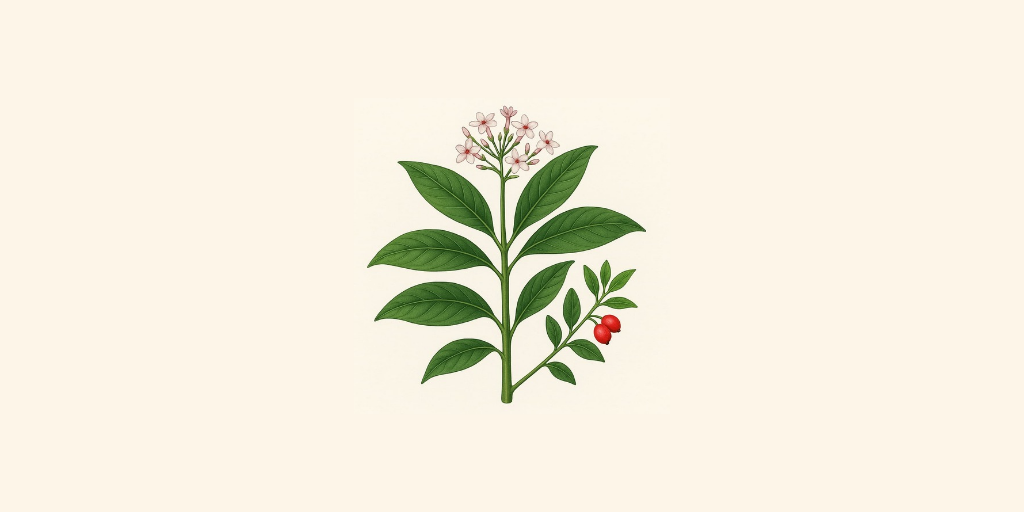
Sanskrit Name:Sarpagandha
Devanagari Name:सर्पगंधा
English Name: Indian Snake Root
Description:
Sarpagandha is a climbing shrub native to the Himalayan regions of India, Nepal, and parts of Bangladesh. It has greenish-white flowers and produces small, red berries. Sarpagandha is primarily known for its anti-hypertensive, sedative, and nervine properties. It is most commonly used to treat high blood pressure (hypertension) due to its ability to lower blood pressure by acting as a vasodilator and reducing the tension in blood vessels. The root of Sarpagandha is also used to treat insomnia, anxiety, and nervous disorders due to its calming and relaxing effects on the nervous system. Sarpagandha is considered a raspanchak, helping to detoxify the body, improve circulation, and support heart health. It is also used to reduce stress and manage psychiatric conditions like schizophrenia and mania, as it has antipsychotic properties. It balances Vata and Pitta doshas, promoting mental peace and overall well-being.
Benefits:
- Sarpagandha is widely known for its ability to manage high blood pressure (hypertension) by acting as a natural antihypertensive.
- It also has sedative properties, making it beneficial for treating anxiety, stress, and insomnia.
- Sarpagandha is used to calm the nervous system, improve mental clarity, and relieve symptoms of agitation and restlessness.
- Additionally, it is used to treat other conditions like muscle spasms, fever, and certain types of pain.
Medical Conditions(Relief):
- Sarpagandha is highly valued in Ayurvedic medicine for its ability to lower blood pressure.
- It acts as a natural antihypertensive, helping to manage hypertension.
- Sarpagandha is also used for its calming effects, alleviating stress, anxiety, and insomnia.
- It is also used in the management of neurological disorders, including epilepsy and seizures.
Medical Conditions(Avoid):
- Sarpagandha should be avoided by individuals with low blood pressure, as it may exacerbate hypotension.
- It should also be used cautiously by individuals on antihypertensive medications, as it may interact with them.
- Pregnant and breastfeeding women should consult their healthcare provider before using Sarpagandha, as it may have uterine-stimulating effects.

