
Sanskrit Name:Shilajit
Devanagari Name:शिलाजीत
Botanical Name: Asphaltum punjabianum
English Name: Shilajit Resin
Description
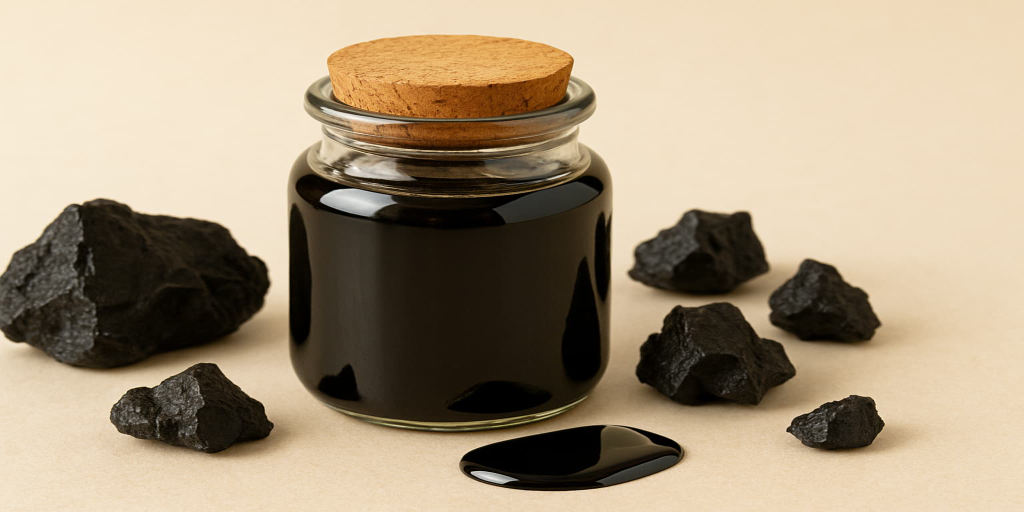
Shilajit is a mineral-rich extract that ranges in color from pale brown to dark brown. It is sourced from the rocks of the Himalayas and is primarily made up of a viscous substance. This extract contains humus, organic plant materials, and fulvic acid, along with over 84 minerals such as copper, silver, zinc, iron, and lead.
Recognized for its health-boosting properties, Shilajit enhances sexual stamina and increases energy levels, aiding in the management of chronic fatigue, tiredness, lethargy, and fatigue related to diabetes. It is known to elevate testosterone levels and improve male fertility. Additionally, it offers benefits for anemia and memory loss.
Benefits – through the lens of Ayurveda
- Rasayana (rejuvenates body)
- Balya (increases strength)
- Vajikara (enhances fertility)
- Deepana (boosts digestion)
- Medhya (improves intellect)
- Tridosha hara (balances all doshas)
- Shothahara (reduces inflammation)
- Mutrala (promotes urination)
Main Chemical Constituents
- Fulvic acid
- Humic acid
- Dibenzo-alpha-pyrones
- Trace minerals (iron, zinc, copper, etc.)
- Selenium
Nutritional Components
- Iron
- Zinc
- Magnesium
- Calcium
- Potassium
- Copper
- Manganese
Medical Conditions(Relief)
- Shilajit is a powerful adaptogen used for its rejuvenating and energizing properties. It is particularly effective in improving stamina, increasing energy levels, and combating fatigue.
- Shilajit is used to enhance brain function and memory, as well as to support cognitive health.
- It helps with joint pain and inflammation due to its anti-inflammatory properties.
- Shilajit is also known to support heart health, regulate blood sugar levels, and improve overall vitality.
- It is a natural detoxifier, promoting liver function.
Medical Conditions(Avoid)
- Shilajit should be avoided by individuals with a history of gout or high uric acid levels, as it may worsen these conditions.
- It should be used with caution by individuals with kidney disease due to its high mineral content.
- Pregnant and breastfeeding women should consult their healthcare provider before using Shilajit.
References
- Charak Samhita of Agnivesha, Charak, Dridhabala edited with ‘Vidyamanorama’ hindi commentary by Acharya Vidyadhar Shukla and prof. Ravi Dutt Tripathi, Chaukhamba Sanskrit Pratishthan, Delhi, edition, 2006; 1
- Kaiyadeva Nighantuh Prof. Priyavrata Sharma and Dr. guru Prasada Sharma Chaukhambha Orientalia Varanasi Reprint, 2013.
- Nighantu aadarsa vol-2 by Bapalala. G. Vaidya Chaukhambha Bharati Academy reprint, 2009.
- Haritakyadi Nighantu, edited by Khemraj Shrikrishnadas, Mumbai, 2000.
- Bhavaprakasa Nighantu of Sri Bhavamisra, commentary by Padmshri prof. K. C. Chunekar edited by Dr. G. S. Pandey. Chaukhambha Bharati Academy Varanasi. Reprint,
- Susruta Samhita of Maharsi-Susruta edited with Ayurveda-Tattva-Sandipika by Kaviraj Ambikadutta Shastri Part-1 Chaukhambha Sanskrit sansthan Varanasi. Reprint, 2017.
- Stohs SJ, Singh K, Das A, Roy S, Sen CK. Energy and health benefits of Shilajit. InSustained Energy for Enhanced Human Functions and Activity 2017 Jan 1 (pp. 187-204). Academic Press.
- Carrasco-Gallardo C, Guzmán L, Maccioni RB. Shilajit: a natural phytocomplex with potential procognitive activity. International Journal of Alzheimer’s disease. 2012;2012(1):674142.
- Wilson E, Rajamanickam GV, Dubey GP, Klose P, Musial F, Saha FJ, Rampp T, Michalsen A, Dobos GJ. Review on shilajit used in traditional Indian medicine. Journal of ethnopharmacology. 2011 Jun 14;136(1):1-9.
- Pingali U, Nutalapati C. Shilajit extract reduces oxidative stress, inflammation, and bone loss to dose-dependently preserve bone mineral density in postmenopausal women with osteopenia: A randomized, double-blind, placebo-controlled trial. Phytomedicine. 2022 Oct 1;105:154334.

