
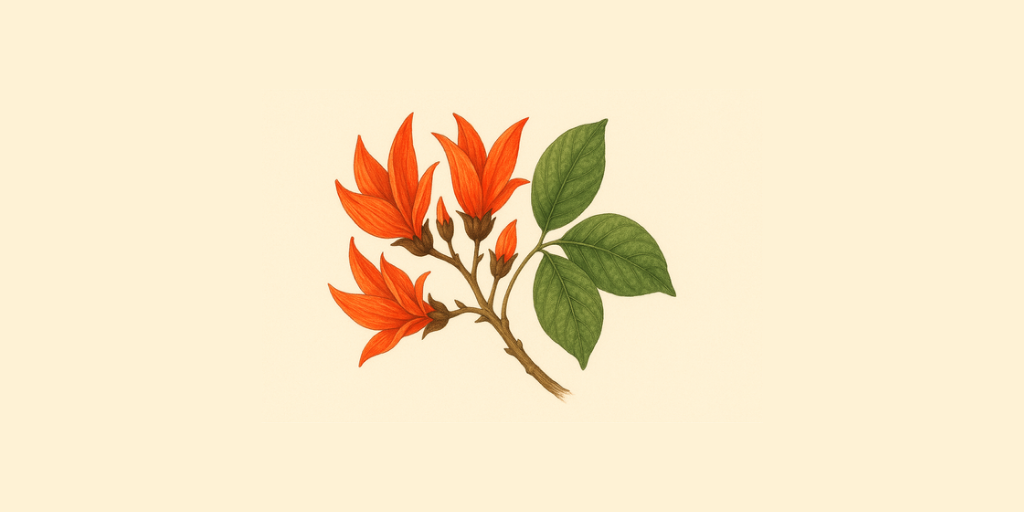
Sanskrit Name: Palash
Devanagari Name: पलाश
English Name: Flame of the Forest
Description:
Palasha, also known as Flame of the Forest, is a medium-sized deciduous tree that grows up to 15 meters in height, found predominantly in the tropical and subtropical regions of India and Southeast Asia. The tree produces bright orange-red flowers, which are the most prominent feature of the plant, often blooming during the dry season.
The bark, flowers, and seeds of Palasha are used in traditional medicine for their anti-inflammatory, antimicrobial, and analgesic properties. Palasha is primarily used to treat digestive issues like indigestion, bloating, and constipation due to its laxative effect. It is also beneficial in treating skin conditions such as eczema and psoriasis, thanks to its anti-inflammatory properties.
In addition, Palasha supports reproductive health by treating uterine disorders, irregular menstruation, and painful menstruation. It is considered a raspanchak, helping to detoxify the body and balance the Vata and Kapha doshas.
Benefits:
- Palasha is used in Ayurvedic medicine for its anti-inflammatory, antimicrobial, and detoxifying properties.
- It helps treat digestive disorders, skin infections, and respiratory issues.
- Palasha is also beneficial for improving circulation, reducing pain, and promoting liver health.
Medical Conditions(Relief):
- Palasha is known for its antimicrobial, anti-inflammatory, and antioxidant properties.
- It is used to treat a variety of skin conditions such as eczema, acne, and wounds due to its ability to promote healing and reduce inflammation.
- Palasha also has a beneficial effect on the digestive system, treating conditions such as constipation and indigestion.
- It supports liver health by promoting detoxification and improving liver function.
- Furthermore, it is used for treating respiratory conditions like asthma and bronchitis.
Medical Conditions(Avoid):
- Palasha should be avoided by individuals with allergies to plants in the Fabaceae family.
- It may cause allergic reactions in some individuals.
- Pregnant and breastfeeding women should consult a healthcare provider before using Palasha, as its safety during pregnancy has not been well-studied.

