
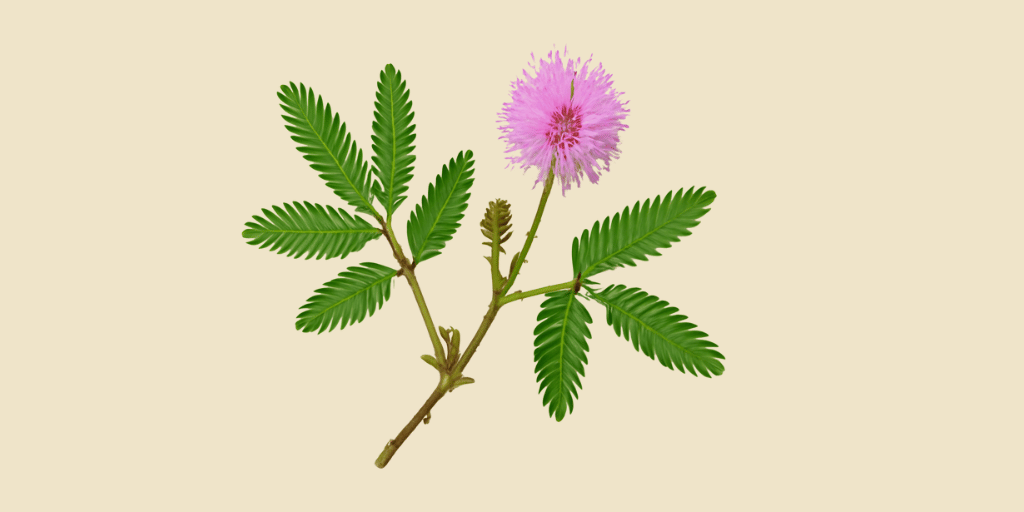
Sanskrit Name: Lajvanti
Devanagari Name: लाजवंती
English Name: Sensitive Plant
Description:
Lajwanti, also known as Mimosa pudica, is a small, sensitive herb found in the tropical and subtropical regions of India and South America. The plant is characterized by pink, fluffy flowers and compound leaves, which fold inward when touched, giving it its name “touch-me-not.”
Lajwanti is known for its anti-inflammatory, analgesic, and sedative properties. It is used to treat pain, inflammation, and muscle spasms, especially in conditions like rheumatism and arthritis. Lajwanti also helps alleviate nervous disorders, including stress, anxiety, and insomnia, by calming the nervous system.
The herb is effective in managing digestive disorders, including gas, bloating, and constipation, and is used to promote liver health by improving detoxification. Lajwanti helps balance Vata and Pitta doshas, especially in calming the mind and improving overall mental clarity.
Benefits:
- Lajwanti, or Mimosa Pudica, is known for its calming and sedative effects.
- It helps in treating nervous disorders, reducing stress, and managing anxiety.
- It also has anti-inflammatory and analgesic properties that aid in pain relief and treating joint conditions.
- Lajwanti is commonly used to support digestive health, alleviate constipation, and improve overall vitality.
- It is also beneficial for skin conditions like rashes and wounds due to its antimicrobial properties.
Medical Conditions(Relief):
- Lajwanti is known for its calming effects on the nervous system.
- It is used to treat stress, anxiety, and insomnia.
- Lajwanti also has anti-inflammatory properties, making it effective in treating joint pain and arthritis.
- It supports digestive health by improving appetite, alleviating constipation, and relieving gas.
- Lajwanti is also beneficial for wound healing, promoting the repair of skin injuries and reducing swelling in affected areas.
Medical Conditions(Avoid):
- Lajwanti should be avoided by individuals with low blood pressure, as it may have hypotensive effects.
- Pregnant and breastfeeding women should consult their healthcare provider before using Lajwanti, as its safety during pregnancy and lactation has not been thoroughly studied.

