
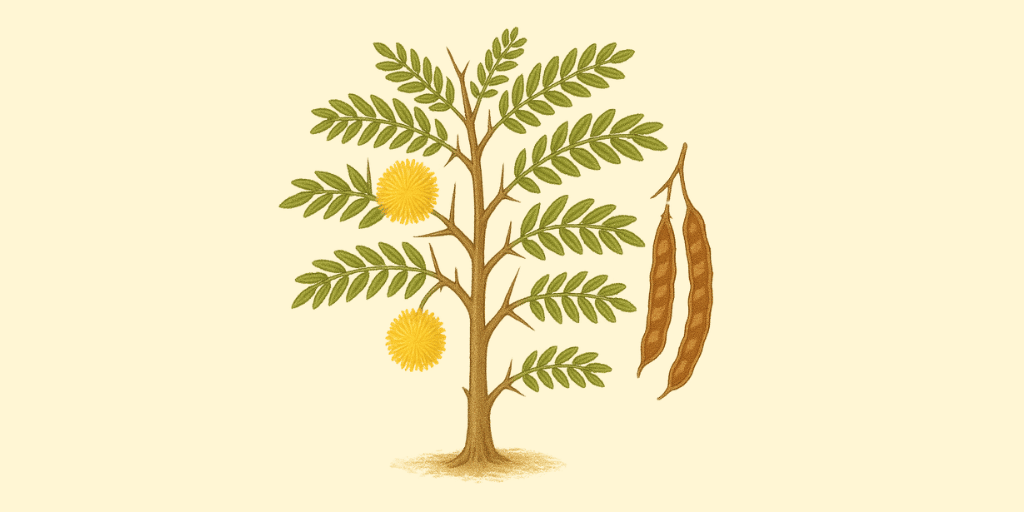
Sanskrit Name: Babula
Devanagari Name: बाबुल
English Name: Indian Gum Arabic Tree, Black Babool
Description:
The Babul Tree, scientifically known as Vachellia nilotica, is a thorny, evergreen tree native to India and parts of Africa. It is also known as Acacia nilotica or Indian Gum Arabic Tree. The Babul tree is valued in Ayurveda for its anti-inflammatory, antimicrobial, astringent, and antioxidant properties. Various parts of the tree, including the bark, leaves, gum, and seeds, are used in traditional medicine to treat a range of ailments. The tree is commonly found in dry, arid regions and has significant ecological and medicinal importance.The Materia Medica highlights the Indian Gum Arabic Tree as an effective herbal remedy for various ailments, including diarrhea and mouth ulcers.
Benefits:
- Babul is widely known for its oral health benefits, particularly for toothaches, gum disease, and bad breath.
- The bark of the tree is rich in tannins, which have astringent properties, making it effective in tightening the gums and relieving inflammation.
- Babul also helps in managing digestive issues, such as diarrhea, dysentery, and gastritis, due to its antimicrobial and antibacterial properties.
- The tree is known for its blood-purifying abilities, helping to detoxify the body and improve skin health, especially in conditions like eczema and acne.
- Babul gum is used to treat respiratory conditions like cough and bronchitis, as it acts as a natural expectorant.
- Additionally, Babul has anti-inflammatory properties, which make it beneficial for joint pain and arthritis.
Medical Conditions(Relief):
- Babul provides relief from various medical conditions.
- The bark and leaves are used to treat oral health issues, including gum disease, toothaches, and bad breath, by acting as a natural antiseptic and astringent.
- Babul is particularly effective in treating digestive disorders like diarrhea and dysentery, due to its antimicrobial properties.
- It is also used for skin problems such as acne, eczema, and rashes, helping to purify the blood and improve overall skin health.
- Babul’s anti-inflammatory properties make it effective in treating joint pain and arthritis, offering relief from swelling and discomfort.
- The gum of the Babul tree is used to treat respiratory issues like cough, bronchitis, and asthma by acting as an expectorant to clear mucus from the respiratory system.
- It also promotes liver health and helps in the treatment of jaundice.
Medical Conditions(Avoid):
- Babul is generally safe when used appropriately, but there are a few precautions to consider.
- The astringent properties of Babul may irritate the gastrointestinal tract when consumed in excess, so it should be used cautiously by individuals with sensitive stomachs or gastritis.
- Due to its laxative effect, excessive use of Babul may lead to diarrhea, particularly in people with irritable bowel syndrome (IBS) or chronic diarrhea.
- Babul should also be avoided by people with low blood pressure, as it may have a hypotensive effect, lowering blood pressure further.
- Pregnant women should use Babul with caution, as its effects during pregnancy have not been fully studied, and it may have uterine-stimulating properties.
- Individuals with allergies to plants in the Leguminosae family, such as acacia, should avoid using Babul.

