
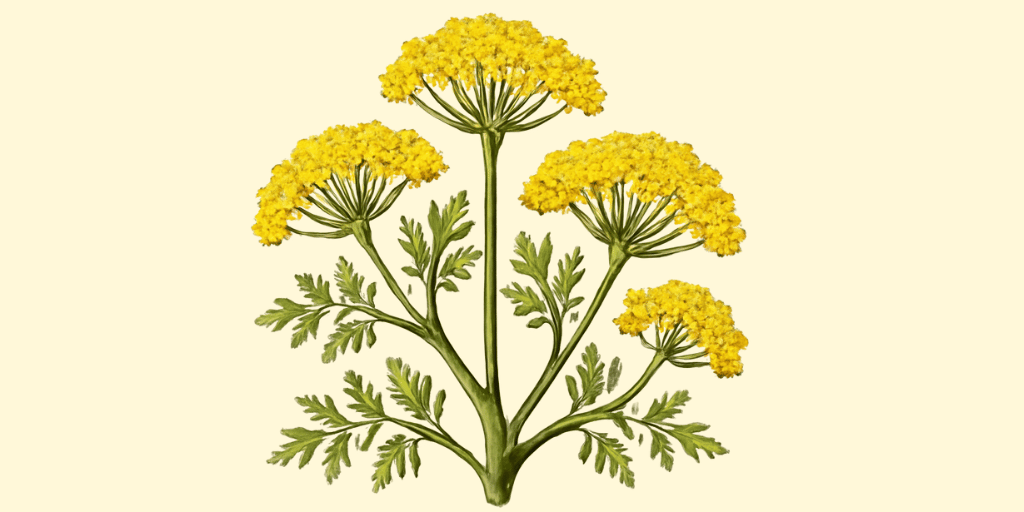
Sanskrit Name: Hingu
Devanagari Name: हींग
English Name: Asafoetida
Description:
Ferula is a perennial, herbaceous plant belonging to the Apiaceae family. It can reach a height of up to 2 meters, with a circular cluster of leaves measuring 30-40 cm. The leaves are delicate, and the flowers are yellow. The roots are large, thick, and pulpy, and the entire plant emits a strong, unpleasant odor.
Just before the flowering season, the stalks are cut close to the roots, resulting in a milky substance that oozes out and dries to form resin. This process continues for three months after the initial cut, yielding over two pounds of resin. The fruits are flat, thin, oval, and reddish-brown. Asafetida, the common name for this herb, is derived from the Latin word “foetid,” meaning very smelly. It is known for its acrid and pungent aroma.
Other common names include food of the gods, asant, stinking gum, devil’s dung, hing, hingu, ting, and kayam. Hing refers to the resin, a gum-like substance obtained by cutting the living rhizome and tap roots of various Ferula species. Asafetida, true to its name, has a fetid smell and a bitter taste.
In Ayurveda, hing is valued for its medicinal properties and is commonly used as a spice in cooking, particularly in curries and pickles, due to its strong aroma in its purest form.
Benefits:
- Hingu (Ferula asafoetida), commonly known as asafoetida, is a powerful digestive stimulant and carminative in Ayurveda.
- Known for its strong aroma, Hingu is used to relieve bloating, gas, and abdominal pain by balancing Vata and Kapha doshas.
- It kindles Agni (digestive fire), clears Āma (toxins), and supports regular bowel movements.
- It’s also used in managing menstrual pain and respiratory congestion due to its warming and penetrating nature.
Medical Conditions(Relief):
- Hingu (Asafoetida) is a potent digestive herb that aids in the treatment of bloating, indigestion, and flatulence.
- It also has anti-inflammatory and antimicrobial properties, making it effective in managing respiratory issues, asthma, and coughs.
Medical Conditions(Avoid):
- Hingu should be avoided by individuals with a history of ulcers or gastrointestinal disorders, as it may irritate the stomach lining.
- It should also be avoided by pregnant women in large quantities.

