
Sanskrit Name:Vatsanabha
Devanagari Name:वत्सनाभ
English Name: Aconite
Description:
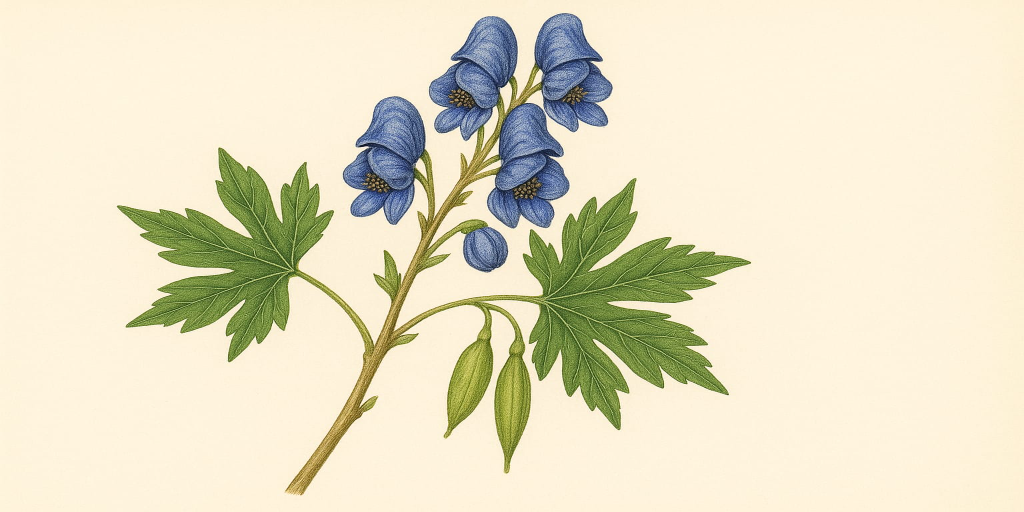
Vatsanabha (Aconitum ferox) is a perennial herbaceous shrub with tuberous roots, reaching heights of up to 3 feet. The leaves are simple, alternate, and oval-shaped, featuring clefts or lobes.
The larger leaves are found at the base of the plant, while the upper leaves are smaller and shorter. The tuberous roots have a dark brown exterior and a yellow interior. The plant produces unique tube-like capsules or helmet-shaped fruits that open at the top.
Notably, it showcases striking blue, yellow, and pink zygomorphic flowers, which are rich in stamens. Flowering and fruiting occur from July to November. Common names for Aconitum ferox include aconite, monkshood, wolf’s bane, leopard’s bane, Indian vish, bikh, mouse bane, women’s bane, devil’s helmet, queen of all poisons, and blue rocket.
While other poisonous herbs in Ayurveda such as ahiphena, bhanga, dhatura, langali, karvira, and jayapal exist, Vatsanabha is considered the most toxic among them. Even a heavy dose can lead to severe consequences, including potential fatality.
Benefits:
- Vatsanabha (Aconitum ferox) is a toxic herb used in Ayurveda only after purification.
- It is a powerful stimulant, pain reliever, and anti-inflammatory agent.
- Due to its potency, it is used in extremely small doses under strict supervision for treating arthritis and fever.
Medical Conditions(Relief):
- Vatsanabha is used in Ayurveda for its detoxifying and anti-inflammatory properties.
- It is also beneficial for treating respiratory and digestive issues.
Medical Conditions(Avoid):
- Vatsanabha should be avoided by individuals with sensitive skin or respiratory conditions.

