
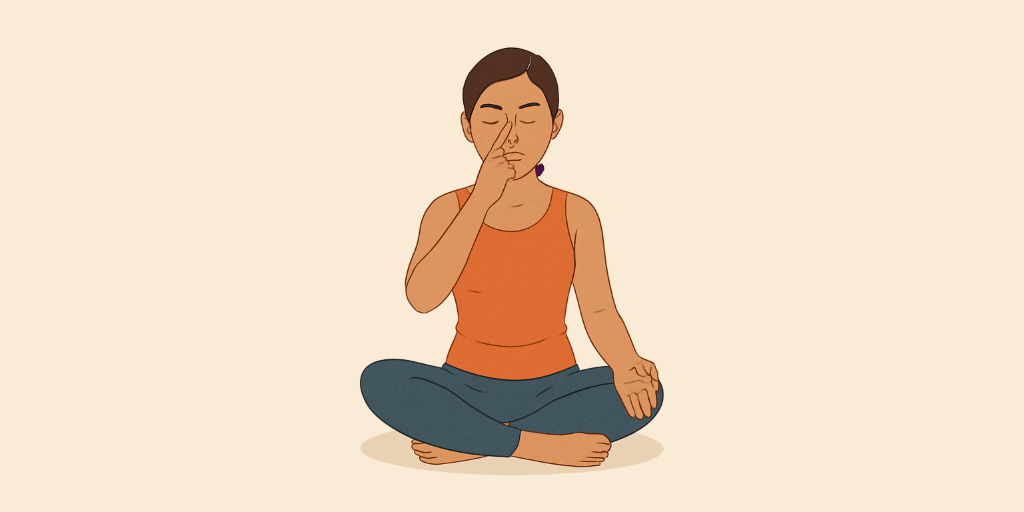
Sanskrit Name: अनुलोम विलोम
English Name: Nadi Shodhana (Alternate Nostril Breathing)
Description
Anulom Vilom is a powerful pranayama (breathing) technique that involves alternating the flow of air through each nostril. It is known for its calming and balancing effects on the body and mind. The practice involves deep inhalation and exhalation through one nostril at a time while the other nostril is closed, helping purify and balance the body’s energy channels. This technique is often used in meditation and is particularly beneficial for reducing stress and promoting mental clarity.
How to Do
Here are the steps to do Anulom Vilom (Alternate Nostril Breathing).
- Sit in a Comfortable Position: Sit in a comfortable cross-legged position such as Sukhasana or Padmasana. Keep your spine straight and your shoulders relaxed. Rest your hands on your knees in Gyan Mudra (thumb and index finger lightly touching) or any other comfortable mudra.
- Position Your Right Hand: Bring your right hand to your face. Use your right thumb to close your right nostril. The index and middle fingers can rest on your forehead, or you can use your ring and little fingers to close your left nostril.
- Close the Right Nostril and Inhale Through Left: Close your right nostril with your right thumb and exhale gently through the left nostril. Then, inhale deeply and slowly through the left nostril, expanding your lungs fully.
- Close Left Nostril and Exhale Through Right: After inhaling through the left nostril, close your left nostril with your ring finger. Release your right nostril and exhale completely through your right nostril.
- Inhale Through Right Nostril: After exhaling through the right nostril, inhale deeply and slowly through your right nostril.
- Close Right Nostril and Exhale Through Left: Close your right nostril with your thumb and release your left nostril. Exhale completely through your left nostril.
- Complete One Round: This completes one round of Anulom Vilom. Continue for 5–10 rounds or more, depending on your comfort and practice level.
- Focus on Your Breath: Throughout the practice, focus on your breath, making sure it’s slow, deep, and steady. Try to maintain a relaxed, calm state of mind.
Benefits
- Helps calm the mind and reduces anxiety and stress levels.
- Strengthens the lungs and improves the flow of oxygen throughout the body.
- Balances the left and right hemispheres of the brain, promoting harmony in the body.
- Increases focus, concentration, and cognitive function.
- Purifies the respiratory system and helps cleanse the mind.
Medical Conditions(Relief)
- Stress and Anxiety: Regular practice can help reduce stress, calm the nervous system, and promote relaxation.
- Asthma: Anulom Vilom can help improve lung capacity and ease symptoms of asthma by strengthening the respiratory system.
- Insomnia: By calming the mind and reducing stress, it can improve sleep quality and combat insomnia.
- High Blood Pressure: It helps in lowering blood pressure by promoting relaxation and stress reduction.
Medical Conditions(Avoid)
- Severe Hypertension: Those with severe high blood pressure should practice under the supervision of a trained instructor, as it may affect pressure levels.
- Heart Conditions: Individuals with heart conditions should consult with a healthcare provider before practicing Anulom Vilom, as it involves controlled breathing that may affect heart rate.
- Pregnancy: Pregnant women should avoid holding the breath for long periods and practice with caution, consulting a healthcare provider.
- Severe Respiratory Conditions: People with severe respiratory issues like COPD or pneumonia should avoid this practice or do it under medical guidance.
- Recent Surgery: If recovering from surgery, consult a doctor before performing Anulom Vilom, especially if it involves significant physical strain.
References
- Patanjali, Yoga Sutras of Patanjali, Commentary by Swami Sivananda. Divine Life Society, 1990; p. 58.
- Swatmarama, Hatha Yoga Pradipika, Edited by Swami Muktibodhananda. Bihar School of Yoga, 1998; p. 72.
- Sushruta, Sushruta Samhita, Commentary by Acharya Y.T. (5th ed.). Varanasi: Chaukambha Orientalia, 1992; p. 445.
- Krishnamacharya, Yoga Makaranda, Translated by A.G. Mohan. Krishnamacharya Yoga Mandiram, 2012; p. 103.
- Iyengar B.K.S., Light on Yoga. HarperCollins Publishers, 1966; p. 102.
- Desikachar T.K.V., The Heart of Yoga: Developing a Personal Practice. Inner Traditions, 1995; p. 88.
- Jois K. Pattabhi, Yoga Mala. The Yoga Institute, 2002; p. 120.
- Swami Vivekananda, Raja Yoga. Advaita Ashrama, 1993; p. 61.
- Swami Sivananda, The Science of Pranayama. Divine Life Society, 1951; p. 99.
- Sivananda Yoga Vedanta Centres, Yoga and Health. Sivananda Publications, 2005; p. 45.

