
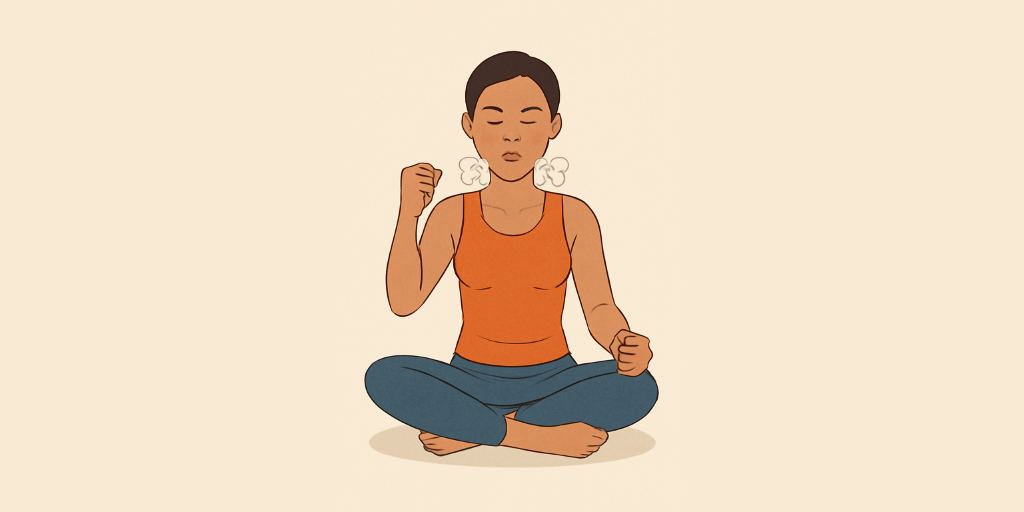
Sanskrit Name: भस्त्रिका प्राणायाम
English Name: Bellows Breath
Description
Bhastrika Pranayama, known as Bellows Breath, is a powerful pranayama technique that involves rapid and forceful inhalation and exhalation through the nostrils. It resembles the pumping action of a bellows, which helps to clear the airways and energize the body. This pranayama is energizing and helps awaken the mind and body. The practice of Bhastrika brings warmth to the body and revitalizes energy.
This pranayama generates internal heat, invigorates the body, and stimulates the brain, making it an excellent practice for boosting energy, mental clarity, and overall vitality. It is often practiced at the beginning of a yoga session to awaken the mind and body, as well as to clear any emotional or physical stagnation. The intensity and rapid pace of this breathing exercise create vibrations throughout the body that can release blockages and help rejuvenate the entire system.
How to Do
Here are the steps to do Bhastrika Pranayama (Bellows Breath).
- Sit in a Comfortable Position: Begin by sitting in a comfortable, upright position such as Sukhasana (Easy Pose) or Padmasana (Lotus Pose). Ensure that your spine is straight and your shoulders are relaxed. Rest your hands on your knees in a comfortable mudra, such as Gyan Mudra or Chin Mudra.
- Relax and Focus on Your Breath: Close your eyes and take a few moments to relax. Bring your attention to your natural breathing and try to clear your mind.
- Start with Deep Breaths: Take a deep, slow inhale through both nostrils, filling your lungs completely. Then exhale slowly and completely through both nostrils. Repeat this for a few cycles, allowing your breath to become steady and deep.
- Begin the Bhastrika Breathing: Now, take a deep breath in through your nostrils, and as you exhale, forcefully expel the air out through the nose with a sharp, quick exhalation. The exhale should be active, like blowing air out forcefully.Follow the exhalation with a strong, quick inhale through your nostrils. The inhalation should be just as forceful as the exhalation, allowing the lungs to expand completely. Breath pattern: Quick, forceful inhale followed by a quick, forceful exhale.
- Rhythm of Bhastrika: Perform this breath in a rhythmic pattern: Inhale (forcefully) and exhale (forcefully) with equal intensity. The focus is on the forceful exhale, which is like the bellows of a fire stoking the flames. The inhale should be as quick and strong as the exhale.Start with 10-15 rounds and gradually increase the number of breaths as you become more comfortable with the technique.
- Complete the Cycle: After completing 10-15 rounds, inhale deeply and hold the breath in for a moment (if comfortable). Then, exhale slowly and gently return to normal breathing.
- Rest: Rest for a moment by sitting quietly with your eyes closed, observing any sensations in your body and calming your breath.
- Repeat the Process: Perform 2-3 cycles of Bhastrika Pranayama, allowing a brief rest between each cycle.
Benefits
- The rapid inhalations and exhalations stimulate the nervous system, increase blood flow, and promote the overall energy levels in the body.
- By encouraging deep, forceful breathing, it strengthens the lungs, improves their capacity, and helps eliminate stagnant air from the respiratory system.
- The pumping action of the diaphragm helps stimulate the body’s detoxification processes, promoting the elimination of toxins and clearing the respiratory tract.
- The intensity of the practice boosts blood circulation, improving oxygen delivery to the brain and the rest of the body.
- The oxygenated blood flow to the brain helps clear mental fog and promotes sharper focus and concentration.
- The forceful breathing massages the digestive organs, helping to stimulate the metabolism and improve digestion.
Medical Conditions(Relief)
- Fatigue and Low Energy: Bhastrika Pranayama is excellent for revitalizing the body and clearing the mind of tiredness, making it a great remedy for fatigue.
- Respiratory Conditions: It improves lung function, clears airways, and strengthens the respiratory muscles, which can provide relief from asthma and bronchitis.
- Stress and Anxiety: The rhythmic breathing helps activate the parasympathetic nervous system, promoting relaxation and reducing anxiety levels.
- Indigestion and Poor Digestion: The breathing technique stimulates the digestive organs, aiding in better digestion and alleviating problems like bloating or constipation.
- Poor Circulation: By enhancing blood flow, Bhastrika improves circulation, which helps increase oxygenation of the tissues and prevents numbness or tingling in extremities.
Medical Conditions(Avoid)
- Severe Hypertension: Due to the rapid and forceful nature of the breathing, those with high blood pressure should avoid this pranayama or practice it with caution and under supervision.
- Heart Conditions: People with heart conditions, including irregular heartbeats or coronary artery disease, should avoid Bhastrika as it can put strain on the heart and cardiovascular system.
- Pregnancy: Pregnant women, particularly in the second and third trimesters, should avoid forceful breathing exercises like Bhastrika, as it may increase intra-abdominal pressure.
- Recent Surgery: If you have recently undergone surgery, particularly abdominal or respiratory surgery, it’s best to avoid Bhastrika until fully healed, as the forceful breathing may stress the body.
- Severe Respiratory Conditions: Those with serious respiratory diseases like COPD, emphysema, or severe asthma should avoid this pranayama, as it could exacerbate breathing difficulties.
References
- Patanjali, Yoga Sutras of Patanjali, Commentary by Swami Sivananda. Divine Life Society, 1990; p. 58.
- Swatmarama, Hatha Yoga Pradipika, Edited by Swami Muktibodhananda. Bihar School of Yoga, 1998; p. 72.
- Sushruta, Sushruta Samhita, Commentary by Acharya Y.T. (5th ed.). Varanasi: Chaukambha Orientalia, 1992; p. 445.
- Krishnamacharya, Yoga Makaranda, Translated by A.G. Mohan. Krishnamacharya Yoga Mandiram, 2012; p. 103.
- Iyengar B.K.S., Light on Yoga. HarperCollins Publishers, 1966; p. 102.
- Desikachar T.K.V., The Heart of Yoga: Developing a Personal Practice. Inner Traditions, 1995; p. 88.
- Jois K. Pattabhi, Yoga Mala. The Yoga Institute, 2002; p. 120.
- Swami Vivekananda, Raja Yoga. Advaita Ashrama, 1993; p. 61.
- Swami Sivananda, The Science of Pranayama. Divine Life Society, 1951; p. 99.
- Sivananda Yoga Vedanta Centres, Yoga and Health. Sivananda Publications, 2005; p. 45.

