
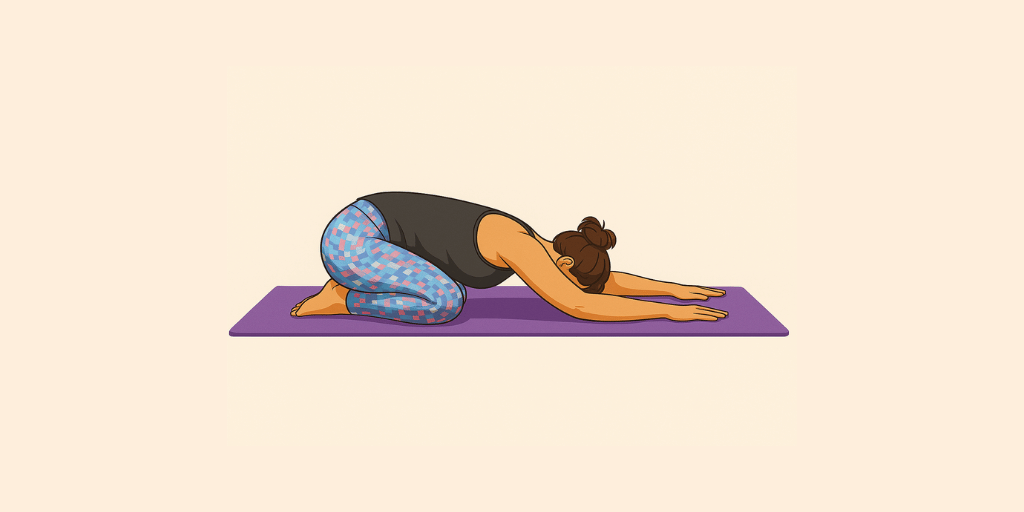
Sanskrit Name: बालासन
English Name: Child Pose
Description
Balasana, commonly known as Child’s Pose, offers a soothing embrace for your body. This gentle pose is perfect for relaxation, making it an excellent choice for beginners or for those needing a breather between more challenging poses. It serves to calm both the body and mind, providing a moment to breathe deeply and feel centered. Consider it a serene interlude, allowing you to reset and rejuvenate before continuing with your yoga session or daily activities.
The term “Bala” translates to “Child” in Sanskrit, while “Asana” means “Pose.”
Balasana acts as a tranquil reset within your yoga routine. It has been practiced for centuries in Hatha Yoga to alleviate tension and promote tranquility. Typically performed after more strenuous poses, it allows you to regain your breath and release stress.
The charm of Balasana lies in its simplicity. It’s accessible to everyone, regardless of their experience level or age. It functions as a brief pause in your practice, enabling relaxation and renewal before proceeding.
How to Do
Here are the steps to do Balasana (Child’s Pose).
- Start in a Kneeling Position: Begin by sitting on your knees with your feet together and knees slightly apart, about hip-width apart. Make sure your hips are directly over your heels.
- Lower Your Torso: Inhale deeply, and as you exhale, slowly lower your torso forward, bringing your chest towards your thighs. Let your forehead rest on the floor (or on a cushion or block for support if needed).
- Extend Your Arms Forward or Relax by Your Sides: You can extend your arms forward on the floor with palms facing down to deepen the stretch in your spine. Alternatively, you can relax your arms by your sides, with palms facing up for a more restful version of the pose.
- Focus on Your Breathing: Take slow, deep breaths as you hold the pose. With each inhale, feel your ribs expand, and with each exhale, allow your body to relax more deeply into the stretch.
- Hold the Pose: Stay in Balasana for 30 seconds to 1 minute, or longer if it feels comfortable. Focus on releasing tension from your neck, shoulders, and back as you breathe deeply.
- Release the Pose: To come out of the pose, slowly lift your torso back up and return to a seated kneeling position.
Balasana is often used as a resting pose during a yoga practice, as it helps to release tension and reset the body. You can modify the pose by placing a cushion or blanket under your hips or forehead for added comfort.
Benefits
- Balasana, commonly known as Child’s Pose, is beneficial for various medical conditions.
- It aids in alleviating stress and anxiety by promoting relaxation and calming the mind.
- This pose can also help relieve back pain and tension in the spine, making it suitable for individuals with chronic back issues.
- Additionally, it stretches the hips, thighs, and lower back, which can be advantageous for those suffering from sciatica or tightness in these areas.
- Furthermore, Balasana supports digestion and can provide relief from constipation, enhancing overall gastrointestinal health.
- These benefits make Balasana a valuable addition to any yoga practice, promoting overall physical and mental well-being.
Medical Conditions(Relief)
- Stress Relief: Balasana helps calm the mind and relieve stress and anxiety by promoting relaxation and introspection.
- Stretching the Back: This pose gently stretches the spine, alleviating tension and discomfort in the back and neck.
- Improved Circulation: It encourages blood flow to the brain, enhancing mental clarity and reducing fatigue.
- Digestive Aid: The forward bend can stimulate the digestive organs, aiding in digestion and relieving bloating.
- Emotional Release: Balasana can help release pent-up emotions, providing a safe space for emotional healing and release.
- Restorative Benefits: It is a restorative pose that promotes deep relaxation, making it beneficial for recovery after intense physical activity.
Medical Conditions(Avoid)
- Knee Injuries: Individuals with knee injuries or chronic knee pain may find this pose uncomfortable or exacerbating their condition.
- Pregnancy: Especially in the later stages, Balasana can put pressure on the abdomen and may not be suitable.
- Back Problems: Those with severe back issues or spinal injuries should avoid this pose, as it may strain the back further.
- Recent Surgery: Anyone who has had recent abdominal or knee surgery should refrain from this pose to prevent discomfort or complications.
- Severe Asthma: Individuals with severe asthma may find it difficult to breathe comfortably in this position.
References
- Patanjali, Yoga Sutras of Patanjali, Commentary by Swami Sivananda. Divine Life Society, 1990; p. 58.
- Swatmarama, Hatha Yoga Pradipika, Edited by Swami Muktibodhananda. Bihar School of Yoga, 1998; p. 72.
- Sushruta, Sushruta Samhita, Commentary by Acharya Y.T. (5th ed.). Varanasi: Chaukambha Orientalia, 1992; p. 445.
- Krishnamacharya, Yoga Makaranda, Translated by A.G. Mohan. Krishnamacharya Yoga Mandiram, 2012; p. 103.
- Iyengar B.K.S., Light on Yoga. HarperCollins Publishers, 1966; p. 102.
- Desikachar T.K.V., The Heart of Yoga: Developing a Personal Practice. Inner Traditions, 1995; p. 88.
- Jois K. Pattabhi, Yoga Mala. The Yoga Institute, 2002; p. 120.
- Swami Vivekananda, Raja Yoga. Advaita Ashrama, 1993; p. 61.
- Swami Sivananda, The Science of Pranayama. Divine Life Society, 1951; p. 99.
- Sivananda Yoga Vedanta Centres, Yoga and Health. Sivananda Publications, 2005; p. 45.

