
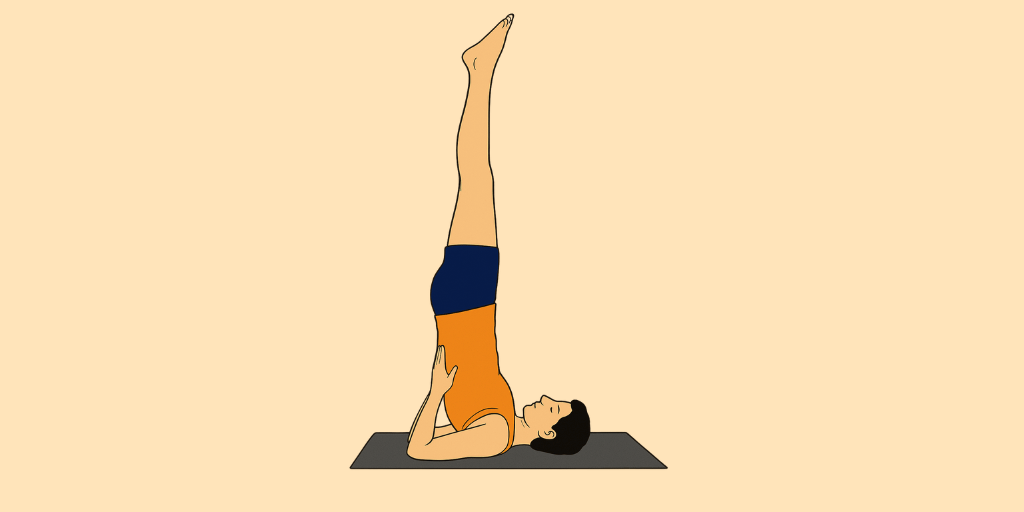
Sanskrit name: सर्वाङ्गासन
English name: Shoulder Stand
Description
Sarvangasana is derived from three Sanskrit terms: ‘Sarv’ meaning all, ‘Anga’ signifying body parts, and ‘Asana’ referring to posture. Therefore, Sarvangasana is a pose that enhances the functioning of all body parts. It is regarded as one of the foremost Hatha yoga asanas and is often referred to as the “Queen of Asanas” due to its extensive health benefits.
This asana provides a multitude of advantages for the entire body. As you transition into the pose, your body will balance on your shoulders, engaging your core and legs while fostering overall strength and stability. This pose is celebrated for its capacity to invigorate the body and soothe the mind, offering numerous health benefits from head to toe.
How to Do
Here are the steps to do Sarvangasana (Shoulder Stand).
- Lie on Your Back: Start by lying flat on your back with your legs extended and your arms by your sides, palms facing down.
- Lift Your Legs: Inhale and slowly raise your legs together, keeping them straight. Bring your legs towards your chest and then, as you exhale, raise your legs straight up toward the ceiling.
- Support Your Lower Back: Place your hands on your lower back for support, with your elbows on the floor, shoulder-width apart. Keep your elbows and arms firm and press your forearms into the floor to help lift your body.
- Lift Your Hips and Spine: Inhale deeply, and, using your arms for support, lift your hips off the floor, bringing your legs up in a straight line above your body. Keep your core engaged and press your elbows firmly into the floor.
- Align Your Body: Straighten your legs completely and align them vertically above your shoulders. Your body should form a straight line, with your weight supported by your shoulders, upper arms, and elbows.
- Adjust Your Hands: Once your body is upright, slide your hands higher on your back, bringing them closer to your shoulders for more stability. Your arms should be firmly pressing against the floor to maintain balance.
- Relax Your Neck: Keep your neck relaxed, avoiding any pressure on it. Gently tuck your chin towards your chest to maintain the natural curve of your neck.
- Hold the Pose: Stay in the position for 20-60 seconds, breathing deeply and evenly. Keep your legs straight and engaged while focusing on maintaining balance and stability.
- Release the Pose: To come out of the pose, gently lower your legs towards the floor while supporting your back with your hands. Roll your spine down slowly, one vertebra at a time, and return to lying on your back.
- Rest in Savasana: After releasing, rest in Savasana (Corpse Pose) for a few moments to relax and allow your body to adjust.
Practice with a wall for support if you’re new to this pose.
Benefits
- Sarvangasana, commonly known as the Shoulder Stand, is beneficial for various medical conditions.
- It can aid in improving circulation, which is helpful for individuals with cardiovascular issues.
- The pose also supports thyroid function, making it advantageous for those with hypothyroidism.
- Additionally, it can alleviate stress and anxiety, contributing positively to mental health.
- Furthermore, Sarvangasana may assist in relieving symptoms of insomnia and improving digestion, making it suitable for those with gastrointestinal concerns.
- Overall, this asana promotes overall well-being and balance in the body.
Medical Conditions(Relief)
- Improves Circulation: Helps enhance blood flow, particularly to the upper body and head.
- Strengthens the Core: Tones the abdominal muscles and strengthens the core.
- Relieves Stress and Anxiety: Calms the nervous system, reducing stress and anxiety.
- Improves Thyroid Function: Stimulates the thyroid gland, promoting hormonal balance.
- Boosts Digestion: Aids in the improvement of digestion by massaging abdominal organs.
- Enhances Balance and Stability: Improves body balance and coordination.
- Relieves Neck and Shoulder Tension: Alleviates tension and stiffness in the neck and shoulders.
Medical Conditions(Avoid)
- Neck Injuries: Individuals with any neck injuries should avoid this pose as it places significant pressure on the cervical spine.
- Glaucoma: This asana increases intraocular pressure, which can exacerbate glaucoma symptoms.
- Thyroid Disorders: Those with hyperthyroidism or other thyroid conditions should avoid this pose, as it can affect thyroid function.
- Pregnancy : Pregnant individuals should refrain from practicing Sarvangasana due to the potential risk of compressing the abdomen.
- High Blood Pressure : This pose may elevate blood pressure, making it unsuitable for those with hypertension.
- Herniated Discs : Individuals with herniated or bulging discs should avoid this pose to prevent further injury.
- Severe Asthma : Those with severe respiratory issues may find this pose uncomfortable and should avoid it.
- Recent Surgery : Anyone who has had recent surgery, especially in the neck, back, or abdomen, should not practice this asana until fully healed.
References
- Patanjali, Yoga Sutras of Patanjali, Commentary by Swami Sivananda. Divine Life Society, 1990; p. 58.
- Swatmarama, Hatha Yoga Pradipika, Edited by Swami Muktibodhananda. Bihar School of Yoga, 1998; p. 72.
- Sushruta, Sushruta Samhita, Commentary by Acharya Y.T. (5th ed.). Varanasi: Chaukambha Orientalia, 1992; p. 445.
- Krishnamacharya, Yoga Makaranda, Translated by A.G. Mohan. Krishnamacharya Yoga Mandiram, 2012; p. 103.
- Iyengar B.K.S., Light on Yoga. HarperCollins Publishers, 1966; p. 102.
- Desikachar T.K.V., The Heart of Yoga: Developing a Personal Practice. Inner Traditions, 1995; p. 88.
- Jois K. Pattabhi, Yoga Mala. The Yoga Institute, 2002; p. 120.
- Swami Vivekananda, Raja Yoga. Advaita Ashrama, 1993; p. 61.
- Swami Sivananda, The Science of Pranayama. Divine Life Society, 1951; p. 99.
- Sivananda Yoga Vedanta Centres, Yoga and Health. Sivananda Publications, 2005; p. 45.

