
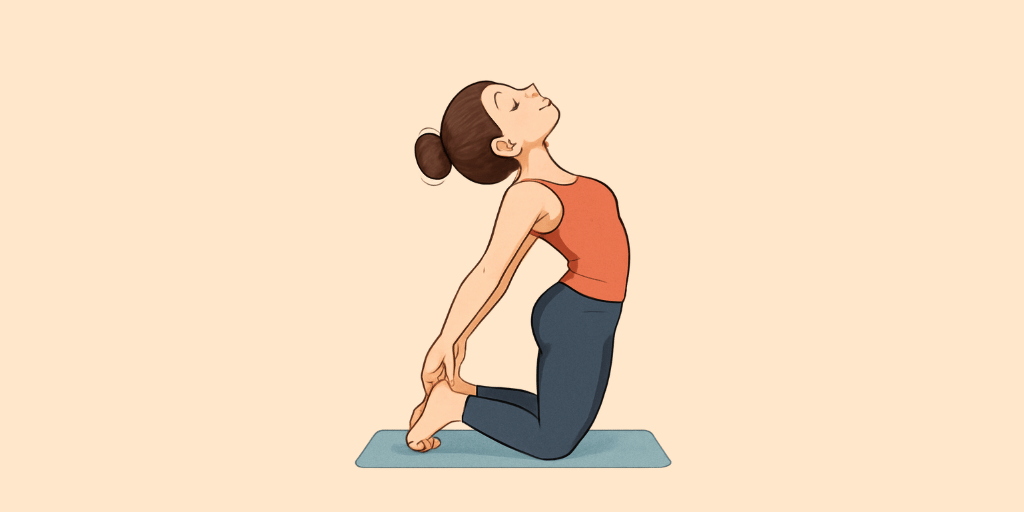
Sanskrit Name: उष्ट्रासन
English Name: Camel Pose
Description
Ushtrasana, commonly referred to as Camel Pose, is a yoga posture that emphasizes deep backbending and opens the heart. Its name derives from Sanskrit, where Ustra translates to camel and asana means pose or posture. This pose resembles the form of a camel with the body.
The term Ustra symbolizes a camel, an animal known for its endurance, strength, and elegance. Camels can withstand harsh environments, representing resilience and adaptability. Practicing Ustrasana not only enhances physical flexibility and strength but also fosters a sense of endurance and resilience. This pose encourages both physical and emotional openness, providing a refreshing and grounding experience.
Ustrasana has a long history, rooted in traditional Hatha yoga, which prepares the body for meditation. It has likely been transmitted through ancient texts such as the Hatha Yoga Pradipika and the Yoga Korunta, which detail postures aimed at purifying and reinforcing the body. Over time, Ustrasana has evolved into a vital aspect of yoga, focusing on flexibility and balance.
How to Do
Here are the steps to do Ushtrasana (Camel Pose).
- Start in a Kneeling Position: Begin by kneeling on the floor with your knees hip-width apart. Your feet should be flat on the ground, with your toes pointing backward.
- Place Your Hands on Your Hips: Place your hands on your hips with your fingers pointing downward and your elbows pointing out to the sides. This helps to stabilize your torso as you move into the backbend.
- Engage Your Core: Engage your core and lengthen your spine to prepare for the backbend. Inhale deeply, ensuring that your spine stays straight and your shoulders are relaxed.
- Start to Lean Back: As you exhale, gently begin to lean your upper body backward, keeping your chest lifted and your back straight. Keep your hips stacked over your knees.
- Reach for Your Heels: Once you feel a stretch in your lower back, reach one hand at a time to grab your heels. Your palms should face down on the soles of your feet. If you cannot reach your heels, you can keep your hands on your lower back for support.
- Push the Hips Forward: Push your hips forward while continuing to lift your chest and stretch your back. You should feel an opening in the chest and a deep stretch in the front of the body.
- Drop Your Head Back: Once your hands are firmly on your heels, you can drop your head back, gazing towards the ceiling. Keep your neck relaxed, and avoid compressing the neck.
- Hold the Pose: Stay in Ushtrasana for 20-30 seconds, breathing deeply and steadily. Focus on lifting your chest higher with each inhale and deepening the stretch in the front of your body with each exhale.
- Release the Pose: To come out of the pose, bring your chin toward your chest first. Then, gently press your hips forward and slowly raise your torso back up to an upright position. Relax in a seated position for a few moments.
Ushtrasana is a wonderful backbend that helps in both physical and emotional release, increasing vitality and boosting confidence.
Benefits
- Ushtrasana, or Camel Pose, is beneficial for various medical conditions.
- It can aid in alleviating back pain by stretching the spine and improving flexibility.
- This asana also helps in respiratory issues, as it opens up the chest and enhances lung capacity.
- Additionally, it may provide relief from stress and anxiety by promoting relaxation and mental clarity.
- Furthermore, Ushtrasana can stimulate the digestive system, assisting in better digestion and alleviating constipation.
Medical Conditions(Relief)
- Improves Flexibility: Ushtrasana stretches the entire front body, enhancing flexibility in the spine, hip flexors, and chest.
- Strengthens Back Muscles: It engages and strengthens the back muscles, promoting better posture and spinal alignment.
- Stimulates Digestive Organs: The pose aids in improving digestion by stimulating the abdominal organs, which can help alleviate digestive issues.
- Opens the Heart and Lungs: By expanding the chest, Ushtrasana encourages deep breathing and improves lung capacity, which can enhance respiratory health.
- Reduces Stress and Anxiety: The heart-opening nature of the pose can help release emotional tension, leading to reduced stress and anxiety levels.
- Therapeutic for Asthma: The expansion of the chest and lungs can provide relief for individuals with asthma by improving airflow.
- Enhances Circulation: Ushtrasana promotes blood flow to the spine and vital organs, contributing to overall cardiovascular health.
- Relieves Fatigue: Practicing this asana can help alleviate fatigue and boost energy levels due to its invigorating nature.
Medical Conditions(Avoid)
- Back Injuries: Individuals with recent or chronic back injuries, including herniated discs, may exacerbate their condition due to the intense back extension required in this pose.
- Knee Issues: Those with knee problems, such as arthritis or ligament injuries, should avoid this pose as it places significant pressure on the knees.
- Pregnancy: Pregnant individuals should refrain from practicing Ushtrasana, especially in the later stages, as the pose can compress the abdomen and may not be safe for the developing fetus.
- Heart Conditions: People with serious heart conditions should avoid this pose, as it may cause undue strain on the cardiovascular system.
- Migraine or Headaches: Practicing Ushtrasana can increase blood flow to the head, potentially triggering or worsening migraines or tension headaches.
- Recent Abdominal Surgery: Those who have undergone recent abdominal surgery should avoid this pose to prevent strain on the healing tissues.
- Severe Asthma: Individuals with severe asthma may find it difficult to breathe in this position, as it can restrict chest expansion.
References
- Patanjali, Yoga Sutras of Patanjali, Commentary by Swami Sivananda. Divine Life Society, 1990; p. 58.
- Swatmarama, Hatha Yoga Pradipika, Edited by Swami Muktibodhananda. Bihar School of Yoga, 1998; p. 72.
- Sushruta, Sushruta Samhita, Commentary by Acharya Y.T. (5th ed.). Varanasi: Chaukambha Orientalia, 1992; p. 445.
- Krishnamacharya, Yoga Makaranda, Translated by A.G. Mohan. Krishnamacharya Yoga Mandiram, 2012; p. 103.
- Iyengar B.K.S., Light on Yoga. HarperCollins Publishers, 1966; p. 102.
- Desikachar T.K.V., The Heart of Yoga: Developing a Personal Practice. Inner Traditions, 1995; p. 88.
- Jois K. Pattabhi, Yoga Mala. The Yoga Institute, 2002; p. 120.
- Swami Vivekananda, Raja Yoga. Advaita Ashrama, 1993; p. 61.
- Swami Sivananda, The Science of Pranayama. Divine Life Society, 1951; p. 99.
- Sivananda Yoga Vedanta Centres, Yoga and Health. Sivananda Publications, 2005; p. 45.

