
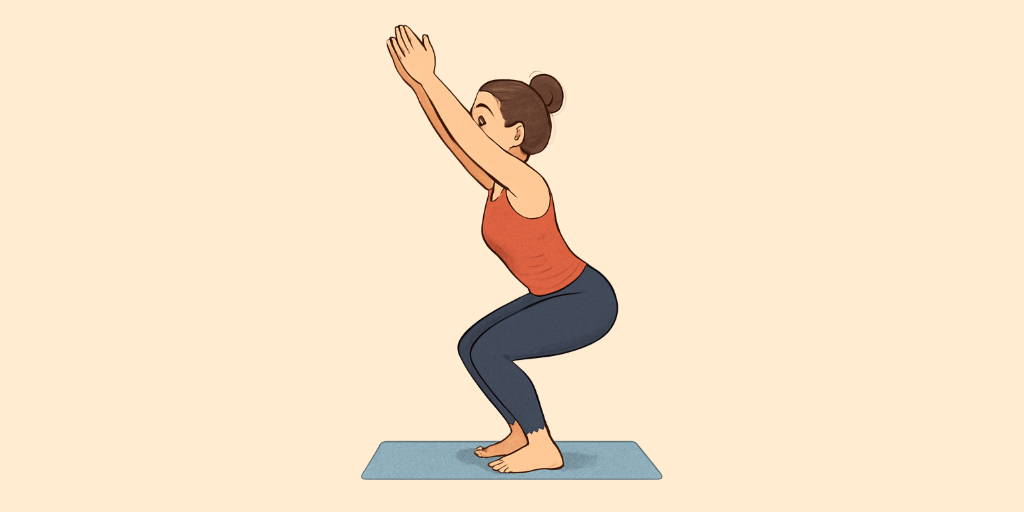
Sanskrit Name: उत्तानासन
English Name: Chair Pose
Description
Utkatasana, commonly known as Chair Pose, is a standing yoga position that enhances strength in the legs, core, and back. The term Utkatasana is derived from two Sanskrit words: Utkata , which means “powerful,” “fierce,” or “intense,” and Asana, meaning “pose” or “posture”. Thus, Utkatasana can be interpreted as “The Powerful Pose” or “The Fierce Pose.”
While it is a component of traditional Hatha Yoga, it is not as ancient as some other yoga poses; its origins can be found in classical yoga texts. This pose was likely created to build leg and core strength for the physical stamina needed in yoga practice, especially for practitioners who engaged in lengthy meditation or seated positions.
Its historical significance lies in traditional yoga practices, where cultivating physical endurance and strength was essential for supporting meditation and spiritual development. Nowadays, it is a common feature in various yoga classes due to its physical advantages and its capacity to challenge both the body and mind.
How to Do
Here are the steps to do Utkatasana (Chair Pose).
- Start in Tadasana (Mountain Pose): Begin by standing tall with your feet together and your arms by your sides. Engage your thighs and lift your kneecaps slightly. Ensure that your weight is evenly distributed on both feet.
- Bend Your Knees: Inhale deeply and, as you exhale, bend your knees as if you are sitting in a chair. Push your hips back while keeping your chest lifted and your spine long. Your knees should not extend past your toes, and they should be aligned with your feet.
- Raise Your Arms: As you bend your knees, extend your arms straight in front of you, parallel to the floor. Keep your palms facing inward, and your fingers stretched out. Alternatively, you can bring your arms overhead with palms facing each other if you want a deeper stretch.
- Engage Your Core: Engage your core muscles to maintain stability and protect your lower back. Keep your torso lifted and your shoulders relaxed.
- Hold the Pose: Hold the position for 15–30 seconds or longer, breathing deeply and steadily. As you hold the pose, focus on keeping your thighs engaged and your weight in your heels. Your legs should be actively working to hold the position.
- Come Out of the Pose: To release, inhale and slowly rise back up to the standing position. Straighten your legs and lower your arms back to your sides.
- Rest: After releasing the pose, take a moment to relax in Tadasana or Savasana (Corpse Pose) to recover from the pose.
If you have any knee or lower back injuries, avoid going too deep into the bend. Use a chair or wall for support if necessary.
Benefits
- Incorporating Utkatasana into a regular yoga practice can lead to these therapeutic benefits, contributing to both physical and mental well-being.
- It strengthens the thighs, calves, and spine, which may aid in alleviating lower back pain.
- Additionally, this pose can enhance circulation and improve respiratory function, making it helpful for those with respiratory issues.
- Practicing Utkatasana can also support digestive health by stimulating the abdominal organs, potentially easing symptoms of constipation.
- Furthermore, it promotes mental focus and can help reduce stress and anxiety, contributing to overall emotional well-being.
Medical Conditions(Relief)
- Strengthens Lower Body: Utkatasana engages and strengthens the muscles in the thighs, calves, and glutes, improving overall lower body strength.
- Enhances Posture: This asana promotes proper alignment and posture by encouraging the practitioner to engage their core and maintain an upright spine.
- Improves Balance: The pose requires balance and stability, which can enhance coordination and body awareness over time.
- Stimulates Digestive Organs: By compressing the abdomen, Utkatasana can stimulate the digestive organs, aiding in digestion and improving metabolic function.
- Increases Endurance: Holding the pose builds stamina, as it requires both physical and mental endurance, which can be beneficial for various physical activities.
- Alleviates Stress: The focus and concentration needed for Utkatasana can help reduce stress and anxiety, promoting a sense of calm and mental clarity.
- Strengthens the Spine: Regular practice can enhance spinal strength and flexibility, contributing to better back health and reducing the risk of injury.
- Enhances Circulation: The pose encourages blood flow to the lower body, which can improve circulation and overall cardiovascular health.
Medical Conditions(Avoid)
- Knee Injuries: Individuals with knee problems, such as arthritis or ligament injuries, may exacerbate their condition due to the strain placed on the knees during this pose.
- Lower Back Issues: Those with chronic lower back pain or herniated discs should be cautious, as the pose requires significant engagement of the lower back, potentially leading to discomfort or injury.
- Hip Problems: People with hip issues, including bursitis or severe hip pain, may find that the pose aggravates their condition due to the required hip flexion and external rotation.
- Cardiovascular Concerns: Individuals with severe hypertension or heart conditions should avoid this pose as it can increase blood pressure and heart rate.
- Pregnancy: Pregnant individuals, especially in later trimesters, should avoid this pose due to the strain it places on the lower back and the risk of losing balance.
- Recent Surgeries: Those recovering from surgeries involving the knees, hips, or lower back should refrain from practicing Utkatasana until fully healed and cleared by a healthcare professional.
References
- Patanjali, Yoga Sutras of Patanjali, Commentary by Swami Sivananda. Divine Life Society, 1990; p. 58.
- Swatmarama, Hatha Yoga Pradipika, Edited by Swami Muktibodhananda. Bihar School of Yoga, 1998; p. 72.
- Sushruta, Sushruta Samhita, Commentary by Acharya Y.T. (5th ed.). Varanasi: Chaukambha Orientalia, 1992; p. 445.
- Krishnamacharya, Yoga Makaranda, Translated by A.G. Mohan. Krishnamacharya Yoga Mandiram, 2012; p. 103.
- Iyengar B.K.S., Light on Yoga. HarperCollins Publishers, 1966; p. 102.
- Desikachar T.K.V., The Heart of Yoga: Developing a Personal Practice. Inner Traditions, 1995; p. 88.
- Jois K. Pattabhi, Yoga Mala. The Yoga Institute, 2002; p. 120.
- Swami Vivekananda, Raja Yoga. Advaita Ashrama, 1993; p. 61.
- Swami Sivananda, The Science of Pranayama. Divine Life Society, 1951; p. 99.
- Sivananda Yoga Vedanta Centres, Yoga and Health. Sivananda Publications, 2005; p. 45.

