
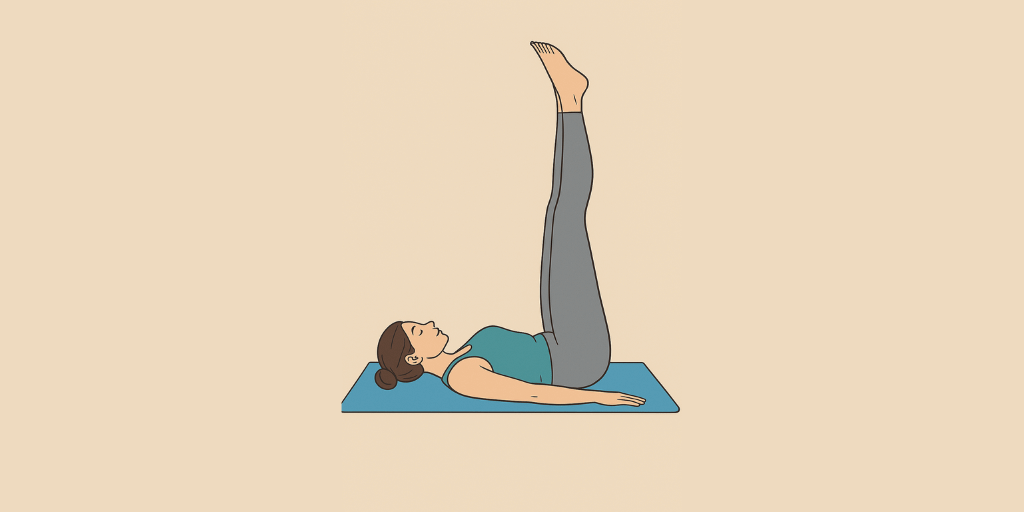
Sanskrit Name: अर्ध हलासन
English Name: Half Plow Pose
Description
Ardha Halasana, known as Half Plow Pose, is a revitalizing yoga position that fortifies the core, enhances blood flow, and aids digestion. The term is derived from Sanskrit: “Ardha” (अर्ध) translates to “half,” “Hala” (हल) means “plow,” and “Asana” (आसन) signifies “pose.” This asana serves as a beginner-friendly version of Halasana (Plow Pose) and is commonly practiced in Hatha Yoga for its ability to stimulate the abdominal area and promote flexibility.
Ardha Halasana is rooted in Hatha Yoga traditions, where partial leg lifts were utilized to progressively enhance core strength and spinal flexibility. Ancient yogis believed that elevating the legs encouraged digestion, boosted circulation, and activated the Manipura (Solar Plexus) Chakra, which regulates metabolism and energy flow.
This posture was originally practiced as a preparatory pose for Halasana (Plow Pose), facilitating easier adaptation for beginners to deeper stretches. Over time, Ardha Halasana has evolved into a standalone asana in contemporary yoga due to its accessibility and therapeutic benefits.
How to Do
Here are the steps to do Ardha Halasana (Half Plow Pose).
- Lie on Your Back: Begin by lying flat on your back on a yoga mat. Keep your legs straight and arms by your sides, with your palms facing down for stability.
- Engage Your Core: Take a few deep breaths, engaging your core and lengthening your spine. Keep your head, neck, and shoulders relaxed on the mat.
- Lift Your Legs: Inhale deeply and begin to lift your legs off the floor. Keep your legs straight and together as you raise them to a 90-degree angle from the floor.
- Lower Your Legs: Exhale and slowly begin to lower your legs towards the floor. Keep your legs straight and avoid letting your back arch as you move. Aim to bring your legs to a 45-degree angle to the floor. You may place your hands under your hips for extra support and stability if needed.
- Hold the Position: Hold the position for 15–30 seconds, breathing deeply and evenly. Keep your legs straight and your core engaged, and ensure that your spine remains long and stable.
- Come Out of the Pose: To release the pose, inhale deeply and slowly raise your legs back up to the 90-degree angle. Then, exhale and gently lower your legs back to the floor, one vertebra at a time. Rest in Savasana (Corpse Pose) for a few moments to relax.
Ensure that you keep your neck and spine aligned throughout the pose.
Benefits
- Incorporating Ardha Halasana into a regular yoga practice can thus yield significant physical and mental health benefits.
- It aids in alleviating stress and anxiety, enhances digestion, and relieves lower back pain.
- Additionally, it can improve flexibility in the spine and strengthen the core muscles, which may help in managing conditions related to posture and spinal alignment.
- This pose also promotes better blood circulation, which can be advantageous for overall cardiovascular health.
Medical Conditions(Relief)
- Improved Digestion: The pose stimulates the abdominal organs, enhancing digestive function and alleviating digestive disorders.
- Strengthening the Core: Engaging the core muscles during the pose helps build strength and stability in the abdominal region.
- Relief from Stress and Anxiety: The inversion aspect of the pose promotes relaxation, reducing stress and anxiety levels by calming the nervous system.
- Enhanced Flexibility: Regular practice increases flexibility in the spine and hamstrings, contributing to overall body mobility.
- Improved Blood Circulation: The pose encourages better blood flow, particularly to the upper body and brain, which can enhance cognitive function and energy levels.
- Alleviation of Back Pain: By stretching and strengthening the spine, Ardha Halasana can help relieve tension and discomfort in the lower back.
- Hormonal Balance: The pose can stimulate the thyroid and adrenal glands, promoting hormonal balance and overall endocrine health.
Medical Conditions(Avoid)
- Neck Injuries: Individuals with any neck injuries or conditions like cervical spondylosis should avoid this pose, as it places strain on the neck.
- Back Problems: Those with severe lower back issues, such as herniated discs or sciatica, should refrain from practicing Ardha Halasana to prevent exacerbating their condition.
- Pregnancy: Pregnant individuals should avoid this asana, particularly in the later stages, due to the pressure it places on the abdomen.
- High Blood Pressure: This pose can lead to an increase in blood pressure; thus, individuals with hypertension should avoid it.
- Glaucoma or Eye Conditions: Those suffering from glaucoma or other eye conditions should avoid this pose to prevent increased pressure in the eyes.
- Recent Abdominal Surgery: Individuals who have undergone recent surgery in the abdominal area should avoid this asana to prevent strain and promote healing.
References
- Patanjali, Yoga Sutras of Patanjali, Commentary by Swami Sivananda. Divine Life Society, 1990; p. 58.
- Swatmarama, Hatha Yoga Pradipika, Edited by Swami Muktibodhananda. Bihar School of Yoga, 1998; p. 72.
- Sushruta, Sushruta Samhita, Commentary by Acharya Y.T. (5th ed.). Varanasi: Chaukambha Orientalia, 1992; p. 445.
- Krishnamacharya, Yoga Makaranda, Translated by A.G. Mohan. Krishnamacharya Yoga Mandiram, 2012; p. 103.
- Iyengar B.K.S., Light on Yoga. HarperCollins Publishers, 1966; p. 102.
- Desikachar T.K.V., The Heart of Yoga: Developing a Personal Practice. Inner Traditions, 1995; p. 88.
- Jois K. Pattabhi, Yoga Mala. The Yoga Institute, 2002; p. 120.
- Swami Vivekananda, Raja Yoga. Advaita Ashrama, 1993; p. 61.
- Swami Sivananda, The Science of Pranayama. Divine Life Society, 1951; p. 99.
- Sivananda Yoga Vedanta Centres, Yoga and Health. Sivananda Publications, 2005; p. 45.

