
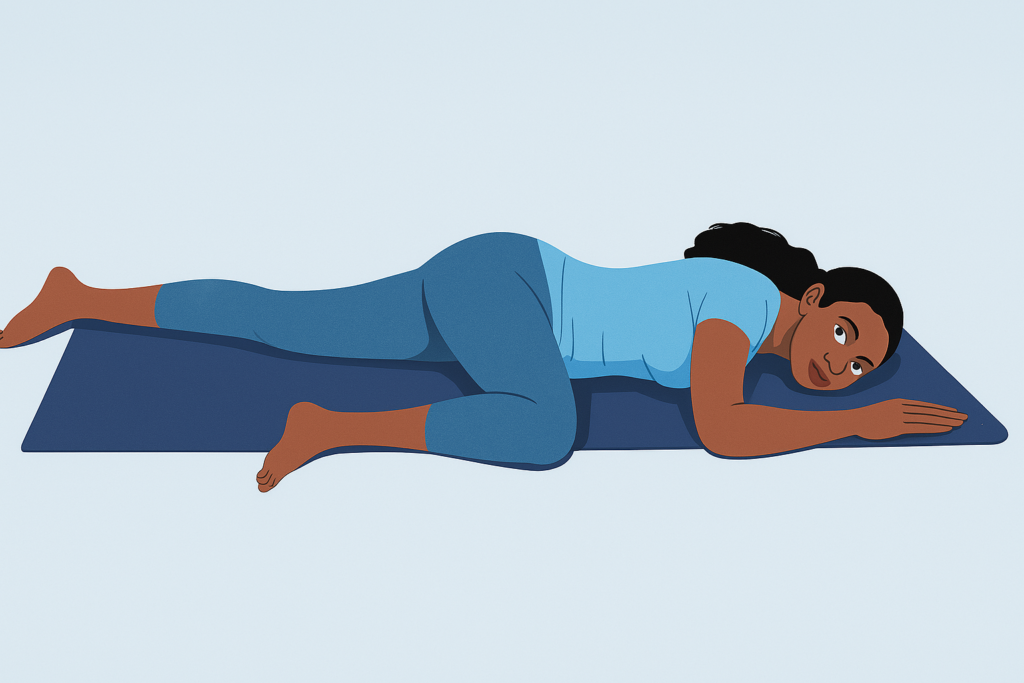
Sanskrit Name: मकरासन
English Name: Crocodile Pose
Description
Makrasana, derived from the Sanskrit term “Makra” (मकर) meaning “crocodile” and “Asana” (आसन) which translates to “pose” or “seat,” is known as “Crocodile Pose.” This pose resembles a crocodile lying on the ground. It serves as a calming and restorative posture, aimed at soothing both the body and mind.
Unlike more vigorous yoga poses, Makrasana emphasizes relaxation over effort and is often practiced after more demanding poses to help the body unwind, alleviate tension, and foster a sense of peace. Although it may not have the ancient significance of poses like Padmasana or Trikonasana, Makrasana is valued in contemporary yoga for its energy-restoring and tranquil qualities.
How to Do
Here are the steps to do Makrasana (Crocodile Pose).
- Lie on Your Stomach: Begin by lying flat on your stomach with your legs extended and your feet placed about hip-width apart.
- Position Your Arms: Extend your arms out in front of you, keeping them parallel to each other. Alternatively, you can place your arms at a 90-degree angle, forming a “T” shape with your body.
- Relax Your Head and Neck: Rest your forehead on the floor, with your neck relaxed. You can place a cushion or bolster under your forehead if it feels more comfortable.
- Place Your Hands: Bring your forearms together so that your hands rest gently on top of each other, with your elbows pointing outward. Alternatively, you can rest your hands under your chin, making a comfortable “crocodile” position.
- Relax Your Legs and Hips: Keep your legs relaxed, with your feet slightly apart, and allow your hips to gently sink into the floor.
- Focus on Your Breath: Breathe deeply and evenly, letting the breath flow naturally. With each inhale, feel your chest and stomach expand. With each exhale, allow your body to release any tension.
- Hold the Pose: Stay in the pose for 2–5 minutes, focusing on relaxation and deep breathing. You should feel a gentle stretch in your lower back and a deep release in your body.
- Release the Pose: To release, slowly lift your forehead off the floor, extend your legs out, and rest in Savasana (Corpse Pose) for a few moments to allow your body to relax completely.
Makrasana is a relaxing, restorative pose commonly used in between more challenging asanas, especially after backbends, to help release tension and restore energy.
Benefits
- Overall, Makrasana is a gentle yet effective pose that supports both physical and mental well-being.
- Makrasana, also known as Crocodile Pose, is beneficial for several medical conditions. It aids in relieving stress and anxiety, promoting relaxation.
- This asana can also help alleviate back pain by stretching the spine and improving posture.
- Additionally, it supports respiratory health by enhancing lung capacity and encouraging deep breathing.
- Furthermore, Makrasana may aid in digestion and help reduce fatigue, making it a versatile pose for overall well-being.
Medical Conditions(Relief)
- Stress Relief: Makrasana helps calm the mind and reduce stress levels, promoting relaxation and mental clarity.
- Improved Digestion: The pose stimulates abdominal organs, aiding in digestion and relieving constipation.
- Back Pain Relief: It stretches the spine and alleviates tension in the lower back, providing relief for those with back pain.
- Respiratory Benefits: The position encourages deep breathing, enhancing lung capacity and respiratory function.
- Posture Correction: Regular practice can help improve posture by strengthening the back and shoulder muscles.
- Enhanced Flexibility: It increases flexibility in the hips and lower back, making it beneficial for overall mobility.
Medical Conditions(Avoid)
- Pregnancy: Pregnant individuals should avoid this pose as it may put pressure on the abdomen and affect the fetus.
- Recent Surgery: Those who have undergone abdominal or back surgery should refrain from practicing Makarasana until fully healed.
- Severe Back Pain: Individuals with acute back pain or serious back injuries should avoid this pose, as it can exacerbate discomfort.
- Neck Issues: Those with neck injuries or chronic neck pain should be cautious, as the position may strain the neck.
- Respiratory Conditions: Individuals with severe asthma or other respiratory issues might find it difficult to breathe comfortably in this position.
- Carpal Tunnel Syndrome: Those suffering from this condition may experience increased discomfort in the wrists during the pose.
References
- Patanjali, Yoga Sutras of Patanjali, Commentary by Swami Sivananda. Divine Life Society, 1990; p. 58.
- Swatmarama, Hatha Yoga Pradipika, Edited by Swami Muktibodhananda. Bihar School of Yoga, 1998; p. 72.
- Sushruta, Sushruta Samhita, Commentary by Acharya Y.T. (5th ed.). Varanasi: Chaukambha Orientalia, 1992; p. 445.
- Krishnamacharya, Yoga Makaranda, Translated by A.G. Mohan. Krishnamacharya Yoga Mandiram, 2012; p. 103.
- Iyengar B.K.S., Light on Yoga. HarperCollins Publishers, 1966; p. 102.
- Desikachar T.K.V., The Heart of Yoga: Developing a Personal Practice. Inner Traditions, 1995; p. 88.
- Jois K. Pattabhi, Yoga Mala. The Yoga Institute, 2002; p. 120.
- Swami Vivekananda, Raja Yoga. Advaita Ashrama, 1993; p. 61.
- Swami Sivananda, The Science of Pranayama. Divine Life Society, 1951; p. 99.
- Sivananda Yoga Vedanta Centres, Yoga and Health. Sivananda Publications, 2005; p. 45.

