
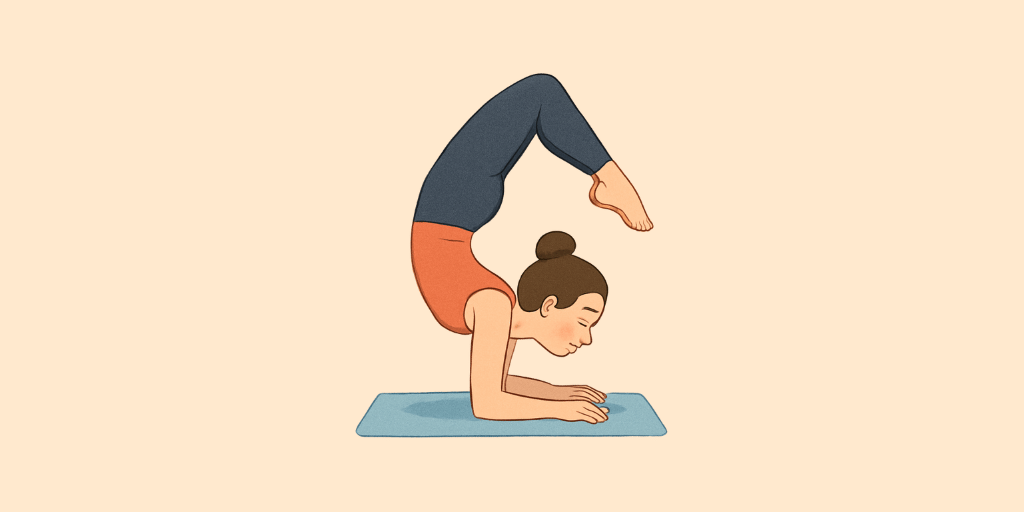
Sanskrit Name: वृश्चिकासन
English Name: Scorpion Pose
Description:
Vrischikasana, commonly referred to as Scorpion Pose, is a visually stunning and demanding yoga position. The term originates from the Sanskrit word Vrischika (वृष्चिक), which translates to “scorpion,” and Asana (आसन), meaning “pose” or “seat.” Thus, Vrischikasana signifies “Scorpion Pose,” as the body’s shape in this position mimics the arched back of a scorpion ready to strike.
Although Vrischikasana is a relatively modern addition to yoga and is not mentioned in ancient texts like the Yoga Sutras or Hatha Yoga Pradipika, it has become increasingly popular in contemporary yoga, particularly among those engaged in advanced practices. This pose requires a combination of strength, balance, and flexibility, making it a sought-after challenge for seasoned practitioners eager to test their limits.
Vrischikasana is not only powerful and striking but also represents overcoming challenges, akin to a scorpion navigating its surroundings with determination.
How to Do
Here are the steps to do Vrischikasana (Scorpion Pose).
- Start in a Forearm Plank Position: Begin by positioning yourself in a forearm plank (Makara Adho Mukha Svanasana). Start with your forearms on the floor, shoulder-width apart, and your legs extended behind you. Your body should be in a straight line from head to heels, engaging your core, thighs, and glutes.
- Lift Your Hips and Shoulders: Push through your forearms and lift your hips up toward the ceiling, bringing your legs into a vertical position. The goal is to form an inverted “V” shape with your body, similar to Adho Mukha Svanasana (Downward-Facing Dog), but with your forearms on the ground.
- Begin to Bend Your Knees: Once your hips are lifted, bend your knees and bring your feet towards your head. Begin to curl your knees over your back, keeping your legs active and engaged.
- Extend Your Legs Over Your Head: From this position, begin to slowly lower your legs towards the floor behind your head. The feet should aim toward the ground, while keeping the legs straight and the body balanced on your forearms.
- Engage Your Core and Lift Your Chest: As you move deeper into the pose, engage your core muscles to protect your lower back. Lift your chest slightly and try to balance by using your forearms, core, and legs. Focus on maintaining stability and balance as you bring your legs closer to the ground.
- Hold the Pose: Stay in the pose for 15–30 seconds, breathing deeply. Keep your gaze forward or slightly upward, focusing on stability and balance. Keep your legs active and strong, and make sure your back is not over-arched.
- Release the Pose: To come out of the pose, gently begin to lift your legs back toward the ceiling, and slowly lower your feet back down to the forearm plank position. Rest in Child’s Pose (Balasana) or Savasana for a few moments to release any tension in the body.
Vrischikasana is a challenging yet rewarding pose that builds strength and flexibility while enhancing mental focus.
Benefits
- Engaging the core during the pose enhances abdominal strength, which supports overall stability and posture.
- The pose stretches the spine, shoulders, and legs, promoting greater flexibility and range of motion in these areas.
- Balancing on the forearms helps improve overall balance and coordination, which can be beneficial in daily activities and other physical practices.
- The inverted nature of the pose can stimulate the nervous system, potentially improving mental clarity and focus.
- The inversion encourages blood flow to the brain and upper body, which may enhance circulation and oxygenation of tissues.
- Like many yoga practices, Vrischikasana can help reduce stress and anxiety levels by promoting mindfulness and relaxation.
- The weight-bearing aspect of the pose builds strength in the shoulders and arms, which can be beneficial for overall upper body strength.
- The intensity of the pose may facilitate emotional release and self-awareness, contributing to mental well-being.
Medical Conditions(Relief)
- Back Pain: This asana strengthens the spine and improves flexibility, which can alleviate discomfort in the back region.
- Digestive Issues: The pose stimulates the abdominal organs, aiding in digestion and promoting overall gut health.
- Stress and Anxiety: Practicing this pose encourages concentration and mindfulness, helping to reduce stress levels and anxiety.
- Improving Balance and Coordination: By enhancing proprioception, this asana helps improve overall balance and coordination, which can be beneficial for those with stability issues.
- Strengthening the Arms and Shoulders: It builds upper body strength, which is useful for individuals recovering from injuries or those looking to enhance their physical fitness.
Medical Conditions(Avoid)
- Carpal Tunnel Syndrome: The pressure on the wrists may exacerbate symptoms.
- Recent Wrist or Shoulder Injuries: Risk of further injury due to the weight-bearing nature of the pose.
- Pregnancy: The pose can strain the abdominal area and is not recommended for expectant mothers.
- Severe Back Issues: Conditions like herniated discs or severe lower back pain may worsen with this pose.
- High Blood Pressure: The inversion can increase blood pressure levels, posing health risks.
- Epilepsy: The pose’s inversion may trigger seizures in susceptible individuals.
- Glaucoma: The pressure on the head can worsen eye conditions.
References
- Patanjali, Yoga Sutras of Patanjali, Commentary by Swami Sivananda. Divine Life Society, 1990; p. 58.
- Swatmarama, Hatha Yoga Pradipika, Edited by Swami Muktibodhananda. Bihar School of Yoga, 1998; p. 72.
- Sushruta, Sushruta Samhita, Commentary by Acharya Y.T. (5th ed.). Varanasi: Chaukambha Orientalia, 1992; p. 445.
- Krishnamacharya, Yoga Makaranda, Translated by A.G. Mohan. Krishnamacharya Yoga Mandiram, 2012; p. 103.
- Iyengar B.K.S., Light on Yoga. HarperCollins Publishers, 1966; p. 102.
- Desikachar T.K.V., The Heart of Yoga: Developing a Personal Practice. Inner Traditions, 1995; p. 88.
- Jois K. Pattabhi, Yoga Mala. The Yoga Institute, 2002; p. 120.
- Swami Vivekananda, Raja Yoga. Advaita Ashrama, 1993; p. 61.
- Swami Sivananda, The Science of Pranayama. Divine Life Society, 1951; p. 99.
- Sivananda Yoga Vedanta Centres, Yoga and Health. Sivananda Publications, 2005; p. 45.

