
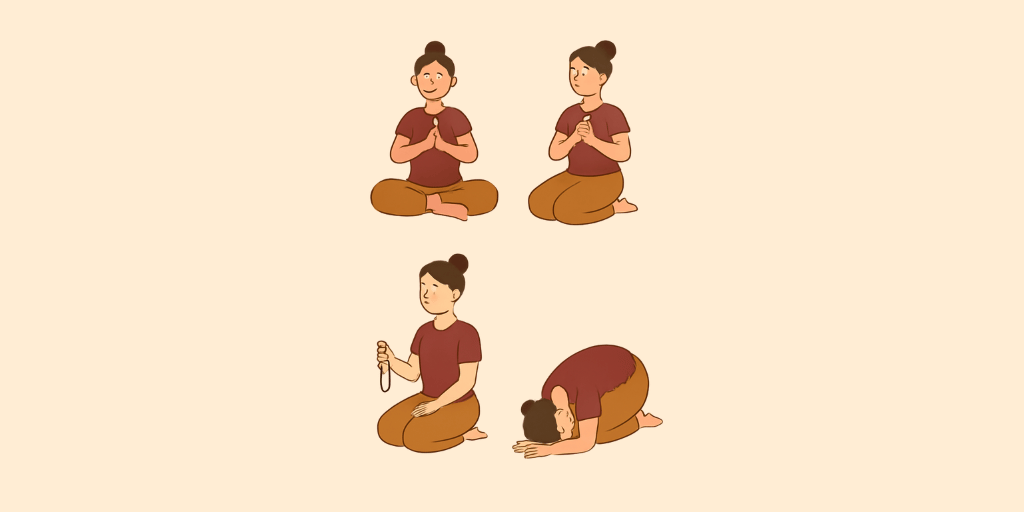
Sanskrit Name: भक्ति योग
English Name: Path of Devotion
Description
Bhakti Yoga, known as the Yoga of Devotion, is a profound spiritual practice that emphasizes love, faith, and surrender to a higher power. The term “Bhakti” originates from Sanskrit, meaning “devotion” or “love,” while “Yoga” translates to “union.” This path teaches that genuine liberation is achieved through selfless love and a steadfast commitment to the divine, promoting inner peace and emotional healing.
Bhakti Yoga has its roots in ancient texts like the Vedas and Upanishads, gaining significant attention in the Bhagavad Gita, where Lord Krishna highlights devotion as a direct route to liberation. The Bhakti Movement, spanning from the 7th to the 17th century CE, saw influential figures such as Ramanuja, Mirabai, and Kabir advocate for divine love and inclusivity, solidifying Bhakti Yoga’s importance in Indian culture.
Today, this practice remains integral to Hindu spiritual traditions, manifesting in temple worship, music (bhajans and kirtans), and poetry, allowing practitioners to express their devotion in varied forms. Unlike other yoga paths that prioritize physical postures or intellectual pursuits, Bhakti Yoga is heart-centered, focusing on compassion, gratitude, and emotional surrender, making it accessible and relevant to a global audience seeking a personal connection with the divine.
Medical Conditions(Relief)
- Anxiety and Stress: Yoga practices, particularly those involving mindfulness and breathing techniques, can significantly reduce anxiety levels and help manage stress effectively.
- Chronic Pain: Individuals suffering from chronic pain conditions, such as arthritis or lower back pain, may find relief through gentle yoga stretches and poses that promote flexibility and strength.
- Depression: Engaging in regular yoga can enhance mood and alleviate symptoms of depression by promoting relaxation and increasing feelings of well-being.
- Cardiovascular Health: Yoga can improve heart health by reducing blood pressure, lowering cholesterol levels, and enhancing overall cardiovascular function through relaxation and physical activity.
- Respiratory Issues: Practices like pranayama (breath control) can benefit those with respiratory conditions, improving lung function and enhancing breathing patterns.
- Digestive Disorders: Certain yoga poses can stimulate digestion and relieve symptoms associated with gastrointestinal issues, such as bloating or constipation.
- Sleep Disorders: Yoga can promote better sleep quality by reducing tension and encouraging relaxation, making it a useful tool for those struggling with insomnia.
- Post-Traumatic Stress Disorder (PTSD): Yoga may help individuals with PTSD by fostering a sense of safety, improving emotional regulation, and reducing hyperarousal symptoms.
- Diabetes Management: Regular yoga practice may aid in managing blood sugar levels and improving insulin sensitivity, benefiting those with diabetes.
- Overall Wellness: Beyond specific conditions, yoga promotes holistic health by enhancing physical fitness, mental clarity, and emotional balance.
Medical Conditions(Avoid)
- Severe Back Pain or Injury: Asanas may exacerbate pain or lead to further injury.
- Recent Surgery: Post-operative recovery requires avoiding strenuous movements to prevent complications.
- Pregnancy: Certain positions may not be suitable, especially in advanced stages.
- Cardiovascular Issues: Individuals with heart conditions should consult a physician before engaging in physical yoga practices.
- Severe Joint Problems: Conditions like arthritis can be aggravated by certain asanas.
- Epilepsy: Some postures may trigger seizures in susceptible individuals.
- Hernia: Certain movements may strain the affected area, worsening the condition.
References
- Patanjali, Yoga Sutras of Patanjali, Commentary by Swami Sivananda. Divine Life Society, 1990; p. 58.
- Swatmarama, Hatha Yoga Pradipika, Edited by Swami Muktibodhananda. Bihar School of Yoga, 1998; p. 72.
- Sushruta, Sushruta Samhita, Commentary by Acharya Y.T. (5th ed.). Varanasi: Chaukambha Orientalia, 1992; p. 445.
- Krishnamacharya, Yoga Makaranda, Translated by A.G. Mohan. Krishnamacharya Yoga Mandiram, 2012; p. 103.
- Iyengar B.K.S., Light on Yoga. HarperCollins Publishers, 1966; p. 102.
- Desikachar T.K.V., The Heart of Yoga: Developing a Personal Practice. Inner Traditions, 1995; p. 88.
- Jois K. Pattabhi, Yoga Mala. The Yoga Institute, 2002; p. 120.
- Swami Vivekananda, Raja Yoga. Advaita Ashrama, 1993; p. 61.
- Swami Sivananda, The Science of Pranayama. Divine Life Society, 1951; p. 99.
- Sivananda Yoga Vedanta Centres, Yoga and Health. Sivananda Publications, 2005; p. 45.

