
Sanskrit Name: सुखासन
English Name: Path of Selfless Action
Description
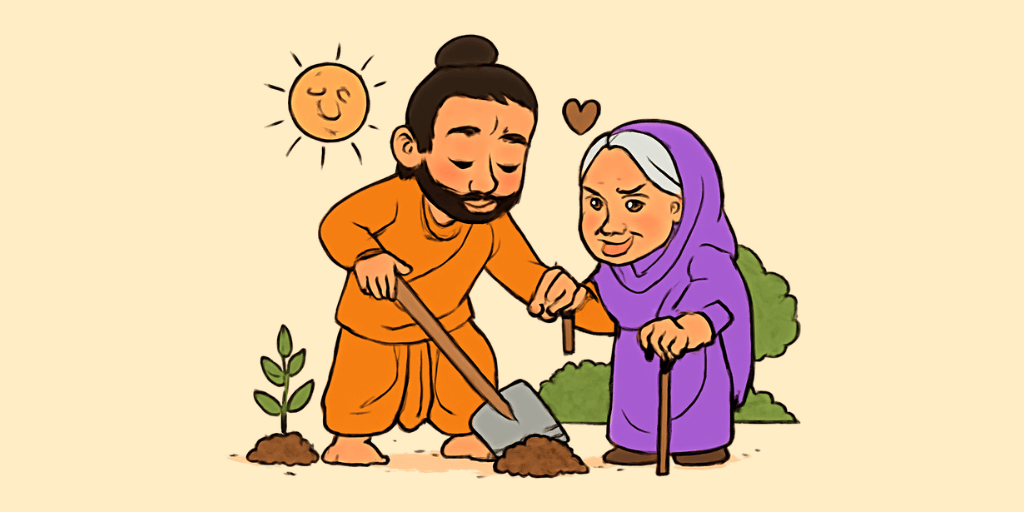
Karma Yoga, referred to as the Yoga of Selfless Action, is a fundamental approach to spiritual development within Yoga philosophy. The name derives from Sanskrit, where “Karma” (कर्म) signifies “action” or “deed,” and “Yoga” (योग) denotes “union.” This practice emphasizes executing responsibilities without attachment to outcomes, prioritizing service, and nurturing a mindset oriented towards giving rather than receiving.
With roots in ancient Vedic traditions, Karma Yoga gained prominence in the Bhagavad Gita, where Lord Krishna instructed Arjuna on the significance of fulfilling one’s duties without seeking rewards. This path promotes selfless service, discipline, and detachment, facilitating inner tranquility and spiritual freedom.
Throughout history, notable spiritual figures like Swami Vivekananda and Mahatma Gandhi highlighted Karma Yoga as a means for self-purification, personal development, and societal change. Today, it remains a timeless principle of mindful action, inspiring individuals to engage with dedication and humility. By practicing Karma Yoga, one develops compassion, distances from ego-driven desires, and discovers happiness in helping others.
Medical Conditions(Relief)
- Stress and Anxiety: Engaging in karma yoga can reduce stress and anxiety levels by promoting mindfulness and a sense of purpose, leading to improved mental well-being.
- Depression: The practice encourages positive interactions and community involvement, which can alleviate feelings of isolation and contribute to a more positive outlook.
- Chronic Pain: The focus on selfless service can help distract individuals from their pain, fostering a more resilient mindset and enhancing overall pain management.
- Cardiovascular Health: Regular participation in karma yoga activities can lead to physical fitness and a healthier lifestyle, which are crucial for maintaining heart health.
- Immune System Support: The positive emotions and reduced stress associated with karma yoga can enhance immune function, helping the body to fight off illnesses more effectively.
- Sleep Disorders: The calming effects of selfless service can promote better sleep patterns by reducing anxiety and fostering relaxation.
- Substance Abuse Recovery: Involvement in community service can provide a supportive network and a sense of belonging, which are vital for individuals recovering from addiction.
Medical Conditions(Avoid)
- Pregnancy: Many asanas may not be suitable due to changes in body dynamics and balance.
- Severe Back Issues: Conditions like herniated discs or severe sciatica can be aggravated by certain poses.
- Recent Surgeries: Individuals recovering from surgery should avoid asanas that strain the affected area.
- Cardiovascular Issues: Those with heart conditions should be cautious with poses that increase heart rate significantly.
- High Blood Pressure: Inversions and strenuous poses may pose risks for individuals with hypertension.
- Glaucoma: Inverted poses can increase pressure in the eyes, which may be harmful.
- Severe Joint Issues: Conditions like arthritis can be exacerbated by certain movements or weight-bearing asanas.
References
- Patanjali, Yoga Sutras of Patanjali, Commentary by Swami Sivananda. Divine Life Society, 1990; p. 58.
- Swatmarama, Hatha Yoga Pradipika, Edited by Swami Muktibodhananda. Bihar School of Yoga, 1998; p. 72.
- Sushruta, Sushruta Samhita, Commentary by Acharya Y.T. (5th ed.). Varanasi: Chaukambha Orientalia, 1992; p. 445.
- Krishnamacharya, Yoga Makaranda, Translated by A.G. Mohan. Krishnamacharya Yoga Mandiram, 2012; p. 103.
- Iyengar B.K.S., Light on Yoga. HarperCollins Publishers, 1966; p. 102.
- Desikachar T.K.V., The Heart of Yoga: Developing a Personal Practice. Inner Traditions, 1995; p. 88.
- Jois K. Pattabhi, Yoga Mala. The Yoga Institute, 2002; p. 120.
- Swami Vivekananda, Raja Yoga. Advaita Ashrama, 1993; p. 61.
- Swami Sivananda, The Science of Pranayama. Divine Life Society, 1951; p. 99.
- Sivananda Yoga Vedanta Centres, Yoga and Health. Sivananda Publications, 2005; p. 45.

