
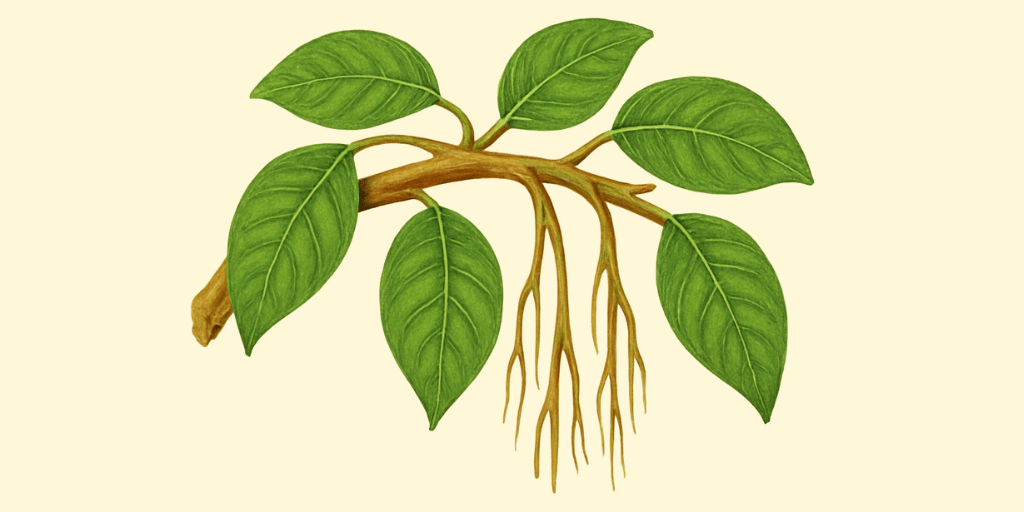
Sanskrit Name: Bargad
Devanagari Name: बरगद
English Name: Banyan Tree
Description:
The Banyan tree, often referred to as the Indian Fig Tree, is a magnificent and revered species native to India and Southeast Asia. It is culturally and medicinally significant in Ayurveda. This tree is distinguished by its expansive canopy and aerial roots that reach down to the soil, creating additional trunks.
Every part of the tree—roots, leaves, bark, and sap—is utilized for its healing attributes. The Banyan tree is frequently viewed as a representation of endurance and resilience, owing to its long lifespan and sturdy nature.
In Ayurveda, the Banyan tree is valued for its astringent, anti-inflammatory, and antimicrobial qualities. It is especially effective in treating skin ailments, enhancing oral health, and supporting digestive wellness. The bark is commonly used in decoctions to alleviate diarrhea and other digestive disorders.
The tree’s milky sap possesses wound-healing and anti-inflammatory effects, making it beneficial for skin infections and burns. Banyan leaves are recognized for their capacity to alleviate joint pain and swelling when applied externally.
Additionally, the Banyan tree contributes to reproductive health. It is believed that ingesting powdered Banyan bark mixed with milk can enhance fertility and address issues like leucorrhea. Its antioxidant properties also support detoxification and strengthen the immune system.
Benefits:
- The Banyan tree is known for its medicinal properties, especially in treating digestive issues, wounds, and respiratory conditions.
- Its bark and leaves have anti-inflammatory and antimicrobial properties, helping to manage skin conditions, such as eczema and psoriasis.
- It leaves are also used in treating ulcers and improving digestion.
- It has cooling properties that help in managing fever and inflammation.
- The tree’s roots are used in Ayurvedic medicine to promote blood purification and detoxification.
Medical Conditions(Relief):
- Banyan Tree (Ficus benghalensis) provides relief for conditions like respiratory issues, cough, and asthma due to its expectorant properties.
- The banyan tree is also used in treating digestive problems like diarrhea and indigestion.
- Its leaves and bark have antimicrobial and anti-inflammatory properties, making it useful for skin conditions, wounds, and infections.
Medical Conditions(Avoid):
- Banyan tree products should be avoided by individuals with allergies to fig or related plants.
- Pregnant and breastfeeding women should consult a healthcare provider before using banyan tree products, as their safety during these stages is not well-documented.

