
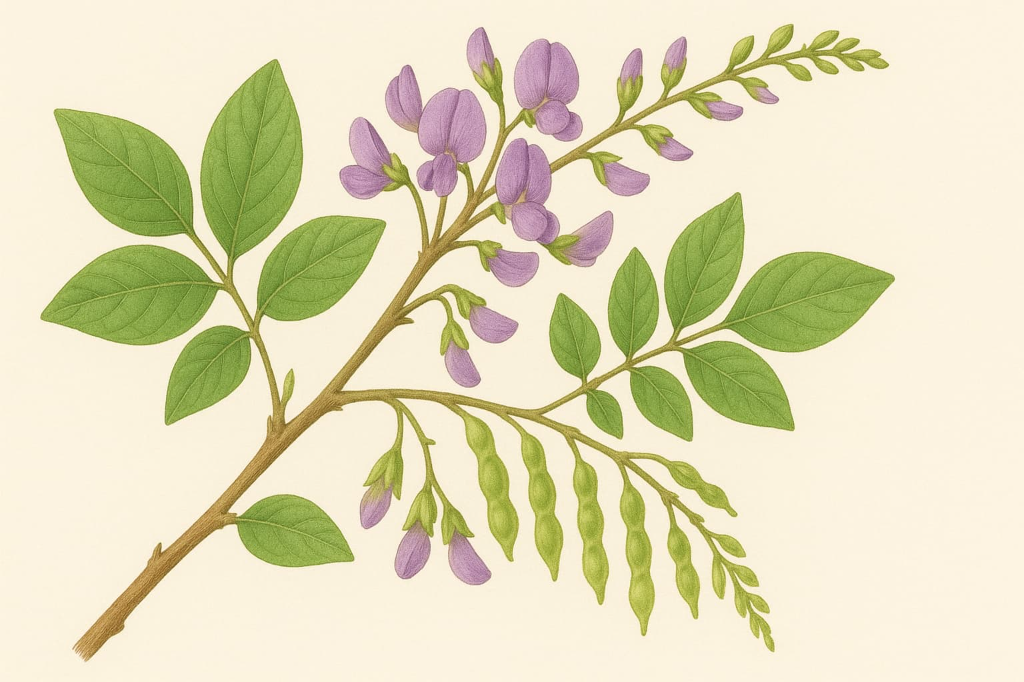
Sanskrit Name: Shalparni
Devanagari Name: शालपर्णी
English Name: Shalparni Herb
Description:
Shalparni is a climbing shrub found in the tropical and subtropical regions of India and Sri Lanka. Known for its anti-inflammatory, analgesic, and anti-arthritic properties, it is commonly used to treat joint pain, rheumatism, and arthritis.
Shalparni is also beneficial for improving respiratory health, particularly in conditions like asthma and bronchitis, as it helps clear mucus and improve breathing. The herb has cooling properties, which make it effective in treating fever and reducing heat in the body. It also supports liver function, detoxifies the body, and is used to treat digestive disorders such as constipation and indigestion.
Benefits:
- Shalparni is beneficial for promoting strength, stamina, and vitality.
- It supports joint health and reduces inflammation associated with arthritis.
- It also helps in improving digestion, managing respiratory issues, and boosting immunity.
Medical Conditions(Relief):
- Shalparni is traditionally used for treating respiratory issues like asthma, cough, and bronchitis. It has expectorant and anti-inflammatory properties that help clear mucus from the airways, promoting easier breathing.
- Shalparni also supports the nervous system by improving mental clarity and reducing anxiety.
- It is commonly used for managing joint pain, arthritis, and conditions caused by inflammation.
- Additionally, Shalparni helps in boosting immune function and treating fever.

