
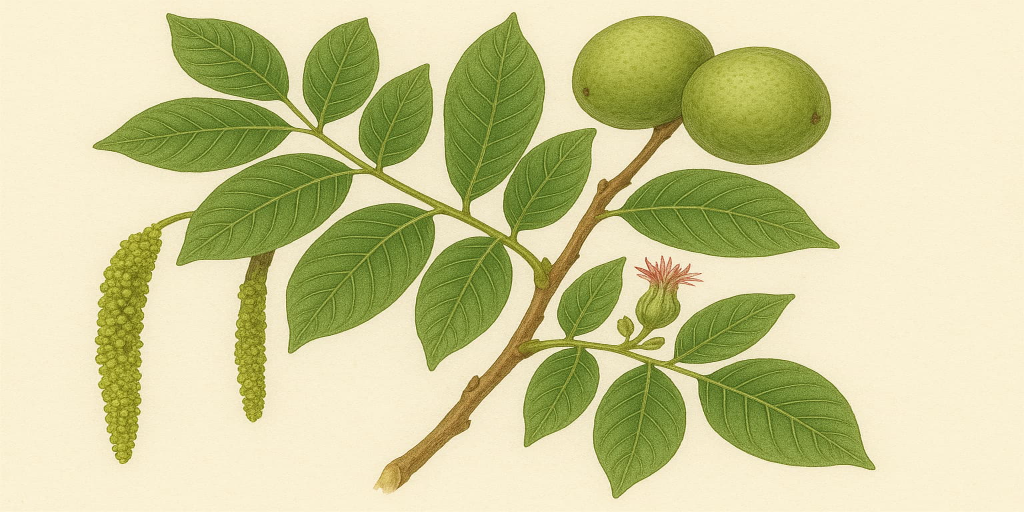
Sanskrit Name: Not listed in Classical Texts
Devanagari Name:अखरोट
Botanical Name: Juglans regia
English Name: Walnut
Description
Walnut is the edible seed of a drupe fruit from the tree Juglans regia, native to Central Asia and now widely cultivated globally. Known for its wrinkled, brain-like shell and rich, oily kernel, walnut is commonly consumed raw, roasted, or as part of sweet and savory preparations. Walnut oil and walnut-based cosmetic products are also widely used for health and skin care.
Nutritionally, walnuts are a potent source of plant-based omega-3 fatty acids (alpha-linolenic acid), antioxidants, polyphenols, protein, dietary fiber, and key minerals like magnesium, copper, and manganese. They are highly valued for supporting cardiovascular function, cognitive health, and overall metabolic balance.
Walnuts are frequently included in therapeutic diets to support memory, reduce inflammation, regulate blood sugar levels, and maintain cholesterol balance. Their oil is commonly used in skincare for reducing dryness, preventing acne, and improving skin texture.
Benefits – through the lens of Ayurveda
Not mentioned in classical Ayurvedic texts, as it is not native to ancient India and was introduced through later trade routes.
Main Chemical Constituents
- Alpha-linolenic acid (Omega-3)
- Polyunsaturated fatty acids
- Tocopherols (Vitamin E)
- Phenolic compounds
- Melatonin
- Arginine
Nutritional Components
- Omega-3 fatty acids
- Protein
- Fiber
- Magnesium
- Vitamin B6
- Antioxidants
Medical Conditions(Relief)
- Walnuts are rich in omega-3 fatty acids, antioxidants, and essential vitamins, making them beneficial for heart health.
- They help reduce bad cholesterol, improve circulation, and support overall cardiovascular function.
- Walnuts also support brain health, improving memory, cognition, and mental clarity due to their high levels of DHA.
- They are also beneficial for skin health, helping to reduce dryness and promote hydration.
- They are beneficial for managing blood sugar levels and promoting skin health.
- Walnuts help improve digestion and are a good source of protein and healthy fats, making them beneficial for muscle repair and overall vitality.
Medical Conditions(Avoid)
- Walnuts should be avoided by individuals with nut allergies, as they can trigger severe allergic reactions.
- People with gastrointestinal sensitivities or digestive disorders may experience bloating or gas when consuming walnuts.
- Pregnant women should consult their healthcare provider before consuming large quantities of walnuts.
References
- Sánchez-González C, Ciudad CJ, Noe V, Izquierdo-Pulido M. Health benefits of walnut polyphenols: An exploration beyond their lipid profile. Critical reviews in food science and nutrition. 2017 Nov 2;57(16):3373-83.
- Binici Hİ, Şat İG, Aoudeh E. Nutritional composition and health benefits of walnut and its products. Atatürk Üniversitesi Ziraat Fakültesi Dergisi. 2021 May 29;52(2):224-30.
- Song H, Cong Z, Wang C, He M, Liu C, Gao P. Research progress on Walnut oil: Bioactive compounds, health benefits, extraction methods, and medicinal uses. Journal of Food Biochemistry. 2022 Dec;46(12):e14504.
- Tapsell LC. Health benefits of walnut consumption. InVI International Walnut Symposium 861 2009 Feb 25 (pp. 409-416).
- Lockyer S, de la Hunty AE, Steenson S, Spiro A, Stanner SA. Walnut consumption and health outcomes with public health relevance—A systematic review of cohort studies and randomized controlled trials published from 2017 to present. Nutrition reviews. 2023 Jan 1;81(1):26-54.
- Chauhan A, Chauhan V. Beneficial effects of walnuts on cognition and brain health. Nutrients. 2020 Feb 20;12(2):550.
- Șen SM, Karadeniz T. The nutritional value of walnut.

