
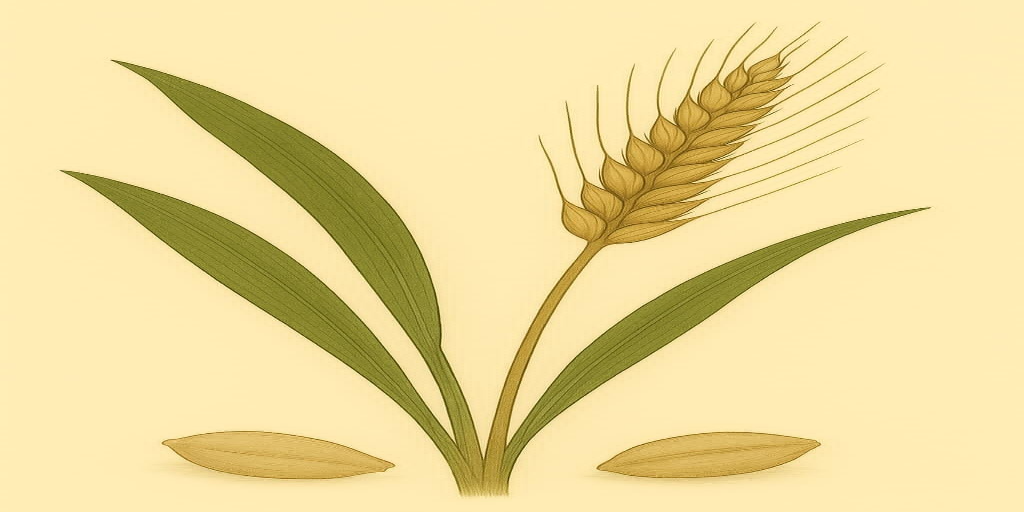
Sanskrit Name:Gehun
Devanagari Name:गेंहू
English Name: Wheat
Description:
Wheat is the most extensively grown cereal crop globally. It is abundant in carbohydrates, dietary fiber, proteins, and minerals. Wheat bran aids in alleviating constipation by increasing stool bulk and facilitating easier passage, primarily due to its laxative effects.
These effects also make it beneficial for managing hemorrhoids. Consuming wheat may assist in weight control by promoting a sense of satiety and curbing overeating. Wheat flour is typically used to make chapatis and is incorporated into various whole grain dishes such as bread, noodles, pasta, and oatmeal.
Additionally, wheat can help address several skin issues like scars, burns, and itching due to its antibacterial and anti-inflammatory properties. A mixture of wheat flour, milk, and honey can be applied to the face for a fresh and radiant complexion. Wheat germ oil is also effective for treating skin irritation, dryness, and tanning because of its antioxidant properties.
It is important to note that wheat contains gluten, which can trigger allergies in certain individuals; therefore, those with gluten intolerance should avoid wheat and its products.
Benefits:
- Wheat is a rich source of carbohydrates, fiber, and essential vitamins like Vitamin B.
- It supports energy production, promotes digestion, and helps manage blood sugar levels.
- Whole wheat is particularly beneficial for heart health, providing nutrients that reduce bad cholesterol levels.
Medical Conditions(Relief):
- Wheat is a highly nutritious grain that provides essential vitamins, minerals, and fiber, supporting digestive health.
- It helps with bowel regularity, preventing constipation and promoting gut health.
- Wheat is a good source of antioxidants, which help reduce oxidative stress and lower the risk of chronic diseases like heart disease and cancer.
- Whole wheat also supports heart health by lowering cholesterol and regulating blood pressure.
Medical Conditions(Avoid):
- Wheat should be avoided by individuals with celiac disease, gluten intolerance, or wheat allergies. It can exacerbate gastrointestinal discomfort and bloating in people with these conditions.
- Pregnant women should ensure that they are consuming wheat in moderation and balanced with other whole grains to prevent overconsumption of gluten.

