
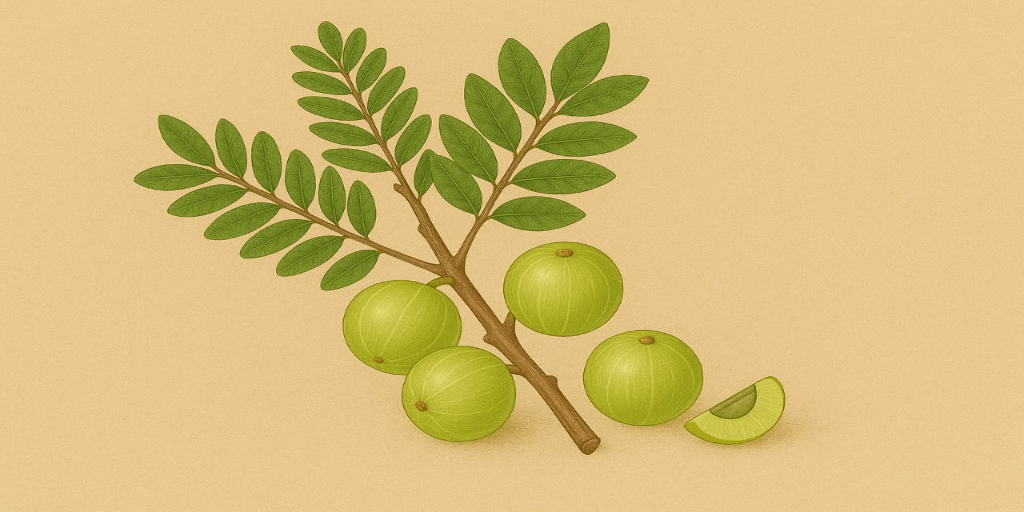
Sanskrit Name:Amlaki
Devanagari Name:आंवला
Botanical Name: Phyllanthus emblica
English Name: Indian Gooseberry
Description
Amla, also known as Indian Gooseberry, is a small, round, greenish-yellow fruit native to India and widely used in traditional Ayurvedic medicine. Rich in antioxidants and vitamin C, it is consumed fresh and in various forms like amla juice, amla powder, amla murabba, dry amla, amla candy, and amla pickle. Amla reetha shikakai mixtures and amla churna are also popular for hair and digestive health.
Amla is recognized for its immune-boosting, anti-aging, and rejuvenating properties. It promotes digestive strength, supports liver health, purifies the blood, and enhances the health of the skin, eyes, and hair. Daily consumption of raw amla or amla juice on an empty stomach is widely practiced to manage cholesterol, improve eyesight, and support metabolism.
Known as a Rasayana in Ayurveda, Amla balances all three doshas—Vata, Pitta, and Kapha. It is used for detoxification, treating hyperacidity, enhancing fertility, and supporting urinary health. It is also considered safe for pregnancy when taken appropriately.
Benefits – through the lens of Ayurveda
- Rasayana (rejuvenative)
- Agnideepana (stimulates digestive fire)
- Tridosha balancing (balances Vata, Pitta, and Kapha)
- Chakshushya (beneficial for eyes)
- Vayasthapana (anti-aging)
- Raktaprasadana (blood purifying)
- Mutrala (diuretic; supports urinary health)
Main Chemical Constituents
- Ascorbic acid (Vitamin C)
- Ellagic acid
- Gallic acid
- Emblicanin A and B
- Quercetin
- Phyllembelin
Nutritional Components
- Vitamin C
- Calcium
- Iron
- Phosphorus
- Polyphenols
- Amino acids
- Dietary fiber
- Natural sugars
- Antioxidants
Medical Conditions(Relief)
- Amla is a powerful antioxidant, rich in vitamin C, and is widely used to boost immunity, improve digestion, and support skin health.
- It is known for its detoxifying properties and helps cleanse the body by promoting liver and kidney function.
- Amla supports hair health by preventing hair loss and promoting growth.
- Its antioxidant properties help fight oxidative stress and reduce the risk of chronic diseases like heart disease, cancer, and diabetes.
- Amla also helps balance blood sugar levels, lower cholesterol, and regulate blood pressure.
Medical Conditions(Avoid)
- Amla should be avoided by individuals with loose stools or gastrointestinal issues, as it may exacerbate these conditions.
- People with low blood pressure should also use Amla cautiously, as it can lower blood pressure further. It may interact with certain medications, so individuals on blood thinners or antihypertensive drugs should consult a healthcare provider before use.
References
- Charak Samhita of Agnivesha, Charak, Dridhabala edited with ‘Vidyamanorama’ hindi commentary by Acharya Vidyadhar Shukla and prof. Ravi Dutt Tripathi, Chaukhamba Sanskrit Pratishthan, Delhi, edition, 2006; 1
- Kaiyadeva Nighantuh Prof. Priyavrata Sharma and Dr. guru Prasada Sharma Chaukhambha Orientalia Varanasi Reprint, 2013.
- Nighantu aadarsa vol-2 by Bapalala. G. Vaidya Chaukhambha Bharati Academy reprint, 2009.
- Haritakyadi Nighantu, edited by Khemraj Shrikrishnadas, Mumbai, 2000.
- Bhavaprakasa Nighantu of Sri Bhavamisra, commentary by Padmshri prof. K. C. Chunekar edited by Dr. G. S. Pandey. Chaukhambha Bharati Academy Varanasi. Reprint,
- Susruta Samhita of Maharsi-Susruta edited with Ayurveda-Tattva-Sandipika by Kaviraj Ambikadutta Shastri Part-1 Chaukhambha Sanskrit sansthan Varanasi. Reprint, 2017
- Yadav N, Singh AK. Amalaki (Emblica officinalis Gaertn.): A review on its therapeutic properties. Journal of Ayurveda and Integrated Medical Sciences. 2023 Oct 12;8(8):155-62.
- Grover M. A comprehensive review on Pharmacological and Ayurvedic aspect of Phyllanthus emblica (Amalki). Adv Pharm J. 2021;6(3):87-94.
- Bhat SA, Farooq A, Iqbal A. A comprehensive review of Emblica officinalis (Āmla): Its medicinal properties and therapeutic uses. Int. J. Unani Integr. Med. 2023;7:01-3.

