
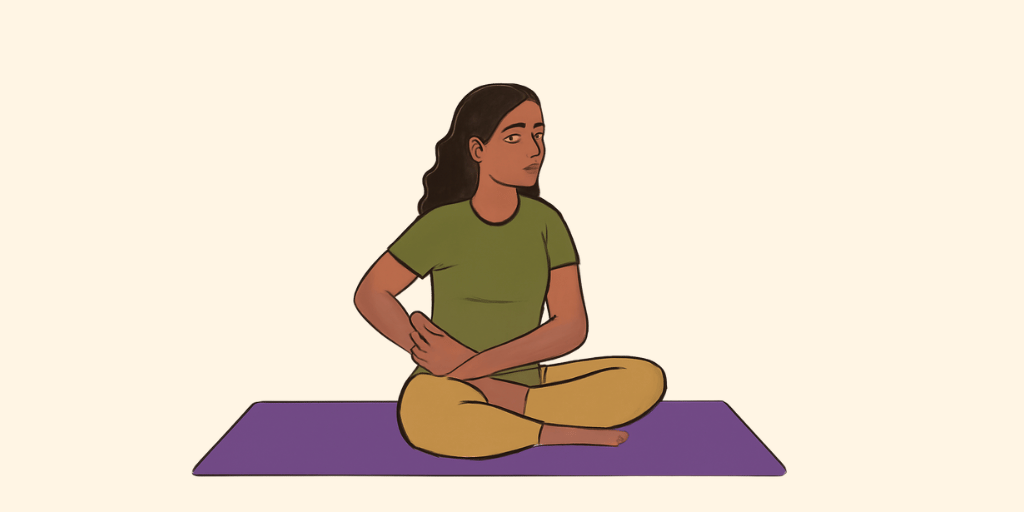
Sanskrit Name: बद्ध पद्मासन
English Name: Bound Lotus Pose
Description
Baddha Padmasana, commonly referred to as Bound Lotus Pose, is a seated yoga position that promotes a profound stretch in the hips and ankles. It is frequently utilized in meditation for its soothing and grounding properties. In Sanskrit: Baddha (बद्ध) translates to bound or locked, Padma (पद्म) refers to lotus, and Asana (आसन) signifies pose or posture. Thus, Baddha Padmasana means Bound Lotus Pose, which illustrates the action of securing the feet in the traditional lotus configuration. This binding enhances the stretch’s intensity and fosters a deeper meditative state.
Originating from Hatha Yoga, this pose is viewed as a more advanced form of Padmasana (Lotus Pose). The binding element symbolizes the concept of detachment or limitation, suggesting that the binding of the legs represents the capacity to restrain oneself for greater clarity on the spiritual journey. It is typically practiced by experienced yogis who possess the requisite flexibility and strength to comfortably maintain the posture.
How to Do
Here are the steps to do Baddha Padmasana (Bound Lotus Pose).
- Sit in Padmasana (Lotus Pose): Begin by sitting in Padmasana (Lotus Pose), which involves placing each foot on the opposite thigh. Start by crossing your legs so that the right foot rests on the left thigh and the left foot rests on the right thigh, with the soles facing upward.
- Position Your Hands: Rest your hands on your knees in Gyan Mudra (index finger and thumb touching) or any comfortable mudra of your choice. Keep your spine straight, shoulders relaxed, and head aligned with the spine.
- Grab the Toes of the Feet: With your hands, gently reach for the big toes of your feet, and clasp them together. In Baddha Padmasana, your hands will hold your feet tightly in front of you while the legs remain in a crossed lotus position.
- Keep Your Back Straight: As you clasp your toes, ensure that your back remains straight and elongated. Lift your chest upwards, and make sure your shoulders are relaxed and away from your ears.
- Lengthen Your Spine: Inhale deeply and lengthen your spine, imagining a string pulling the top of your head towards the ceiling. This will help in opening the chest and elongating the back.
- Close Your Eyes and Focus: Close your eyes gently, and bring your focus inward. Breathe deeply and steadily, maintaining a calm and focused mind. You can meditate or stay in this pose for 5–15 minutes, depending on your comfort level.
- Release the Pose: To release, gently uncross your legs, and extend them straight out in front of you. Shake them out to release any tension in the hips, thighs, and legs.
Baddha Padmasana is an advanced version of Padmasana, and it is excellent for deepening your meditation practice, increasing flexibility, and cultivating inner calm.
Benefits
- Baddha Padmasana, or Bound Lotus Pose, can be beneficial for various medical conditions.
- It may assist in alleviating symptoms of anxiety and stress by promoting relaxation and mindfulness.
- This asana may also enhance flexibility in the hips and knees, which can be advantageous for individuals with joint stiffness.
- Additionally, it can aid in improving digestion and may help with certain gastrointestinal issues by stimulating abdominal organs.
- Furthermore, practicing this pose can support overall spinal health and posture, potentially benefiting those with back pain.
Medical Conditions(Relief)
- Improved Flexibility: This asana enhances flexibility in the hips, knees, and ankles, promoting overall joint health.
- Calming the Mind: Practicing Baddha Padmasana can help reduce stress and anxiety, fostering a sense of calm and mental clarity.
- Stimulating Digestion: The seated position encourages proper alignment of the spine and aids in digestion by stimulating the abdominal organs.
- Strengthening the Back: This pose helps strengthen the back muscles, improving posture and reducing the risk of back pain.
- Enhancing Circulation: The position promotes better blood flow to the legs and pelvic region, which can alleviate numbness and improve overall circulation.
- Balancing Energy: It is believed to balance the root chakra (Muladhara), promoting feelings of stability and grounding.
Medical Conditions(Avoid)
- Knee Injuries: Individuals with knee injuries or chronic knee pain should avoid this asana due to the strain it places on the knee joints.
- Hip Issues: Those suffering from hip injuries, arthritis, or any hip-related conditions may find this pose uncomfortable or exacerbating their condition.
- Ankle Problems: People with ankle injuries or chronic ankle pain should refrain from practicing this pose, as it can put pressure on the ankles.
- Pregnancy: Pregnant individuals should generally avoid this pose, particularly in later trimesters, due to the pressure it can place on the abdomen and pelvis.
- Sciatica: Those with sciatica or other nerve-related issues in the lower back and legs may experience increased discomfort or pain while practicing this pose.
- Recent Surgeries: Individuals who have undergone recent surgeries involving the lower body should avoid this pose until fully healed.
- Severe Back Pain: Those experiencing severe or chronic back pain should be cautious, as the pose can strain the lower back.
- Balance Issues: Individuals with balance disorders or instability should avoid this pose, as it requires a certain level of balance and stability to perform safely.
References
- Patanjali, Yoga Sutras of Patanjali, Commentary by Swami Sivananda. Divine Life Society, 1990; p. 58.
- Swatmarama, Hatha Yoga Pradipika, Edited by Swami Muktibodhananda. Bihar School of Yoga, 1998; p. 72.
- Sushruta, Sushruta Samhita, Commentary by Acharya Y.T. (5th ed.). Varanasi: Chaukambha Orientalia, 1992; p. 445.
- Krishnamacharya, Yoga Makaranda, Translated by A.G. Mohan. Krishnamacharya Yoga Mandiram, 2012; p. 103.
- Iyengar B.K.S., Light on Yoga. HarperCollins Publishers, 1966; p. 102.
- Desikachar T.K.V., The Heart of Yoga: Developing a Personal Practice. Inner Traditions, 1995; p. 88.
- Jois K. Pattabhi, Yoga Mala. The Yoga Institute, 2002; p. 120.
- Swami Vivekananda, Raja Yoga. Advaita Ashrama, 1993; p. 61.
- Swami Sivananda, The Science of Pranayama. Divine Life Society, 1951; p. 99.
- Sivananda Yoga Vedanta Centres, Yoga and Health. Sivananda Publications, 2005; p. 45.

