
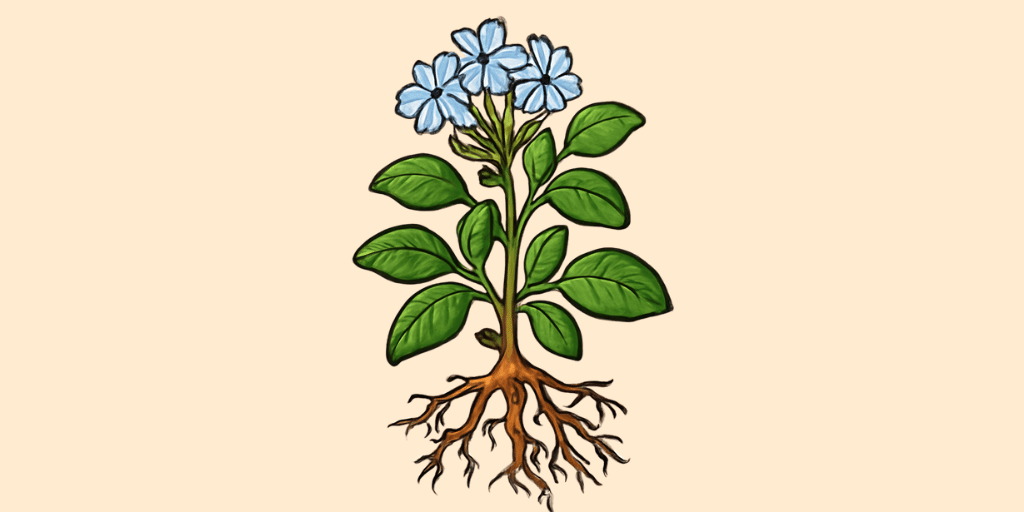
Sanskrit Name: Chitrak
Devanagari Name: चित्रक
English Name: Chitrak Root
Description:
Chitrak is a perennial shrub found in the tropical regions of India and Sri Lanka. It has white or blue flowers and green leaves. Chitrak is well-known for its digestive stimulant and purgative properties.
Chitrak is commonly used to treat indigestion, bloating, and gas by improving metabolism and stimulating the digestive fire (Agni). It also serves as a raspanchak, helping to detoxify the liver and digestive system, while balancing Vata and Kapha doshas. The herb is also useful for joint pain, arthritis, and skin issues like acne and eczema due to its anti-inflammatory effects.
Benefits:
- White Leadwort, or Plumbago zeylanica, offers several key therapeutic benefits.
- It acts as an anti-inflammatory, providing relief for muscle and joint pains when used in poultices.
- Its antiseptic properties enhance wound healing.
- It stimulates the gastrointestinal tract, aiding in the treatment of digestive disorders.
- The active compound, plumbagin, is responsible for these therapeutic effects.
Medical Conditions(Relief):
- Chitrak is an important herb in Ayurveda, known for its digestive properties.
- It is used to treat indigestion, bloating, constipation, and low appetite.
- Chitrak stimulates the digestive fire (Agni) and helps in detoxifying the body by purging accumulated toxins.
- It also has anti-inflammatory and analgesic properties, making it useful for managing joint pain, arthritis, and muscle aches.
- Additionally, Chitrak supports liver function, helping to detoxify the liver and improve its overall health.
Medical Conditions(Avoid):
- Chitrak should be avoided by individuals with a sensitive stomach or gastrointestinal disorders like ulcers or gastritis, as it may irritate the digestive tract.
- Pregnant women should avoid Chitrak due to its strong purgative effects, which may stimulate uterine contractions.

