
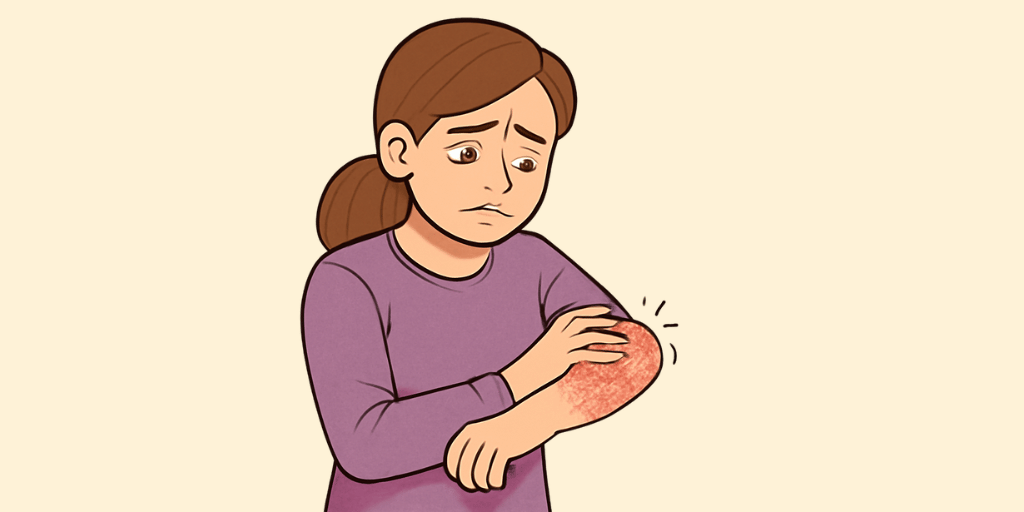
Ayurvedic Name: Charmakhya
Description:
It presents as thickened, dry, and leathery patches of skin, resembling hardened leather (Charma). This is mainly a Vata-Kapha disorder, where excess dryness and loss of natural oils make the skin rough and cracked. It resembles Chronic Eczema or Lichenification. Ayurveda advocates Dashmool Kwath, Mahatikta Ghrita, and external applications of Aloe vera and Sesame oil massage. Swedana (Steam therapy) helps in softening the hardened skin.
Signs & Symptoms:
Charmakhya presents with Kushta (Skin Lesions), Rukshata (Dryness), Shotha (Swelling), and Sotha (Inflammation), accompanied by Kandu (Itching).
Diagnosis:
Skin Biopsy
Risk Factors:
- Dietary Factors: Excessive consumption of rich, heavy foods like fried and processed items can increase the risk of Charmakhya (skin diseases). A diet low in antioxidants and nutrients can weaken the skin’s defense against infections.
- Lifestyle Factors: Exposure to environmental pollutants, stress, and poor sleep habits can worsen the symptoms of skin conditions like Charmakhya. Poor hydration and lack of proper skincare can contribute to flare-ups.
Complications:
- Skin Inflammation (Charmakhya): Chronic irritation and inflammation of the skin, leading to redness and swelling.
- Scaly Skin (Twak Rukshata): Dry, flaky skin as a result of prolonged irritation or infection.
- Pain (Ruja): Painful lesions or patches that result from skin damage.
Epidemeology:
Charmakhya (Skin Disorders) is commonly seen in individuals with poor diet, hormonal imbalances, or those suffering from chronic conditions like diabetes or eczema. It is also prevalent in individuals exposed to environmental irritants or pollutants.

