
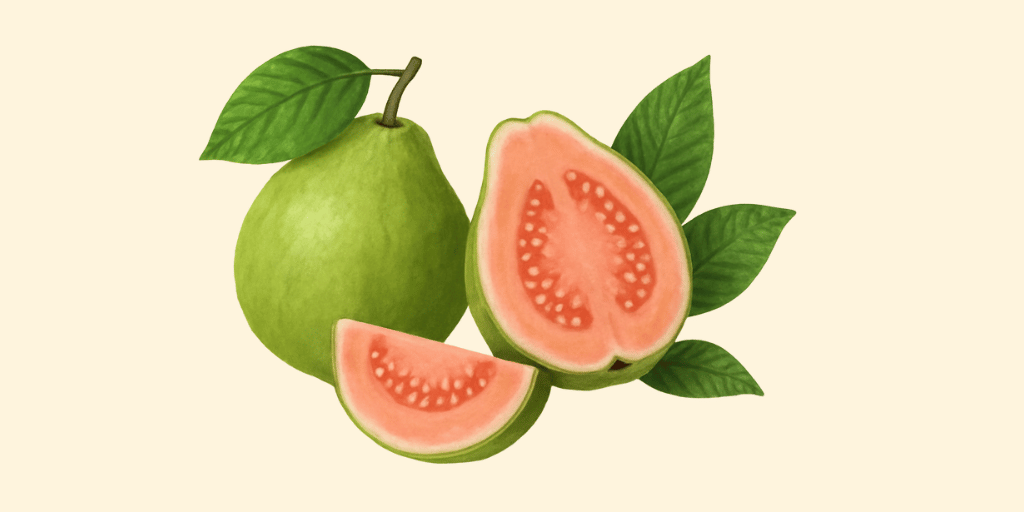
Sanskrit Name: Not listed in Classical Texts
Devanagari Name: अमरूद
Botanical Name: Psidium guajava
English Name: Guava
Description
Guava, or Amrud in Hindi, is a tropical fruit cherished for its sweet yet slightly tangy taste and powerful health benefits. With a smooth green or yellow peel and soft white or pink flesh, guava is often eaten raw or used in the form of guava juice, tea, face masks, and supplements.
The guava fruit is a nutritional powerhouse, loaded with Vitamin C, dietary fiber, potassium, and antioxidants, offering significant immune-boosting and digestive benefits. Even the guava leaves are medicinally valuable—rich in flavonoids and tannins, they are often used in herbal teas to help regulate blood sugar, manage infections, and aid digestion.
Due to its low glycemic index and high fiber content, guava is suitable for weight loss and beneficial for people with diabetes. The fruit is also known to promote healthy skin, hair growth, and support heart health by improving cholesterol profiles. Whether it’s red guava, pink guava, or Thai guava, each variety holds rich nutritional value.
Benefits – through the lens of Ayurveda
In classical Ayurvedic texts, guava is not mentioned, as it is not native to ancient India.
Main Chemical Constituents
- Vitamin C
- Dietary fiber (Soluble & insoluble)
- Lycopene (in pink/red guava)
- Flavonoids & Tannins (especially in leaves)
- Beta-carotene
- Polyphenols
Nutritional Components
- Protein
- Carbohydrates
- Fiber
- Vitamin C
- Potassium
- Vitamin A, B9 (Folate), and Magnesium
Medical Conditions(Relief)
- Guava provides relief for digestive issues like constipation due to its high fiber content.
- It is rich in vitamin C, which boosts the immune system and skin health.
- It supports heart health by lowering cholesterol and promoting blood circulation.
- It is also beneficial for blood sugar management and reducing inflammation in the body.
Medical Conditions(Avoid)
- Guava should be avoided by individuals with allergies to tropical fruits.
- People with sensitive stomachs or acid reflux may also experience discomfort.
References
- Mathpal D, Rathore G. An analysis of health benefits of guava. Int J Innov Res Eng Manag. 2022;9(1):239-42.
- Kumar M, Tomar M, Amarowicz R, Saurabh V, Nair MS, Maheshwari C, Sasi M, Prajapati U, Hasan M, Singh S, Changan S. Guava (Psidium guajava L.) leaves: Nutritional composition, phytochemical profile, and health-promoting bioactivities. Foods. 2021 Apr 1;10(4):752.
- Takeda LN, Laurindo LF, Guiguer EL, Bishayee A, Araujo AC, Ubeda LC, Goulart RD, Barbalho SM. Psidium guajava L.: A systematic review of the multifaceted health benefits and economic importance. Food Reviews International. 2023 Aug 25;39(7):4333-63.
- Naseer S, Hussain S, Naeem N, Pervaiz M, Rahman M. The phytochemistry and medicinal value of Psidium guajava (guava). Clinical phytoscience. 2018 Dec;4(1):1-8.
- Parvez GM, Shakib U, Khokon M, Sanzia M. A short review on a nutritional fruit: guava. Open Access: Toxicology and Research. 2018;1:1-8.

