
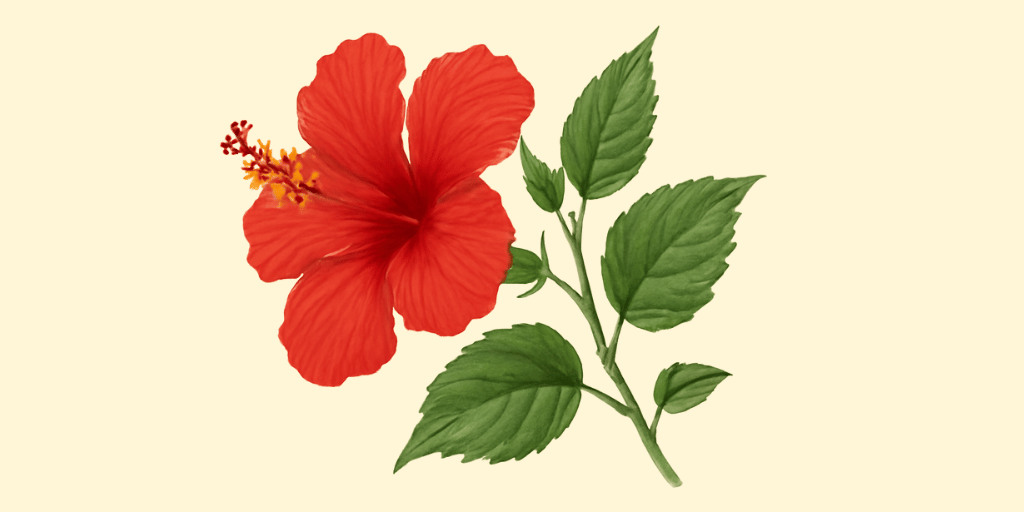
Sanskrit Name: Japa
Devanagari Name: गुड़हल
Botanical Name: Hibiscus rosa-sinensis
English Name: Hibiscus Flower
Description
Hibiscus, known as जपापुष्प (Japa Pushpa) in Hindi, is a vibrant flowering plant widely appreciated for its ornamental beauty and therapeutic properties. With its characteristic bright red petals and distinct five-lobed flowers, hibiscus is commonly found in tropical and subtropical regions. In India, hibiscus is a familiar garden flower and is often used in hair oils, teas, and skin-care preparations.
Hibiscus tea, made from dried hibiscus petals, is popular for its tart flavor and vibrant color, and is consumed both hot and cold. It is used to manage blood pressure, support liver function, and aid weight loss. The hibiscus flower is also used in making natural dyes and beauty treatments.
Hibiscus powder and hibiscus oil are commonly used for hair strengthening and conditioning. Its extracts are also used in serums and facial masks for their antioxidant and astringent effects.
From wellness supplements and hair masks to hibiscus-infused beverages, this flower plays a significant role in both natural healthcare and the beauty industry. Hibiscus is available in different varieties, including red, pink, yellow, and white flowers, but the red variety is most commonly associated with therapeutic use.
Benefits – through the lens of Ayurveda
- Keshya (promotes hair growth and health)
- Raktaprasadana (purifies and cools the blood)
- Pittahara (balances excess pitta)
- Vrana Ropana (aids wound healing)
- Varnya (enhances skin complexion)
Main Chemical Constituents
- Anthocyanins (Delphinidin, Cyanidin)
- Flavonoids
- Tannins
- Malic acid
- Citric acid
- Polysaccharides
Nutritional Components
- Vitamin C
- Iron
- Calcium
- Beta-carotene
- Amino acids
- Antioxidants
Medical Conditions(Relief)
- Hibiscus is known for its ability to lower blood pressure, reduce cholesterol, and support heart health.
- It has anti-inflammatory and antioxidant properties that help manage liver health and detoxification.
- It also aids in digestive health, weight loss, and promotes skin health.
- It is also known for its antioxidant properties, which help fight oxidative stress and reduce the risk of chronic diseases.
- Additionally, it is used to improve skin health, reduce signs of aging, and promote hair growth.
Medical Conditions(Avoid)
- Hibiscus should be avoided by individuals with low blood pressure, as it may further lower blood pressure.
- Pregnant women should avoid hibiscus in large amounts due to potential uterine contractions.
References
- Charak Samhita of Agnivesha, Charak, Dridhabala edited with ‘Vidyamanorama’ hindi commentary by Acharya Vidyadhar Shukla and prof. Ravi Dutt Tripathi, Chaukhamba Sanskrit Pratishthan, Delhi, edition, 2006; 1
- Kaiyadeva Nighantuh Prof. Priyavrata Sharma and Dr. guru Prasada Sharma Chaukhambha Orientalia Varanasi Reprint, 2013.
- Nighantu aadarsa vol-2 by Bapalala. G. Vaidya Chaukhambha Bharati Academy reprint, 2009.
- Haritakyadi Nighantu, edited by Khemraj Shrikrishnadas, Mumbai, 2000.
- Bhavaprakasa Nighantu of Sri Bhavamisra, commentary by Padmshri prof. K. C. Chunekar edited by Dr. G. S. Pandey. Chaukhambha Bharati Academy Varanasi. Reprint,
- Susruta Samhita of Maharsi-Susruta edited with Ayurveda-Tattva-Sandipika by Kaviraj Ambikadutta Shastri Part-1 Chaukhambha Sanskrit sansthan Varanasi. Reprint, 2017.
- Preeti RK, Lagashetty A, Patil SJ. Hibiscus rosa sinensis: THEIR MEDICINAL PROPERTIES AND APPLICATIONS. NANO BIOLOGY.:86.
- Amtaghri S, Qabouche A, Slaoui M, Eddouks M. A comprehensive overview of Hibiscus rosa-sinensis L.: Its ethnobotanical uses, phytochemistry, therapeutic uses, pharmacological activities, and toxicology. Endocrine, Metabolic & Immune Disorders-Drug Targets (Formerly Current Drug Targets-Immune, Endocrine & Metabolic Disorders). 2024 Jan 1;24(1):86-115.
- Gulati K. Evaluation of Cellular and Molecular Mechanisms of therapeutic effects of Hibiscus rosa-sinensis and Piper nigrum in Experimental Model of Bronchial Asthma. Medicon Pharmaceutical Sciences. 2022;2:02-13.
- Yashaswini S, Hegde RV, Venugopal CK. Health and nutrition from ornamentals. International Journal of Research in Ayurveda & Pharmacy. 2011;2(2):375-82.

