
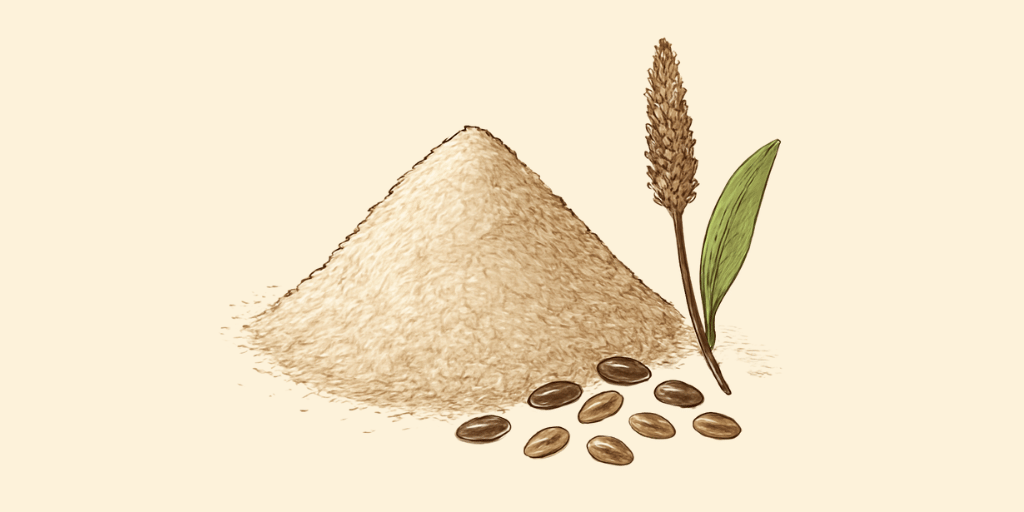
Sanskrit Name: Ashwakarna / Ashwagol
Devanagari Name: इसबगोल
Botanical Name: Plantago ovata
English Name: Psyllium Husk
Description
Isabgol, commonly referred to as Psyllium Husk, is a powerful natural remedy derived from the seeds of the Plantago ovata plant. The outer layer of these seeds is processed to produce the husk, which is rich in soluble fiber.
Isabgol forms a gel-like substance when mixed with water, making it a bulk-forming natural laxative. It helps soften stools, supports bowel regularity, and relieves conditions such as constipation and irritable bowel syndrome (IBS). Its ability to regulate bowel movement without causing dependency makes it ideal for long-term use under guidance.
In addition to its effects on digestion, Isabgol has a cooling nature and is used to relieve acidity, promote satiety, and assist in weight management. Its fiber content also plays a role in cholesterol reduction, blood sugar control, and cardiovascular health.
Ayurveda classifies Isabgol as having a mild and balancing effect, particularly suitable for Pitta and Vata disorders. It is often recommended as part of gut-cleansing therapies (Virechana) and for detoxification support.
Benefits – through the lens of Ayurveda
- Vibandhahara (relieves constipation)
- Graahi (absorbs excess fluids in intestines)
- Shothahara (anti-inflammatory)
- Hridaya mitra (supports heart health)
- Agnideepaka (kindles digestive fire gently)
- Pitta-Vatahara (balances Pitta and Vata doshas)
Main Chemical Constituents
- Mucilage (Arabinoxylan, Rhamnose, Galacturonic acid)
- Aucubin
- Tannins
- Polysaccharides
- Fixed oils
Nutritional Components
- Dietary Fiber
- Protein
- Carbohydrates
- Fat
- Calcium
- Potassium
Medical Conditions(Relief)
- Isabgol provides relief for constipation, irritable bowel syndrome (IBS), and digestive issues due to its high fiber content.
- It helps to regulate bowel movements, support heart health, and lower cholesterol.
- It is also known for its ability to regulate cholesterol levels, support heart health, and manage blood sugar levels in people with diabetes.
- It helps in weight management by promoting a feeling of fullness.
- It also aids in detoxification and promotes weight loss.
Medical Conditions(Avoid)
- Isabgol should be avoided by individuals with intestinal obstruction or bowel blockages, as it can worsen these conditions.
References
- Bhavaprakasa Nighantu of Sri Bhavamisra, commentary by Padmashri prof. K. C. Chunekar edited by Dr. G. S. Pandey. Chaukhambha Bharati Academy Varanasi. Reprint, 2015.
- Shastry JLN, Ayurvedoktha Aushadha Niruktamala (ed.1), Varanasi, Chawkambha Orienatlia, 2001; p.82
- Acharya YT, editor (5 ed.), Commentary Nibandha Sangraha on Sushruta samhita of Sushruta. Chikitsastana; Kushthachikitsa: Chapter 9, verse 34. Varanasi: Chaukambha Orientalia,1992; p 445
- Sharma PV, Dravyaguna Vijnana.ed.14. Varanasi: Chawkambha Bharati Academy; 1993: p 192
- Pal D. A Review of Potential Health Benefits and Therapeutic Applications of Psyllium (Plantago Ovata) Husk in Disease Management. IJSR. 2023;12:1858-61.
- Das M, Trivedi A. Isabgol: A potential medicinal plant with commercial and trade value. Indian Horticulture. 2023;68(5):11-4.
- Purohit P, Rathore HS. Isabgol: a herbal remedy. World Journal of Pharmaceutical Research. 2019 Mar 25;8(7):579-85.

