
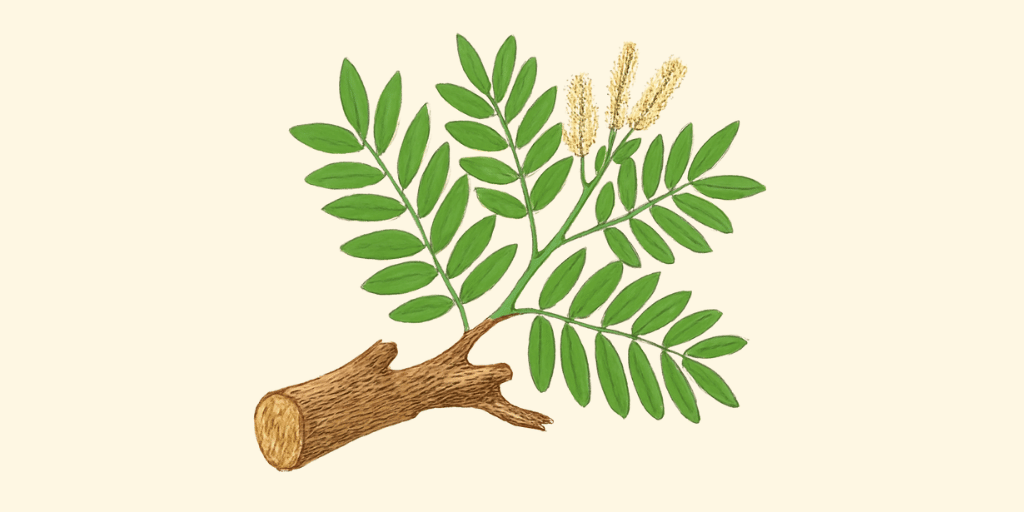
Sanskrit Name: Khadirkasth
Devanagari Name: खडीरकाष्ठ
English Name: Acacia Wood
Description:
Khadirkashth, also known as Acacia catechu or Khair, is an important herb in Ayurveda, especially valued for its anti-inflammatory, astringent, and antimicrobial properties. The bark of Khadirkashth is commonly used to treat skin conditions such as eczema, rashes, and acne. It is also effective in healing wounds and ulcers, as it has wound-healing properties that help promote skin regeneration.
Internally, Khadirkashth is used to treat digestive disorders, including diarrhea, dysentery, and bloody stools. Its astringent nature helps tighten the tissues, reduce inflammation in the intestines, and control excessive fluid loss.
Khadirkashth is also useful in oral health, as it is used in mouthwashes and tooth powders to prevent gum infections, tooth decay, and bad breath due to its antimicrobial properties. It helps to reduce oral bacteria and promote oral hygiene.
Khadirkashth helps balance Pitta and Kapha doshas and is often used for its ability to treat fever, infections, and skin diseases.
Benefits:
- Cutch tree is primarily used for treating skin and respiratory issues, especially those related to allergies.
- It also helps maintain oral hygiene and serves as a local treatment for bleeding injuries due to its astringent properties.
Medical Conditions(Relief):
- Khadirkasth, or the heartwood of the Acacia tree, has a long history in Ayurvedic medicine for its anti-inflammatory, astringent, and antimicrobial properties.
- It is used to treat conditions like diarrhea, dysentery, and bleeding disorders due to its ability to reduce inflammation and promote healing.
- Khadirkasth also supports oral health, helping to treat mouth ulcers and gum infections.
- Additionally, it is used in formulations for skin health, helping to treat acne, eczema, and other skin irritations.
Medical Conditions(Avoid):
- Khadirkasth should be avoided by individuals with allergies to legumes or plants from the Acacia family.
- People with gastrointestinal conditions, especially those prone to constipation or dryness, should use it cautiously.
- Pregnant women should consult their healthcare provider before using Khadirkasth, as its astringent properties may have unintended effects.

