
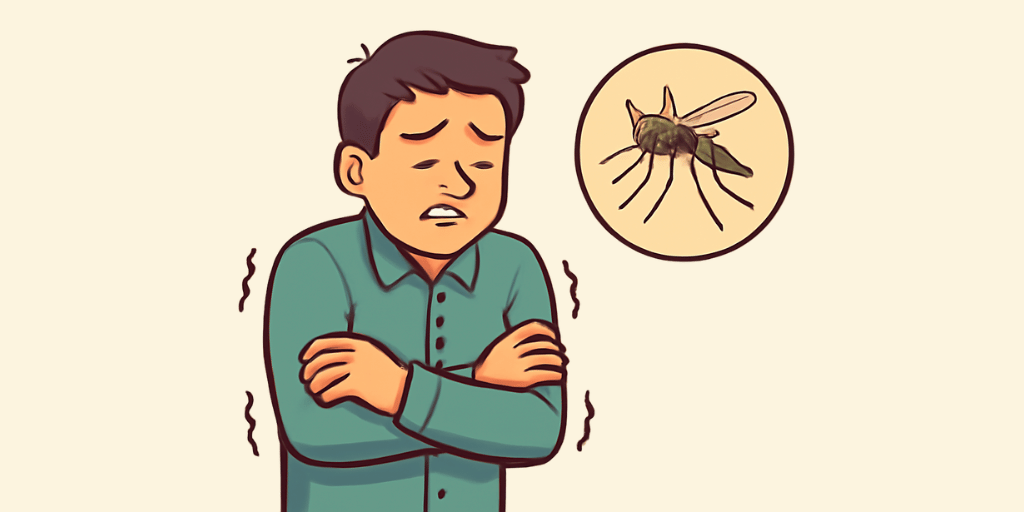
Ayurvedic Name: Visham Jwar
Description:
Malaria is considered a condition arising from an imbalance of Pitta and Vata doshas, with a particular emphasis on Vata’s erratic movement and Pitta’s heating nature. In Ayurveda, malaria is often linked with the accumulation of Ama (toxins) in the blood, caused by poor digestion (mandagni), which weakens the body’s immune system and makes it susceptible to infections. The fever and chills associated with malaria are seen as a result of the imbalance in the body’s heat and circulation, leading to toxic accumulation.
Ayurveda treats malaria by focusing on detoxification, restoring digestive health, and balancing the doshas with herbs like Giloy, Neem, and Turmeric.
Signs & Symptoms:
- Anidra (Insomnia): Difficulty sleeping may occur due to the high fever, chills, and body aches that disrupt rest.
- Jwara (Fever): Recurring high fever, often with chills, which is a hallmark symptom of malaria.
- Anga Shoola (Body Pain): Severe body pain, including muscle and joint aches, is commonly associated with malaria.
- Chardi (Vomiting): Nausea and vomiting are common due to the body’s response to the infection.
- Shitalata (Coldness): Feeling of coldness or chills during the onset of fever episodes.
- Shwasa (Breathlessness): Difficulty breathing may arise due to the body’s decreased oxygen-carrying capacity caused by anemia and parasitic infection.
- Dourbalya (Weakness): General weakness and fatigue result from the body’s effort to fight the infection and the depletion of red blood cells and energy reserves.
Diagnosis:
Clinical exam and blood smear analysis for Plasmodium infection, often showing cyclical fever patterns and anemia.
Risk Factors:
- Dietary Factors
Poor nutrition: A weakened immune system due to inadequate nutrition increases the risk of malaria infection.
Iron deficiency: Low iron levels can make the body more vulnerable to infections, including malaria. - Lifestyle Factors
Not using mosquito protection: Failure to use insect repellent, mosquito nets, or protective clothing increases the risk of malaria.
Living or traveling in endemic areas: Spending time in regions where malaria is common increases exposure to infected mosquitoes. - Medical Conditions
Weakened immune system: Individuals with compromised immunity (e.g., due to HIV, chemotherapy) are at higher risk for contracting malaria.
Pregnancy: Pregnant women are more vulnerable to malaria, especially in areas with high transmission rates.
Complications:
- Anemia (Rakta Daurbalya) – Malaria destroys red blood cells, leading to anemia, which causes weakness, fatigue, and pale skin.
- Organ Failure (Kosha Vikruti) – Severe malaria can cause organ failure, particularly in the kidneys, liver, or lungs, due to the accumulation of toxins.
- Severe Dehydration (Trishna Kshaya) – The fever and sweating associated with malaria can lead to dehydration, which worsens the condition.
- Cerebral Malaria (Shira Shoola) – In severe cases, malaria can affect the brain, leading to seizures, confusion, and coma.
- Hypoglycemia – Malaria treatment, particularly quinine, can cause a dangerous drop in blood sugar levels, leading to hypoglycemia.
Epidemeology:
Affects over 200 million people annually, primarily in sub-Saharan Africa, Southeast Asia, and South America. Children under the age of five and pregnant women are particularly vulnerable to severe malaria.
Higher rates are seen in areas with tropical and subtropical climates, where mosquitoes carrying the Plasmodium parasite are prevalent. The disease burden is highest in countries with limited access to healthcare and malaria control measures.
References:
- Agnivesha, Samhita C, Trikamji AY. Choukambha Publication. Varanasi c2001. p. 738-399.
- Krishna Das KV. Text Book of Medi-cine, edited by K.V.Krishna Das, 5th Ed, Jaypee Brothers Medical Publishers (P) Ltd, 1466, Page No 359.
- World Health Organization. World Malaria Report 2018. WHO; Geneva, Switzerland; c2018.
- Dhiman S. Are malaria elimination efforts on right track? An analysis of gains achieved and challenges ahead. Infect. Dis. Poverty. 2019;8:14. DOI: 10.1186/s40249019-0524-x.
- Agnivesha, Samhita C, Trikamji AY. Choukambh Publication. Varanasi; c2001. p. 738-405.
- Acharya SDASG, Acharya VYT. Chaukambha Sanskrit Sansthan; c2002. p. 824-675.
- Acharya SDASG, Acharya VYT. Chaukambha Sanskrit Sansthan; c2002. p. 824-642.
- Sushrutha M. Sushrutha Samhi- hi-ta,7 ed., Varanasi U.P, Sri Dalhana Achary a Sri Gayadas Acharya, Vaidya Yadavji Trikamji Acharya, Chaukambha Sanskrit Sansthan; c2002. p. 824-27.
- https://www.dipterajournal.com/pdf/2023/vol10issue6/PartA/10-6-10-881.pdf

